
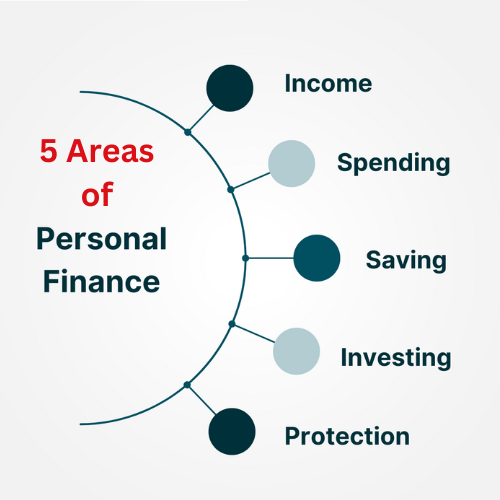
Personal finance means managing the money you earn, spend, save, invest, and protect. Ever feel as though your bills and your goals are pulling in different directions? The constant influx of bills, options for saving, and investment opportunities can leave even the most organized among us feeling a tad bewildered. However, achieving financial stability and independence doesn’t have to be an arduous task. You can take significant steps towards financial competence and a secure future by breaking down personal finance into five main areas and learning to manage each effectively. Let’s explore these five domains, unpack why they matter, and discuss some actionable strategies for controlling them.
1. Earning: The Foundation of Financial Security
Personal finance starts with the money available to your household. That may come from wages, pensions, Social Security, benefits, or other income. Use the amount you actually receive when planning what you can spend.
Try this: List each income source, the amount received, and its payment date. For example, two payments of $1,500 give you $3,000 for the month, but bills still need to fit the dates the money arrives.
Control Strategies:
- Enhance Your Skills: Invest in education and training to increase marketability and earning potential. Attend workshops and online courses, or pursue further education that aligns with your career goals.
- Negotiate Wisely: Whether discussing salaries, raises, or side contracts, don’t shy away from negotiations. Research industry standards and advocate for your worth.
- Diversify Income: Explore side hustles or freelance opportunities that align with your talents or interests. This diversification can provide financial cushioning and growth opportunities.
2. Spending: The Art of Frugal Living
The spending side of personal finance is about deciding what your available money needs to cover. Include essential bills, debt payments, everyday purchases, and costs that arrive less often. Tracking spending can show a shortfall; it does not create extra income.
Try this: Compare one month of income with expenses. If $3,000 comes in and $3,150 goes out, identify the $150 gap before adding a new commitment. Start with the Budgeting guide. For balances you already owe, use the Debt and Credit guide.
Control Strategies:
- Budgeting: Create a realistic budget that aligns with your lifestyle and stick to it. There are countless budgeting tools and apps available that can help you track spending and manage bills.
- Prioritize Needs Over Wants: Distinguish between essential expenses and non-essential expenditures. Make deliberate choices to focus spending on needs before wants.
- Practice Conscious Shopping: Avoid impulse buying by implementing a 24-hour rule before making significant purchases and take advantage of discounts, rewards programs, and cash-back offers.
3. Saving: Building Your Financial Cushion
Saving is the part of personal finance that sets money aside for later. Separate known future bills from unexpected costs so an annual renewal does not take you by surprise.
Try this: A $240 annual bill due in six months needs $40 a month if nothing is set aside yet. Check that amount against your budget. For unexpected costs, use the emergency fund guide to choose a target that fits your household.
Control Strategies:
- Automate Savings: Set up automatic monthly transfers from your checking account to a savings account, treating savings like another fixed expense.
- Establish an Emergency Fund: Choose a starting amount you can work toward, then review it as your needs change. The CFPB explains that the amount depends on your situation.
- Set Clear Goals: Whether for a vacation, a new car, or retirement, having clear financial goals ensures you’re allocating the right amount toward savings.
4. Investing: Growing Your Wealth
Investing means buying assets with the aim of earning a return. In personal finance, the purpose and timing of your goal matter: money needed for a bill soon has a different job from money intended for retirement years away. Investments can lose value.
Try this: Choose one investment you own or are considering. Write down what it holds, its fees, how it could lose value, and when you expect to need the money. Continue with the Investing and Wealth guide.
Control Strategies:
- Educate Yourself: Understanding the basics of investment options and market mechanisms can demystify the process and improve your decision-making.
- Diversify Your Portfolio: Spreading money across investments can reduce concentration risk, but it cannot guarantee a profit or prevent losses. Investor.gov explains diversification.
- Start Early: The magic of compounding means that even small amounts can grow significantly if invested early and left to accrue over time.
5. Protection: Safeguarding Your Finances
Protection is the part of personal finance that prepares for losses and disruptions. Insurance, secure accounts, and clear instructions for handling your affairs each serve a different purpose. Review what you have and where you need help.
Try this: Review one insurance policy. Note what it covers, the deductible, exclusions, and renewal date. If a term is unclear, ask the provider before assuming a loss is covered. For changes in retirement, visit the Retirement section.
Control Strategies:
- Insurance: Assess your need for health, life, disability, and other forms of insurance to protect yourself and your family from unforeseen circumstances.
- Legal Planning: Establish a will and consider estate planning to ensure your assets are managed and distributed according to your wishes.
- Regular Reviews: Review and adjust your protection strategies to reflect life changes such as marriage, children, or significant purchases.
Your Next Personal Finance Step
Mastering personal finance is not an overnight task but a lifelong journey. By understanding and controlling these five key areas—earning, spending, saving, investing, and protecting—you equip yourself with the tools needed to navigate the financial currents of life. Stay proactive, seek professional advice when necessary, and continuously educate yourself to adapt to changing circumstances. With discipline and strategic planning, financial peace of mind is not just a dream but an attainable reality.
Choose one area of personal finance to work on this week. Write down one number you need to check and one action you can take. For basic concepts, read Understand Money. To choose your next learning topic, return to the Financial Education guide.