
I have an idea of when it started, but I honestly don’t know whether I have ever been completely out of debt.
At some point, someone dangled a credit card application in front of me, and I couldn’t wait to grab it. Then the card arrived with a credit limit that seemed enormous compared with what I was used to having in my pocket.
It was probably only a few thousand dollars, but to me, it felt like a small fortune.
Of course, that credit limit was not a small fortune. It was borrowed money waiting to become a monthly payment. Like many people, I understood that in theory. Understanding it and acting like I understood it were two very different things.
That is how debt often begins. It may start with one credit card, one car loan, or one purchase that feels manageable at the time. Then another payment gets added, interest begins piling up, and eventually you wonder how you will ever get ahead.
Learning how to get out of debt begins with an honest look at what you owe, what you can afford, and what needs to change. If you are still deciding how much debt is affecting your finances and everyday choices, start with The Impact of Debt: How It Affects Your Money and Your Life. Getting out of debt does not begin with a secret trick, a perfect spreadsheet, or someone promising to make your debt disappear.
The goal is not simply to pay off a balance. It is to build a realistic system that helps you get out of debt—and keeps you from falling right back into it.
First, Decide Whether You Have a Payoff Problem or a Debt Crisis
Before choosing a debt payoff method, determine what kind of situation you are facing.
You may have a debt payoff problem if you can:
- Pay your essential household expenses
- Make the minimum payments on your debts
- Avoid adding new balances most months
- Find at least some extra money for repayment
You may be facing a debt crisis if you are:
- Missing payments regularly
- Using one credit card to pay another
- Falling behind on housing, utilities, food, or insurance
- Receiving collection notices or lawsuit threats
- Unable to make minimum payments
- Borrowing money for basic living expenses
These situations require different approaches.
If you can cover your necessities and minimum payments, a structured payoff plan may be enough. If you cannot, the immediate goal is stabilization—not aggressive repayment. Read Debt Crisis? 7 Powerful Steps to Regain Control for help protecting essential expenses, contacting creditors, and comparing professional debt-relief options.
The Consumer Financial Protection Bureau recommends contacting your credit card company as soon as you believe you cannot make a payment. You may qualify for a hardship program, adjusted payment, or temporary interest-rate reduction.
Waiting usually reduces your options. Calling early gives you a better chance of working something out.
Get Out of Debt by Knowing Exactly What You Owe
It is difficult to solve a problem you cannot see clearly.
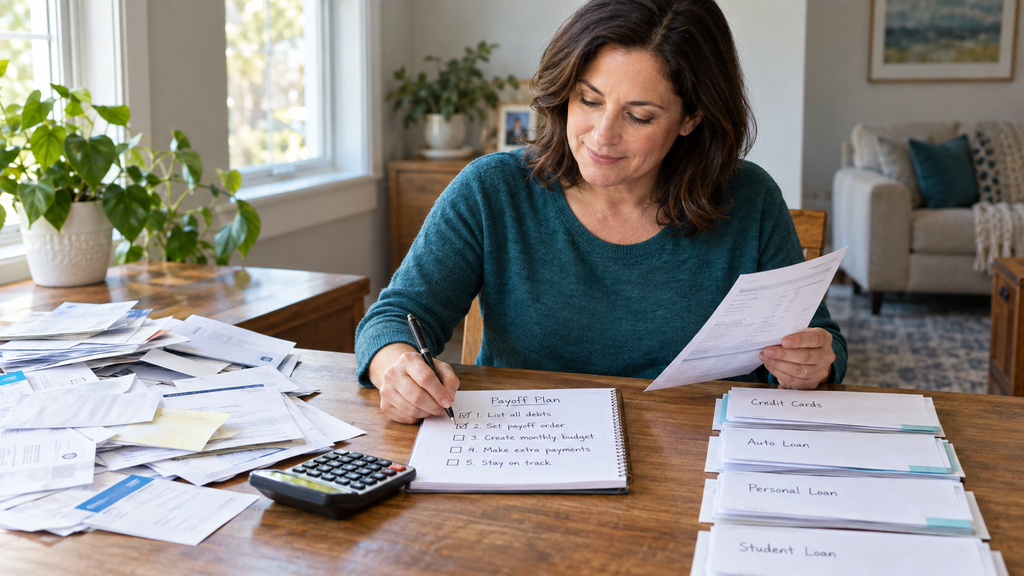
Gather your most recent statements and list every debt, including:
- Credit cards
- Personal loans
- Auto loans
- Student loans
- Medical debt
- Buy now, pay later balances
- Past-due accounts
- Collection accounts
- Money owed to family or friends
For each debt, write down:
- The creditor
- Current balance
- Interest rate
- Minimum payment
- Payment due date
- Account status
- Any promotional rate and when it expires
The total might be uncomfortable. I understand the temptation to look at the list through one partially closed eye. But the number already exists whether you add it up or not.
Once it is written down, it becomes something you can plan around.
If your balances barely seem to move despite regular payments, The Minimum Payment Trap: How Credit Card Debt Can Last for Years explains why.
If student loans are part of your list, read How to Pay Off Student Loans: Practical Strategies for help sorting through your loan types, payment concerns, and repayment options.
Protect Essential Expenses Before You Try to Get Out of Debt
Paying debt matters, but your household still has to function.
Before sending extra money to a credit card, make sure you can cover:
- Housing
- Utilities
- Food
- Necessary transportation
- Insurance
- Prescriptions and essential healthcare
- Minimum required debt payments
Do not fall behind on your mortgage, rent, electricity, or insurance to make an aggressive extra credit card payment. That can create a more serious problem than the one you are trying to solve.
If your income does not cover these priorities, read Unpaid Bills? Here’s How to Decide What to Pay First.
Create a Spending Plan to Help You Get Out of Debt
To get out of debt, you need a payoff plan that fits your actual life.
Start with your monthly take-home income. Then subtract essential expenses, minimum debt payments, and a reasonable amount for irregular costs.
Whatever remains is your potential extra debt payment.
If the number is smaller than you hoped, that is not failure. It is information.
You may be able to create more room by:
- Canceling unused subscriptions
- Shopping insurance policies
- Reducing takeout and convenience spending
- Negotiating phone, internet, or service bills
- Selling items you no longer use
- Using overtime, bonuses, or side income carefully
Our guide on how to make a budget that actually works can help you build a plan without pretending every month will go perfectly.
Build a Small Emergency Fund While You Get Out of Debt
It can feel strange to save money while paying interest. However, without savings, every surprise becomes a potential new debt.
Consider building a starter emergency fund before sending every available dollar toward repayment. The right amount depends on your income, household expenses, job stability, insurance, and access to other resources.
The purpose is not to fully fund several months of expenses before addressing expensive debt. It is to create a buffer between you and the next flat tire, medical copay, or home repair.
Once you have that starting cushion, you can divide extra money between debt repayment and additional emergency savings based on your situation.
If you are unsure how to divide that money, read Emergency Fund or Debt: Which Should You Prioritize First?.
For more help, see Emergency Fund: Why You Need One and How to Build It.
Choose a Method to Get Out of Debt
Once your cash flow is stable, choose a repayment method. No single method works best for everyone.
The Debt Snowball
With the debt snowball, you pay extra toward the smallest balance while making minimum payments on everything else.
Once you pay it off, you roll that payment into the next-smallest debt.
The advantage is motivation. Paying off a small account quickly gives you a visible win and one fewer payment to manage.
The disadvantage is that you may pay more interest than you would with another method.
The Debt Avalanche
With the debt avalanche, you pay extra toward the debt with the highest interest rate.
After paying it off, you move to the debt with the next-highest rate.
The avalanche generally reduces interest costs, but your first victory may take longer if the highest-rate balance is large.
A Strategic Hybrid
You can also combine the two methods.
For example, you might pay off one very small balance first to create momentum. Then you could switch to the highest-interest debt.
That is not cheating. Personal finance is not a game show with one correct door.
The best method is the one that:
- Makes mathematical sense
- Keeps you motivated
- Fits your available cash flow
- Prevents you from adding new debt
Use the Debt Payoff Calculator to compare repayment orders, estimated interest, and potential debt-free dates.
You can also read Debt Snowball vs. Avalanche: Which Payoff Method Is Better? for a closer comparison of both methods.
Automate Your Plan to Get Out of Debt
Once you choose a strategy, automate the minimum payments on every account you can.
Then schedule your extra payment shortly after your income arrives. This reduces the chance that the money will disappear into everyday spending.
Automation does not mean forgetting about the plan. Review your accounts at least once a month to confirm:
- Payments were processed correctly
- Interest rates did not change
- Promotional periods are not expiring
- No unexpected fees appeared
- Your target debt is moving in the right direction
A debt plan should run consistently, but you should still keep your hands on the steering wheel.
Look for Ways to Lower Your Interest Rates
A lower interest rate can help more of each payment reach the balance.
For help preparing your request and comparing offers, read How to Negotiate Better Rates on Loans and Credit Cards.
Possible options include:
- Asking the creditor for a lower rate
- Requesting a hardship program
- Transferring a balance to a lower-rate offer
- Refinancing or consolidating qualifying debt
- Working with a nonprofit credit counselor
Before moving debt, examine the entire offer.
Check:
- Transfer or origination fees
- Promotional-rate expiration dates
- The regular interest rate after the promotion
- Monthly payment requirements
- Loan length
- Prepayment penalties
- Whether you are likely to reuse the paid-off cards
A lower payment is not automatically a better deal. Stretching the debt over several additional years could increase the total cost even if the interest rate is lower.
Debt consolidation can help, but it won’t get you out of debt by itself. It reorganizes the debt. Your spending and repayment habits still determine what happens next.
Use Extra Income With a Plan
Bonuses, tax refunds, raises, gifts, and side-income payments can speed up your progress. A real windfall can help, but relying on chance is not a repayment strategy. If the hope of one lucky ticket is beginning to feel like a financial plan, read The Lottery as a Debt Solution: Why It’s Not a Practical Fix.
Before applying all of a windfall to debt, ask:
- Are my essential bills current?
- Do I have a basic emergency cushion?
- Will I owe taxes on this income?
- Am I receiving an employer retirement match?
- Which debt costs me the most?
You do not have to send every unexpected dollar to debt. A plan with no room for savings or enjoyment can become hard to maintain.
One reasonable approach is to decide in advance how to divide extra money. Some might go toward your target debt, some toward savings, and a small amount toward something you can enjoy without guilt.
The exact percentages matter less than having a plan before the money arrives.
If your income has increased, see How to Use Your Raise to Pay Off Debt Faster for help putting that increase to work.
Track Your Progress as You Get Out of Debt
Paying off debt often takes months or years. That makes progress easy to overlook.
If the worry is affecting your daily life, The Psychological Effects of Debt and How to Regain Control addresses the emotional side of repayment.
Long payoff plans can test your motivation even when they are working. If that sounds familiar, read Paying Off Debt: How to Stay Motivated on the Goal. Track more than your total balance. Record:
- Each debt you eliminate
- Total principal paid
- Interest avoided
- Monthly payments freed up
- Your estimated debt-free date
- The number of consecutive months without new debt
When you pay off an account, celebrate the milestone without replacing it with another balance.
A small dinner, a day trip, or another planned reward can mark the progress. The celebration should remind you that the plan is working, not send you back to the starting line.
What If You Cannot Make the Minimum Payments?
If minimum payments no longer fit your income, do not try to solve the problem with another high-cost loan.
Before considering a payday loan to bridge the gap, read Payday Loan: Why the Quick Fix Can Cost You More.
Contact your creditors and explain:
- Why you cannot make the current payment
- How much you can afford
- When you expect your situation to improve
- What payment or interest-rate adjustment you are requesting
Write down the representative’s name, the date, and what was discussed. Ask for any agreement in writing.
A reputable nonprofit credit counseling organization may also help you review your budget and determine whether a debt management plan is appropriate.
A debt management plan is not the same as debt settlement. Under a debt management plan, you generally repay the enrolled debt through structured payments that may include reduced interest rates or fees.
For a closer look at this option, read Debt Management Plan: How It Works and Whether It’s Right for You.
Be Careful With Debt-Relief Promises
Debt creates stress, and stress can make a dramatic promise sound especially appealing.
Be cautious of companies that:
- Guarantee they can eliminate your debt
- Promise to settle it for pennies on the dollar
- Demand fees before settling anything
- Tell you to stop communicating with creditors
- Tell you to stop making payments without explaining the consequences
- Claim access to a secret government debt-relief program
- Pressure you to act immediately
The Federal Trade Commission’s debt-relief guidance explains how to evaluate credit counseling and recognize debt-relief scams.
Debt settlement can involve serious risks. Balances may continue growing, creditors may pursue collection or legal action, credit can be damaged, and forgiven debt may have tax consequences.
If your situation is difficult, speaking with a qualified nonprofit credit counselor or bankruptcy attorney may provide a clearer view of your legitimate options.
How to Stay Out of Debt After Paying It Off
Paying off debt is an achievement. Staying out requires a new system.
Keep the Payments—But Redirect Them
When a debt is paid off, redirect its old payment toward:
- The next debt
- Your emergency fund
- Retirement savings
- Another important financial goal
You have already adjusted your spending around that payment. Redirecting it keeps the habit working for you.
Continue Reviewing Your Spending
A monthly financial check-in can help you catch problems before they become balances.
Ask:
- Did I spend more than planned?
- Is an irregular expense coming soon?
- Did I use credit for something I could not afford?
- Does my spending still reflect my priorities?
- What needs to change next month?
Save for Predictable Expenses
Car repairs, holidays, insurance premiums, home maintenance, and annual subscriptions are not entirely unexpected.
Setting aside a little each month for these expenses can reduce the need to borrow when they arrive.
Decide How You Will Use Credit
You may choose to continue using credit cards, use them only for certain expenses, or stop using them while rebuilding your habits.
Whichever approach you choose, set clear boundaries. A paid-off card is available credit—not additional income.
Frequently Asked Questions About Getting Out of Debt
Should I save money or pay off debt first?
Start by keeping essential bills current and building a modest emergency cushion. After that, the right balance depends on your interest rates, income stability, available savings, and household risks.
Is the snowball or avalanche method better?
The avalanche usually saves more interest. The snowball may provide faster motivational wins. The best choice is the method you are most likely to follow consistently.
Should I close a credit card after paying it off?
Closing an account can affect your available credit and credit history. However, keeping an account open may not make sense if it charges an annual fee or strongly tempts you to overspend. Consider both the credit effects and your actual behavior.
Can debt consolidation help me get out of debt?
It can help if it meaningfully lowers your interest rate, offers affordable payments, and doesn’t extend repayment so long that the total cost increases. It works only if you avoid rebuilding balances on the accounts you paid off.
How long will it take to get out of debt?
That depends on your balances, interest rates, minimum payments, extra payments, and whether you add new debt. A debt payoff calculator can give you a more useful estimate than a generic promise.
Your Next Step
You do not need to solve every part of your debt today.
Start with one concrete action:
- List every debt.
- Confirm that essential bills and minimum payments are covered.
- Set aside a starter emergency cushion.
- Choose a repayment method.
- Calculate a realistic extra payment.
- Track your progress each month.
Learning how to get out of debt is not about punishing yourself for old decisions. It is about creating a better system for the decisions ahead.
Your first payment may not feel dramatic. Make it anyway. That is how the balance starts moving—and how your financial options begin opening again.