
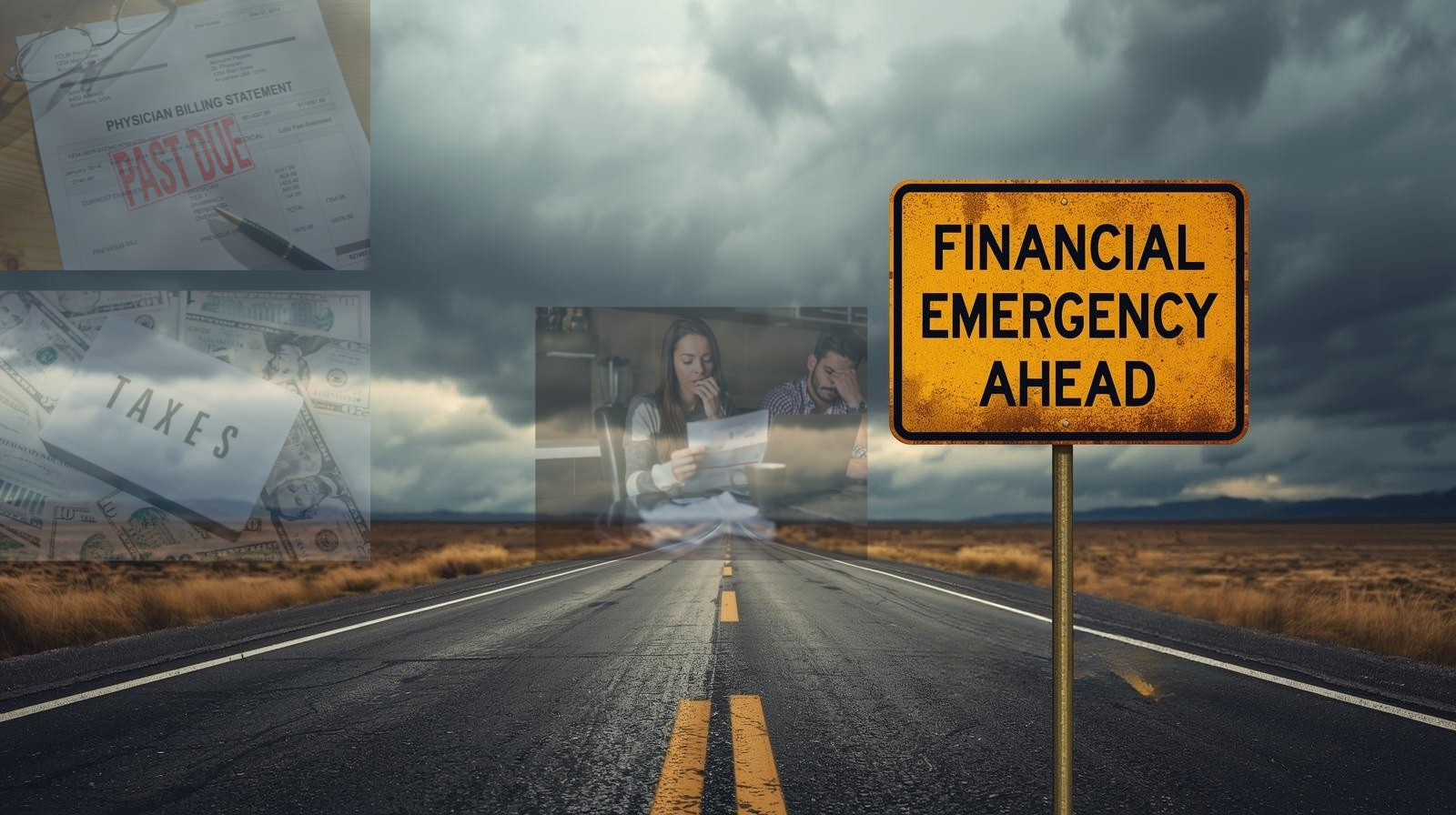
Ask five people how much you should have in an emergency fund, and you may get five different answers.
One person will say $1,000. Another will insist on three months of expenses. Someone else will recommend six months, while the especially cautious person in the group may suggest enough money to survive until the next presidential election.
The honest answer is less dramatic: the right amount depends on your household. If you need to start with the basics, read Emergency Fund: Why You Need One and How to Build It first.
Your income, essential expenses, insurance, dependents, housing, employment, and comfort with risk all affect the number. The familiar three-to-six-month guideline provides a useful starting point, but it should not make the decision for you.
This guide will help you choose a realistic target. When you are ready to see the actual numbers, use the calculator below.
How Much Should You Have in an Emergency Fund to Start?
Your first emergency-fund goal does not need to cover several months of expenses.
It needs to help with the next realistic financial surprise.
A starter fund might be:
- $250
- $500
- $1,000
- One insurance deductible
- One week of essential expenses
- The likely cost of a common car or home repair
Suppose your car is older and a typical repair could cost $800. That may be a more meaningful first target than an arbitrary amount someone recommended online.
The starter fund will not protect you from a long income interruption. It can help prevent a smaller emergency from going directly onto a credit card.
Once you reach that first milestone, you can work toward one month of essential expenses and then build from there.
Why Three to Six Months Is Only a Guideline
The common recommendation is to save three to six months of essential living expenses. The Federal Deposit Insurance Corporation offers similar guidance while encouraging people to build savings through regular deposits and occasional windfalls.
That range is useful because it gives households time to manage a job loss, major repair, health-related expense, or other serious disruption without immediately taking on debt.
But three months and six months are very different goals.
If your essential monthly expenses total $4,000:
- One month equals $4,000
- Three months equals $12,000
- Six months equals $24,000
- Nine months equals $36,000
- Twelve months equals $48,000
Seeing those numbers can be motivating—or mildly terrifying.
That is why deciding how much you should have in an emergency fund should begin with your actual risks and expenses, not a rule printed on someone else’s refrigerator.
Begin With Essential Monthly Expenses
Your emergency-fund calculation should not necessarily use everything you currently spend.
Ask what your household would still need to pay if income stopped or dropped significantly.
Include expenses such as:
- Rent or mortgage
- Basic utilities
- Groceries
- Insurance
- Transportation
- Prescriptions and necessary healthcare
- Minimum debt payments
- Childcare or dependent care
- Essential phone and internet service
Leave out expenses you could temporarily reduce or pause:
- Entertainment
- Restaurant meals
- Optional shopping
- Vacations
- Nonessential subscriptions
- Additional debt payments above the required minimum
- Some hobby and personal-spending costs
Imagine that your household normally spends $5,500 each month, but only $4,000 is essential. Your emergency-fund target should generally begin with the $4,000 figure.
This does not mean enjoyable spending is unimportant. It means an emergency budget has a different job than your regular spending plan.
When a Three-Month Emergency Fund May Be Reasonable
A three-month target may provide a reasonable cushion when several parts of your financial life are stable.
That may include:
- Two reliable household incomes
- Long-term, steady employment
- Strong health, disability, homeowners, renters, and auto insurance
- Low required debt payments
- Few dependents
- Flexible monthly expenses
- Access to paid leave
- A highly marketable occupation
- Reliable family support in a serious emergency
A household with two stable incomes may be less likely to lose all income at the same time. If one person temporarily stops working, the second income may continue covering part of the household’s needs.
Three months is not automatically enough simply because two people work. Consider whether one income could realistically carry the essential expenses and how long it might take either person to replace lost employment.
When Six Months May Be the Better Target
Six months may be more appropriate when a household has greater responsibilities or fewer backup options.
Consider a larger target if you have:
- One primary household income
- Dependents
- A mortgage
- Older vehicles or a home requiring regular repairs
- High insurance deductibles
- Limited paid leave
- Employment in a specialized field
- Income that would be difficult to replace quickly
- Ongoing necessary healthcare expenses
- Significant minimum debt payments
The question is not whether something bad will happen. It is how much financial disruption your household could absorb before essential bills become difficult to pay.
A six-month fund creates more time and flexibility, but it also takes longer to build. You may decide to reach three months first and then continue toward six.
When Nine to Twelve Months May Make Sense
Some households may feel more secure with more than six months of essential expenses.
A nine- or twelve-month target may be worth considering if you are:
- Self-employed
- Paid primarily through commissions
- Working seasonally
- Relying on irregular contract income
- Supporting several dependents
- Managing substantial property responsibilities
- Approaching retirement
- Concerned about a lengthy job search
- Living with limited insurance coverage
- Operating a business that depends heavily on one client or industry
A larger fund is not automatically better if building it prevents you from paying high-interest debt, receiving an employer retirement match, or covering other important priorities.
Emergency savings is one part of your financial life. It should strengthen the overall plan rather than consume every available dollar indefinitely.
How Much Should Retirees Have in an Emergency Fund?
Retirement changes the calculation, but it does not eliminate the need for emergency savings.
A retiree may have stable income from Social Security, a pension, or other dependable sources. That can reduce the risk of suddenly losing an entire paycheck.
However, retirement can bring different risks:
- Home repairs
- Vehicle replacement or repair
- Insurance deductibles
- Necessary travel
- Family emergencies
- Expenses not fully covered by insurance
- Helping a dependent family member
- Delays or changes affecting income deposits
- Market downturns that make investment withdrawals less attractive
When deciding how much you should have in an emergency fund during retirement, separate predictable income from unpredictable expenses.
Someone whose guaranteed monthly income covers all essential expenses may not need the same income-replacement fund as a working household. However, a larger reserve for repairs, deductibles, and household needs may still be appropriate.
The goal is not to follow a working-age formula automatically. It is to identify the financial shocks your retirement income would not comfortably absorb.
How Income Stability Changes the Number
Income stability may be the most important factor in deciding how much you should have in an emergency fund.
Very stable income
Examples might include dependable pension income, Social Security, or long-term employment with little variation.
A target near the lower end of your range may be reasonable if essential expenses are also manageable.
Somewhat variable income
Income may fluctuate because of overtime, commissions, part-time work, or seasonal changes.
Base the emergency-fund calculation on essential expenses, but consider moving toward six months rather than stopping at three.
Highly variable income
Self-employment, contract work, business income, and commission-heavy positions can change considerably from month to month.
A larger fund may need to serve two purposes:
- Cover true emergencies
- Smooth ordinary income fluctuations
Those should ideally be tracked separately. Otherwise, using the fund during a normal slow month may leave too little available for an actual emergency.
Consider Your Insurance Deductibles
Your insurance policies provide another practical way to choose a starter target.
Review the deductibles for:
- Health insurance
- Homeowners or renters insurance
- Auto insurance
- Flood or windstorm coverage
- Other essential property coverage
You do not necessarily need enough cash to cover every deductible simultaneously. However, knowing the numbers helps you understand what a single insured emergency could still cost out of pocket.
If your homeowners deductible is $2,500 and your starter fund is $500, you have identified a gap worth addressing.
An insurance policy can limit the size of a loss. Your emergency savings may still need to cover the part assigned to you.
Homeowners and Renters May Need Different Cushions
Renters generally are not responsible for replacing a roof, repairing a water heater, or fixing the home’s electrical system. Homeowners are.
That does not mean renters need no emergency savings. They may face:
- Moving expenses
- Temporary housing costs
- Rent increases
- Security deposits
- Car repairs
- Income loss
- Personal-property replacement
Homeowners may need additional reserves for repairs and insurance deductibles. Some of those expenses are predictable enough to belong in a home-maintenance sinking fund rather than the emergency fund.
The more you separate predictable ownership costs from genuine emergencies, the more accurate your emergency-fund target becomes.
Dependents Increase the Need for Flexibility
When other people depend on your income, fewer expenses can be paused during a crisis.
Children, an adult family member with support needs, or an older relative may create ongoing costs for:
- Housing
- Food
- Transportation
- Healthcare
- Childcare
- Education
- Other essential care
Dependents do not automatically determine how much you should have in an emergency fund, but they increase the consequences of having too little.
A larger cushion can provide additional time to make thoughtful decisions without disrupting necessary care.
What If You Are Paying Off Debt?
Saving several months of expenses while carrying expensive credit-card debt can feel painfully slow.
At the same time, putting every available dollar toward debt while keeping no emergency savings can cause a familiar cycle:
- You reduce the credit-card balance.
- An unexpected expense arrives.
- The expense goes back onto the card.
- You start paying down the same balance again.
A practical middle path may be:
- Build a starter emergency fund
- Continue required debt payments
- Focus additional money on high-interest debt
- Rebuild the starter fund after using it
- Expand emergency savings as the debt becomes more manageable
The separate article Emergency Fund vs. Debt: Which Should You Prioritize First? will examine that decision in greater detail.
Do Not Count Every Available Dollar
When calculating your emergency savings, be careful about counting money that already has another job.
Your emergency fund generally should not include:
- Next month’s rent or mortgage payment
- Money reserved for taxes
- A vacation fund
- Holiday savings
- Retirement accounts
- Available credit-card limits
- Home equity
- Investments that may lose value
- Money committed to an upcoming expense
Available credit is borrowing capacity, not savings.
Retirement accounts may be accessible in some circumstances, but taxes, penalties, market conditions, and long-term consequences can make them an expensive emergency resource.
Your emergency fund should be money you can use without creating a second financial problem.
Where Should You Keep It?
Emergency savings should generally remain safe, accessible, and separate from everyday spending.
Common choices include:
- A high-yield savings account
- A traditional savings account
- A money market deposit account
- An insured account at a bank or credit union
The money should be close enough to reach during a genuine emergency but not so close that it becomes part of ordinary spending.
For a comparison of the choices, read Savings Account vs. Money Market vs. CD: Which Works Best?.
Use the Emergency Fund Calculator
You now have the information needed to calculate a personalized range.
The Emergency Fund Calculator lets you enter:
- Essential monthly expenses
- Current emergency savings
- Monthly savings contributions
- Your preferred number of months
- Income stability
It will show:
- Your monthly essential-expense total
- Your emergency-fund goal
- How much you have already saved
- How much remains
- Your progress percentage
- An estimated timeline
- One-, three-, and six-month milestones
The result is a planning estimate, not a command. Review it against your household risks and choose a target that provides useful protection without ignoring your other financial priorities.
Review the Number When Life Changes
Your answer to how much you should have in an emergency fund is not permanent.
Recalculate after major changes such as:
- A new job
- Retirement
- Marriage or divorce
- Buying or selling a home
- Adding a dependent
- Paying off significant debt
- A change in insurance coverage
- A major increase or decrease in essential expenses
- Moving from steady employment to self-employment
You should also review the amount after using the fund. A real emergency may reveal that your original target was too low—or that some predictable expense needs its own sinking fund.
The Bottom Line
So, how much should you have in an emergency fund?
Start with an amount that could handle a likely financial surprise. Then work toward one month of essential expenses.
From there:
- Three months may work for a household with stable income and strong backup options.
- Six months may suit a single-income household, homeowners, dependents, or people with greater financial obligations.
- Nine to twelve months may make sense for highly variable income, self-employment, or circumstances where replacing income could take longer.
The right target is not the largest number you can imagine. It is the amount that gives your household meaningful protection while allowing you to continue working on other financial priorities.
Use the Emergency Fund Calculator to see your numbers, choose your first milestone, and begin building from there.