
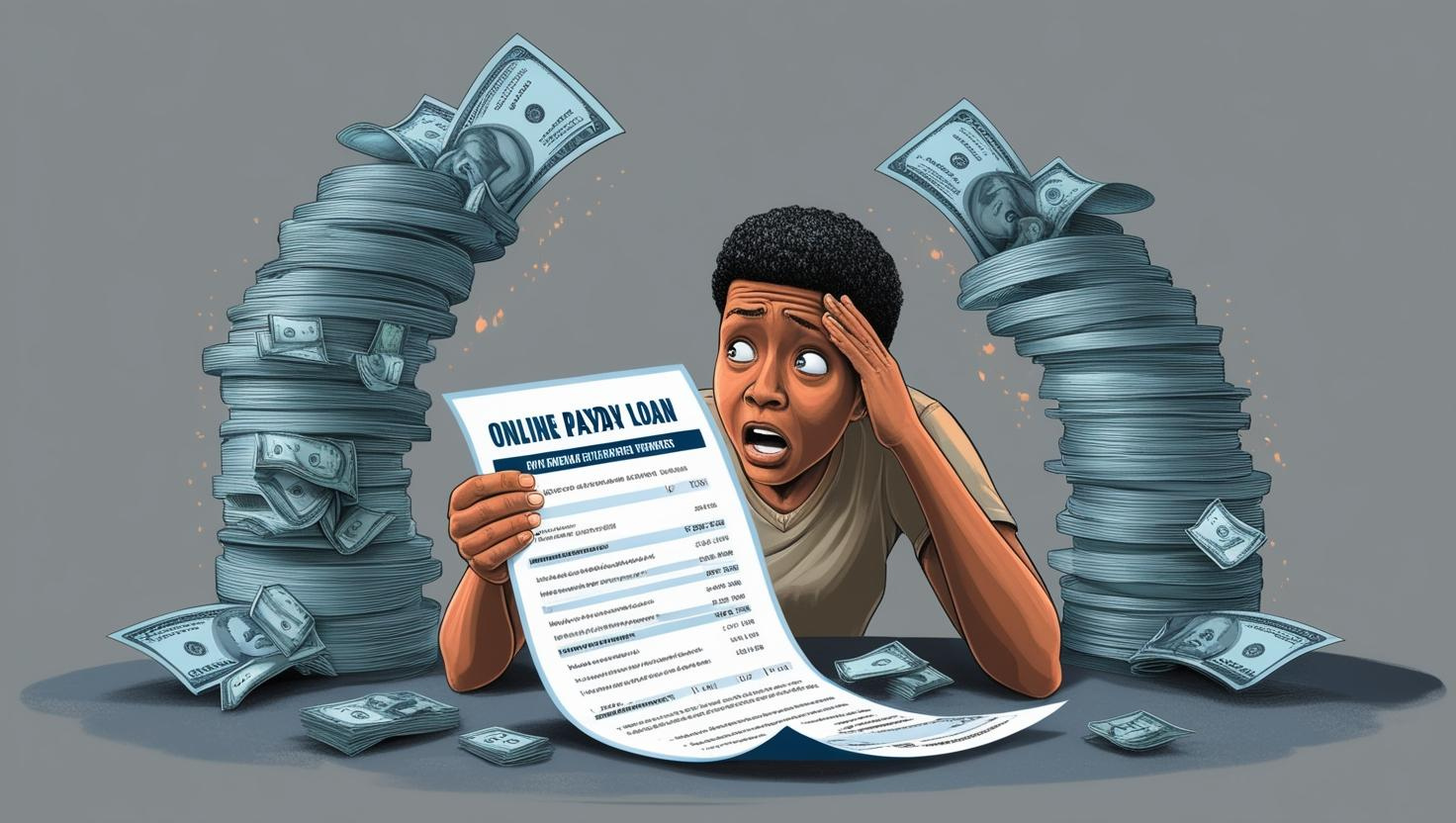
Payday loans can look like a lifeline when a bill is due, and your checking account is running on fumes.
Maybe your car needs a repair so you can get to work. The electric bill is overdue. Your rent is due before your next paycheck arrives. You do not need a lecture about planning better—you need to solve a problem now.
That urgency is exactly what makes a payday loan so tempting. The application may be quick, the requirements may appear simple, and the money may arrive faster than help from other sources.
But the real question is not whether a payday loan can get you through today. It is whether you can repay it without creating a larger problem on your next payday.
Before accepting one, slow the decision down long enough to understand the cost, the repayment terms, and the alternatives that may be available.
What Is a Payday Loan?
A payday loan is generally a small, short-term loan that is expected to be repaid on or shortly after your next payday.
The lender may require access to your bank account, a postdated check, or authorization to withdraw the amount owed electronically. Depending on the lender, loan, and state, you may pay a flat fee, interest, or both.
Payday loans are different from an ordinary installment loan because the entire amount may become due within a very short period. That is where many borrowers run into trouble.
If your paycheck is already needed for rent, food, utilities, transportation, insurance, and existing debt payments, repaying the payday loan could leave you short again.
The loan may solve this week’s shortage while creating another one two weeks from now.
See the Cost in Dollars Before You Borrow
Payday-loan advertisements may emphasize the fee rather than the annual percentage rate. A fee can sound manageable until you compare it with the amount borrowed and the short repayment period.
Consider this simplified example:
| Loan details | Amount |
|---|---|
| Amount borrowed | $500 |
| Finance charge | $75 |
| Amount due on payday | $575 |
| Repayment period | 14 days |
The $75 fee may not seem overwhelming on its own. But you are paying $75 to use $500 for only two weeks.
The exact fees and terms vary by lender, product, and state. Before agreeing to anything, ask for the total amount you must repay, the due date, the annual percentage rate, and every possible fee in writing.
The Consumer Financial Protection Bureau’s payday-loan information can help you understand how these loans work and what questions to ask.
Why Payday Loans Can Become a Cycle
The greatest risk is not always the first loan. It is what happens when the repayment comes due.
Suppose you borrowed $500 because your paycheck could not cover an unexpected expense. When the next payday arrives, the lender collects $575.
If you did not have an extra $500 before taking the loan, losing $575 from the next paycheck may leave you unable to cover another bill. You may then feel pressure to:
- Renew or extend the loan where permitted
- Take out another payday loan
- Overdraw your bank account
- Miss another bill
- Use a credit card for ordinary expenses
- Borrow from a different lender
Now the original cash shortage has become a recurring debt problem.
State laws and lender policies differ. Some states restrict payday lending, fees, renewals, or rollovers. Others permit different forms of high-cost short-term credit. Do not assume a loan is affordable simply because it is legally available.
Start With the Bill Creating the Emergency
Before looking for another loan, identify the exact problem you are trying to solve.
Write down:
- The bill or expense
- The total amount due
- The deadline
- What happens if it is paid late
- Whether a partial payment will help
- Whether the company offers an extension or hardship arrangement
A $600 shortage does not always require finding $600 immediately.
A utility provider might accept a payment arrangement. A medical provider may offer an interest-free payment plan. A creditor may move a due date. A landlord may accept part now and the remainder on an agreed date.
None of those outcomes is guaranteed. However, one phone call could produce a cheaper solution than borrowing the full amount through a payday lender.
If you cannot pay everything currently due, use Unpaid Bills? Here’s How to Decide What to Pay First to protect the expenses with the most serious immediate consequences.
Protect Essential Expenses First
When money cannot cover every obligation, the loudest creditor shouldn’t automatically get the first dollar.
Start with the expenses that keep you safe, housed, healthy, and able to earn income. Depending on your circumstances, those may include:
- Rent or mortgage
- Essential utilities
- Food
- Necessary medications and healthcare
- Transportation required for work
- Required insurance
- Childcare needed for employment
- Court-ordered obligations
- Essential taxes
That doesn’t mean you can ignore other bills indefinitely. It means you should understand the consequences before using grocery or rent money to satisfy an unsecured creditor.
If required debt payments consistently interfere with basic needs, the problem may be bigger than a one-payday shortage. Read Debt Crisis? 7 Powerful Steps to Regain Control for a more complete stabilization plan.
Contact the Company Before the Due Date
Calling a company to say you cannot pay is uncomfortable. Waiting until after you miss a payment usually doesn’t make the conversation easier.
Contact the creditor, landlord, utility company, medical provider, insurer, or service provider as soon as you know there is a problem.
Ask whether it offers:
- A different due date
- A short payment extension
- A partial-payment arrangement
- A temporary hardship program
- Waived or reduced late fees
- A longer repayment schedule
- Local assistance programs
- An income-based payment option
Do not agree to a payment amount you cannot afford merely to end the conversation.
Before accepting an arrangement, ask for the terms in writing. Confirm the amount, due dates, fees, interest, duration, and consequences of a missed payment.
Look for Assistance That Does Not Create Another Debt
Some immediate problems may be addressed through community or government resources.
Possible starting points include:
- 211: Connects callers with local food, housing, utility, transportation, and emergency-assistance programs
- Utility assistance: Some providers offer hardship plans or can direct customers to local energy-assistance programs
- Food assistance: Food banks and nutrition programs may free up cash for housing, transportation, or utilities
- Employer assistance: Some employers offer payroll advances, employee-assistance programs, emergency grants, or earned-wage access
- Veterans’ organizations: Veterans and military families may qualify for assistance through government or nonprofit programs
- Local charities and faith-based organizations: Some provide limited emergency help with rent, utilities, transportation, or food
Assistance programs have eligibility requirements, and funding may be limited. Still, it is worth checking before committing future income to a high-cost loan.
Be Careful When Comparing Other Borrowing Options
Another type of loan is not automatically a safe solution.
A personal loan, credit-card cash advance, overdraft, pawn loan, title loan, retirement-plan loan, or cash-advance app may carry different costs and risks. Some could be less expensive than a payday loan, while others may create an equally serious problem.
Before using any borrowing option, compare:
- The amount you will actually receive
- The total amount you must repay
- The annual percentage rate
- All fees
- The repayment period
- The required payment
- Whether collateral is at risk
- Whether the lender can withdraw money from your account
- The consequences of missing a payment
- Whether you can repay it without falling short again
Do not compare only the monthly payment. A smaller payment stretched across a much longer period could cost more overall.
Think Carefully Before Borrowing From Retirement
A retirement-plan loan may appear attractive because you are borrowing from your own account.
However, it is not free money.
Borrowing from a workplace retirement plan can reduce the amount left invested. Repayment usually comes from your future paychecks, which may make an already tight cash flow even tighter. If you leave or lose your job, the plan’s repayment rules may create additional complications.
The tax consequences and repayment requirements depend on the type of plan and your circumstances. Review the plan documents and consider speaking with the plan administrator or a qualified tax professional before making the decision.
A retirement loan should not be presented as an automatic alternative to a payday loan.
Watch for Payday-Loan and Advance-Fee Scams
An urgent need for money can also make someone more vulnerable to fraud.
Be cautious if a lender:
- Guarantees approval before reviewing your information
- Demands an upfront payment before releasing the loan
- Requests payment through gift cards, cryptocurrency, or a wire transfer
- Pressures you to act immediately
- Refuses to disclose the full cost in writing
- Contacts you unexpectedly with a loan offer
- Asks for online-banking credentials
- Threatens arrest for failing to repay an ordinary consumer debt
- Claims to represent a government loan program you never applied for
Never pay a fee to “unlock” loan proceeds. Verify the lender’s identity, licensing where applicable, physical address, contact information, and written terms before providing financial information.
If You Already Have a Payday Loan
If the loan is already in place, start by gathering the facts.
Write down:
- The amount borrowed
- The amount currently owed
- The repayment date
- The lender’s fees
- Any authorization to withdraw money
- Whether renewal or rollover is permitted
- What happens if the payment fails
- The lender’s contact information
Then contact the lender and ask what repayment options are available. Do not agree to another arrangement until you understand the total cost.
You may also consider contacting a reputable nonprofit credit-counseling organization. A counselor may help you review your income, essential expenses, debts, and realistic options. Ask about every fee before enrolling in a service or debt-management plan.
If several debts have become unmanageable, How to Get Out of Debt and Stay Out for Good provides a structured way to assess what you owe and build a longer-term repayment plan.
Build a Small Buffer Before Chasing a Huge Goal
When you have almost nothing saved, being told to accumulate six months of expenses can feel about as useful as being told to build a bridge before crossing a puddle.
Start with a smaller target.
Your first goal might be:
- $100
- One insurance deductible
- One utility bill
- $250
- $500
- One week of essential expenses
That amount will not protect you from every emergency. It can, however, prevent a smaller problem from immediately requiring another loan.
If you are balancing savings with existing balances, Emergency Fund or Debt: Which Should You Prioritize First? explains how to build a starter cushion while continuing to address debt.
Create a Plan for the Next Shortfall
Once you stabilize the immediate problem, look at why the shortage occurred.
Was it:
- A one-time emergency?
- An annual expense you didn’t plan for?
- A bill-timing problem?
- A temporary reduction in income?
- A recurring gap between income and expenses?
- Debt payments consuming too much of the paycheck?
- An expense that has permanently increased?
The answer determines the solution.
An annual car-registration bill may call for a monthly sinking fund. A bill-timing problem may improve if you move due dates. A recurring income shortfall may require a major expense reduction, additional income, creditor assistance, or professional counseling.
The goal is not to criticize the decision that brought you here. It is to reduce the chance that the same shortage returns next payday.
A Payday Loan Is Not the Only Next Step
A payday loan may provide money quickly. What matters is what happens when repayment comes due.
Before borrowing, calculate the total cost, protect essential expenses, contact the company creating the immediate deadline, and check available community resources. If you compare other forms of credit, compare their complete cost and risks—not merely how quickly the money arrives.
You do not have to solve your entire financial life today.
Your next step may be making one phone call, arranging one extension, applying for one assistance program, or listing the bills that need attention first.
That may not feel dramatic. But it can solve the immediate problem without handing an even larger one to your next paycheck.
For educational purposes only. This article provides general information about payday loans, debt, and personal finance. It is not individualized financial, legal, tax, or credit advice. Payday-lending laws and available assistance programs vary by location and may change.