
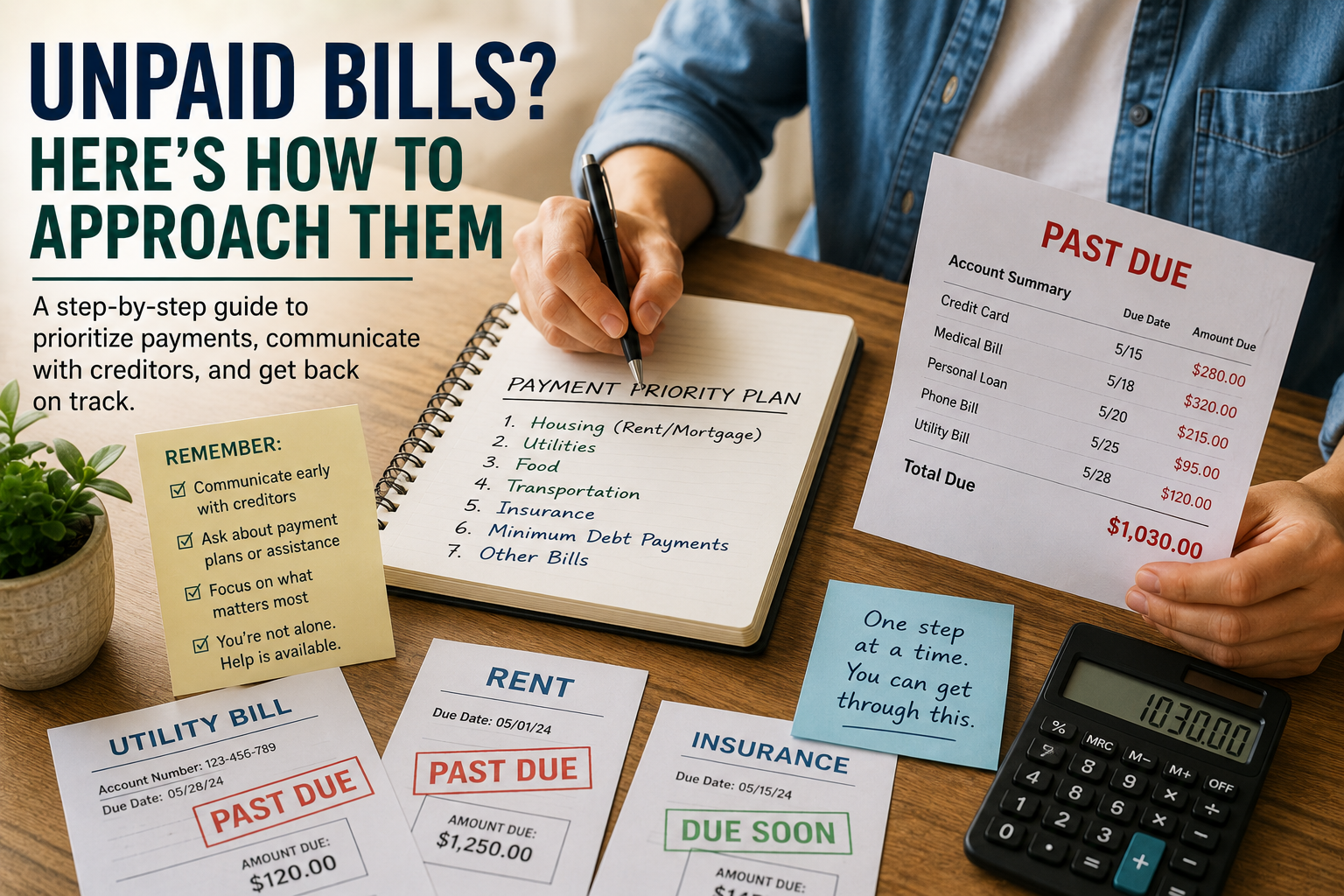
Finding yourself with unpaid bills can be one of the most stressful financial situations you’ll ever face.
When there isn’t enough money to pay everything, it’s easy to panic. Many people start paying the first bill that arrives or the creditor calling the loudest.
That’s understandable—but it’s usually not the best strategy.
The goal isn’t to make everyone happy. The goal is to protect your health, housing, income, and ability to recover financially.
If you’re dealing with unpaid bills, here’s a practical way to decide what to pay first.
Step 1: Don’t Panic—Get the Facts
Before making any payments, take a complete look at your financial situation.
Write down:
- How much money you have available today.
- Your next expected source of income.
- Every bill that is due.
- The due dates.
- The minimum payments.
- Any late fees or penalties.
Having everything in one place makes the situation feel more manageable and helps you make decisions based on facts instead of fear.
Step 2: Protect Your Basic Needs First
Your first responsibility is protecting the essentials.
These usually include:
Housing
Whether you rent or own your home, keeping a roof over your head should be one of your highest priorities.
Utilities
Electricity, water, and essential heating or cooling keep your home safe and livable.
If you’re already behind, contact the utility company immediately. Many offer payment arrangements before disconnecting service.
Food
Everyone needs to eat.
If money is tight, focus on affordable, nutritious groceries rather than restaurant meals or convenience foods.
Transportation
If you need a vehicle to get to work or take family members to medical appointments, prioritize essential transportation expenses such as fuel, insurance, and required loan payments.
Protecting your ability to earn income is part of protecting your financial future.
Step 3: Contact Your Creditors Before They Contact You
One of the biggest mistakes people make is avoiding phone calls or ignoring bills.
Most creditors would rather work with you than receive nothing at all.
Call before your payment is seriously overdue whenever possible.
Ask whether they offer:
- Payment plans
- Temporary hardship programs
- Deferred payments
- Reduced minimum payments
- Waived late fees
Not every creditor will say yes, but many will if you communicate early.
Step 4: Understand Which Debts Carry the Greatest Risk
Not every unpaid bill has the same consequences.
Some missed payments are inconvenient.
Others can create much larger problems.
For example:
- Missing a mortgage payment could eventually put your home at risk.
- Falling behind on a vehicle loan could lead to repossession.
- Allowing insurance to lapse could expose you to significant financial loss.
- Ignoring tax obligations can create additional penalties and interest.
Understanding the consequences helps you decide where your limited money will do the most good.
Step 5: Know the Difference Between Urgent and Important
When money is short, the loudest bill isn’t always the most important one.
Collection calls may create pressure, but pressure alone shouldn’t determine your priorities.
Instead, ask:
- Does this payment protect my home?
- My income?
- Does it protect my health or safety?
- Will delaying this payment create a much bigger problem?
Those questions usually lead to better financial decisions.
Step 6: Look for Temporary Financial Assistance
If you’re experiencing a temporary hardship, don’t assume you’re alone.
Depending on your situation, you may qualify for assistance through:
- Community organizations
- Nonprofit credit counseling agencies
- Utility assistance programs
- Food assistance programs
- Local charities
- Government assistance programs
These resources exist to help people through difficult periods—not because they’ve failed, but because life sometimes becomes expensive all at once.
Step 7: Create a Recovery Plan
Missing payments doesn’t mean you’ll always be behind.
Once the immediate crisis has passed, focus on rebuilding.
That may include:
- Catching up on overdue accounts.
- Building a small emergency fund.
- Reviewing monthly spending.
- Reducing unnecessary expenses.
- Paying down high-interest debt.
- Creating a simple financial plan for future emergencies.
Every financial recovery starts with one good decision followed by another.
Common Mistakes to Avoid
When dealing with unpaid bills, try to avoid these common mistakes:
- Ignoring creditors.
- Using high-interest debt to cover everyday expenses.
- Emptying retirement accounts for short-term problems without understanding the long-term consequences.
- Paying bills based only on collection pressure.
- Assuming there’s no help available.
A calm, organized approach usually produces better outcomes than making financial decisions under pressure.
Final Thoughts
Once you’ve protected essential expenses and addressed the most urgent bills, you can work toward a longer-term repayment strategy. Our guide to getting out of debt and staying out for good walks through how to build that plan.
Having unpaid bills can feel overwhelming, but it doesn’t mean you’ve failed.
Job loss, medical emergencies, unexpected repairs, and other financial shocks affect people at every income level.
What matters most is how you respond.
Focus on protecting your basic needs first, communicate with your creditors, understand the consequences of delayed payments, and build a plan for recovery one step at a time.
Financial setbacks are temporary for many people. Thoughtful decisions today can make the path forward much easier tomorrow.