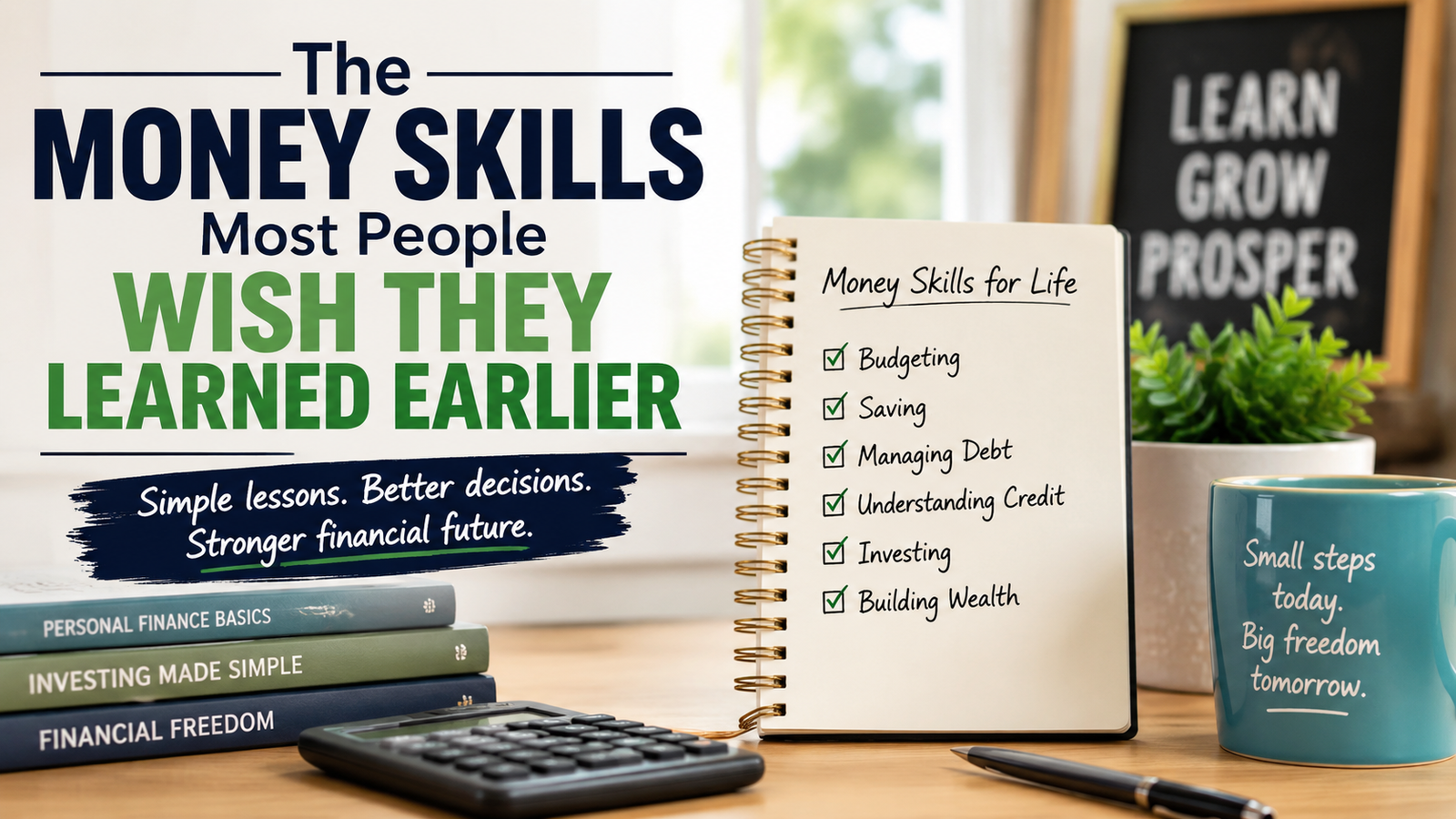
Ever looked at a financial decision and thought, “I wish someone had shown me how to do this years ago”? You can start building those money skills with the bills, statements, and choices in front of you now.
These money skills start with small practice tasks: understanding spending, preparing for costs, reviewing credit, comparing borrowing, and asking useful investment questions.
Money Skills You Can Practice Now
Learning a definition is a start. A money skill is something you can do with it: read a statement, plan for a bill, or compare two offers.
Choose the task below that matches your situation. You can practice one skill without tackling your entire financial life this weekend.
Read Your Spending Without Guessing
One of the most useful money skills is reading your spending clearly. Use your recent transactions to see where money went. Separate regular bills, everyday essentials, and optional purchases. Include cash purchases that do not appear on your statement.
Try it: Review one week of spending. Choose a transaction you forgot about and ask whether it was expected, useful, and affordable. Do not assume every small purchase is a problem.
Then compare the full month’s expenses with income. Small cuts may help, but they may not close a larger shortfall. Use How to Make a Budget to put the numbers together.
Prepare for Bills and Unexpected Costs
An annual renewal needs planning even though it does not arrive every month. An urgent repair may arrive without a date you can predict. Keeping both in view helps you avoid treating every expense as a surprise.
Try it: List one known future bill, its expected amount, and when it is due. If a $300 renewal is due in five months and you already have $50 set aside, the remaining $250 would require $50 a month. Check whether that fits your budget.
For unexpected costs, start with How Much Should You Have in an Emergency Fund? A useful target depends on your household needs and risks.
Read a Credit Report Before You Need Credit
A credit report records information about your borrowing and repayment history. Reviewing it helps you spot unfamiliar accounts or information that appears wrong.
Try it: Obtain a report through AnnualCreditReport.com. Check your identifying information and one account you recognize. Compare its reported details with your own records.
If you find something questionable, note the item and gather supporting records. The CFPB Your Money, Your Goals toolkit includes tools for reviewing reports and disputing errors.
Compare the Full Cost of Borrowing
Comparing borrowing offers is another of the money skills you can practice before signing anything. A smaller monthly payment may come with a longer repayment period. You need both figures to judge what an offer means for your household.
Try it: Compare these hypothetical offers for the same purchase: $100 a month for 12 months totals $1,200; $75 a month for 18 months totals $1,350. The second payment is lower, but the scheduled payments total $150 more. Check fees and other terms before comparing real offers.
Write down the APR, fees, repayment period, and total repayment alongside the monthly payment. For a purchase decision, read Buying Mistakes: 5 Ways a Good Deal Gets Expensive.
Ask Useful Questions About an Investment
You do not need to predict the next market winner to begin learning. Start by understanding what an investment is, what it costs, and how its risks fit the purpose of your money.
Try it: Choose an investment you already own or are researching. Find answers to these questions: What does it hold? How could it lose value? What fees apply? When do I expect to need this money? Write down what remains unclear before making a decision.
Use the Investing and Wealth guide for your next learning step. If you need help evaluating professional advice, read How to Find Financial Advice You Can Actually Trust.
Turn a Skill Into a Repeatable Action
Money skills become more useful with regular practice. Give the task a place in your week. You might check upcoming bills on payday or review transactions each Sunday. Keep the first version short enough to use during a busy week.
Try it: Complete this sentence: “When ______ happens, I will ______.” For example: “When my pay arrives, I will check payments due before the next payday.”
Money Habits: Small Changes That Can Transform Your Life offers more ways to make useful actions part of your routine.
Build Your Money Skills One Task at a Time
Looking back can show you what to learn next. Choose one task above, gather the information it needs, and set aside a little time to do it. Then write down what you learned and your next action.
Return to Financial Education Doesn’t Have to Be Complicated for another topic, or use Financial Education for Adults to find free learning resources.