
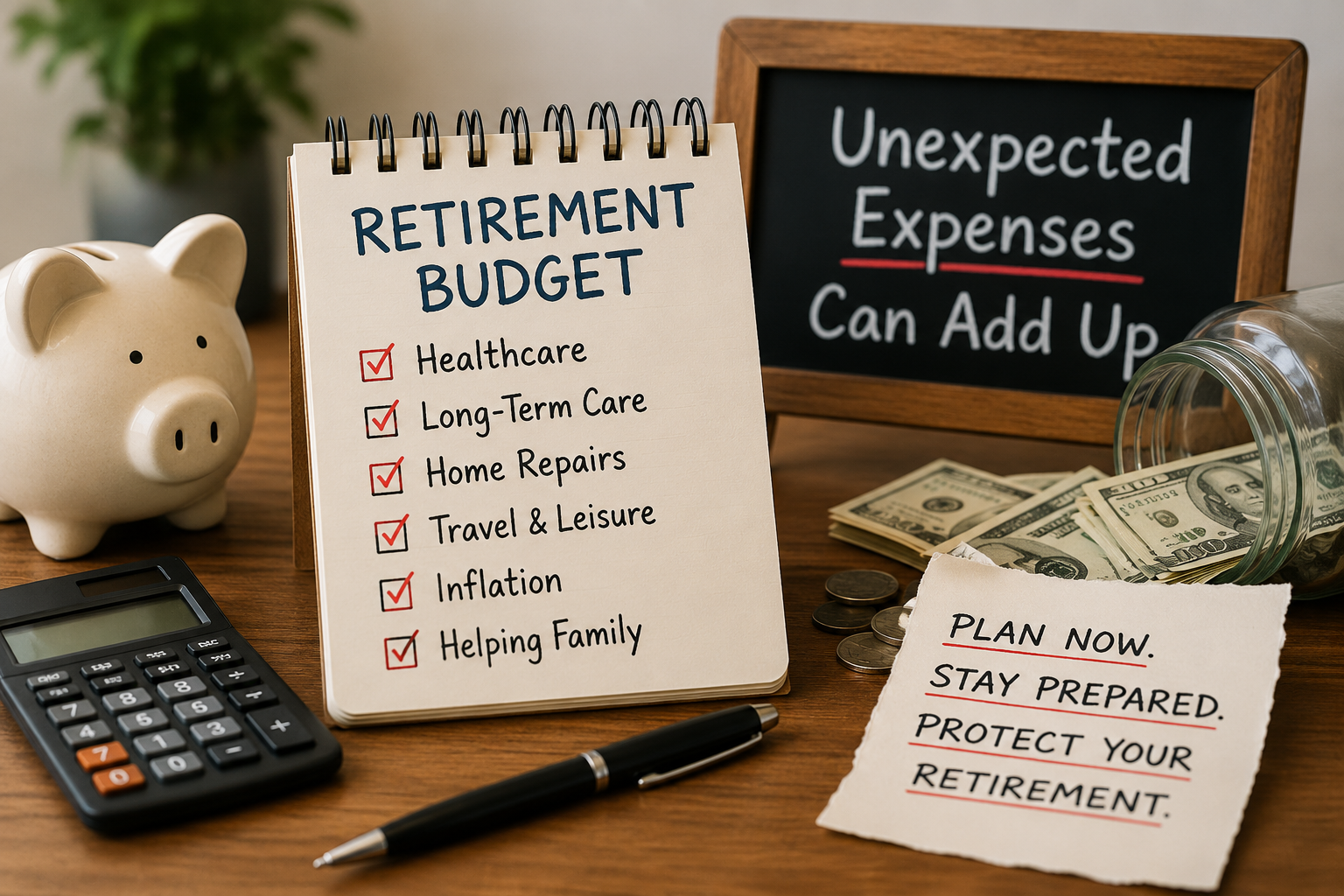
Unexpected retirement expenses have a way of arriving after you have already worked out what your monthly income can cover. The usual bills may fit. Then the car needs replacing, a dental bill arrives, or someone in the family needs help.
Some costs are genuine surprises. Others are predictable but easy to leave out because they do not arrive every month. You may not know when the water heater will fail, but you know it will not last forever. A useful retirement plan makes room for both kinds of expense.
These eight areas deserve a closer look. The goal is not to worry about everything that could happen. It is to identify the costs most likely to affect your household and take one manageable step to prepare.

1. Healthcare Bills Beyond the Monthly Premium
An insurance premium is only part of your healthcare budget. Depending on your coverage, you may also face deductibles, copayments, coinsurance, prescription costs, and services the plan does not cover.
Original Medicare generally does not cover routine dental care, hearing aids, or routine eye exams for glasses. Some Medicare Advantage plans offer additional benefits, subject to their terms. Review your actual coverage rather than assuming every Medicare option works alike. Medicare’s guide to services not covered by Original Medicare explains the distinctions.
Use recent bills and plan documents to estimate your own costs. If a bill looks wrong or unaffordable, How to Challenge and Negotiate a Medical Bill offers a practical starting point. Unexpected retirement expenses are easier to assess when you know what you may owe before agreeing to a service.
2. Long-Term Care and Regular Help at Home
Help with bathing, dressing, meals, or other daily tasks can become a major household expense. It is different from a short period of skilled care after an illness or injury. Medicare generally does not pay for most long-term custodial care, including that care at home or in a nursing facility.
Payment options depend on circumstances and may include personal resources, an existing long-term care policy, or Medicaid for people who meet their state’s requirements. Do not assume either that insurance will cover everything or that buying a new policy is available or appropriate for everyone.
Begin by finding out what help would cost locally and what existing coverage provides. Discuss who could help organize care without assuming a relative can provide unlimited unpaid assistance.
3. Home Repairs and Costs That Continue After the Mortgage
A paid-off house still needs money. Property taxes, insurance, community fees, maintenance, and utilities continue. A roof, air conditioner, appliance, or plumbing problem can add a much larger bill.
Separate routine maintenance from major replacements. List the larger items, their condition, and any estimates you already have. An inspection or quote can provide a more useful planning figure than a general percentage of the home’s value.
If maintaining the property is becoming harder as well as more expensive, read Home in Retirement: Is Your Home Still Right for You?. Unexpected retirement expenses can include paying someone for tasks you previously did yourself.
4. Replacing a Car or Changing How You Get Around
Keeping the same car for years may make transportation look inexpensive—until it needs major repairs or replacement. Look beyond a possible car payment to insurance, registration, maintenance, and the cost of getting where you need to go.
Driving less can change the numbers too. You may need paid rides, delivery fees, or help reaching appointments. Compare those costs with what you would actually save by keeping fewer vehicles or giving up a car.
Transportation in Retirement helps you explore the daily-life side. For a purchase, Buying a New Car? Don’t Overlook These Hidden Costs covers expenses beyond the advertised price.
5. Rising Prices and Annual Renewals
Inflation is not one bill. It is the gradual change in what your money buys. Insurance renewals, groceries, utilities, and service charges can change at different speeds. Even if some retirement income increases, it may not match the particular costs your household faces.
Review actual renewal notices and recent spending. Separate a price increase from a change in what you bought or used. This helps you identify whether to compare providers, adjust usage, or change the spending plan.
Some unexpected retirement expenses are simply several small increases arriving together. Checking them periodically is more manageable than discovering the combined effect after savings have been shrinking for months.
6. Travel, Hobbies, and Family Emergencies
The trips you hope to take deserve a place in the plan. So do supplies, memberships, equipment, and ongoing fees for the activities you enjoy. Retirement does not need to become a contest to spend as little as possible.
But planned vacations are different from an urgent trip to help a relative or attend a funeral. Short-notice travel can bring transportation, lodging, meals, and pet-care costs all at once.
Keep an affordable allowance for enjoyment and consider a separate reserve for urgent travel. Estimate the costs that fit your family’s location and circumstances rather than using someone else’s travel budget.
7. Financial Help for Family Members
Helping a child, grandchild, or another relative can be meaningful. It can also become an ongoing obligation when the original request sounded temporary.
Before agreeing, decide how much you can provide without missing your own bills or using money reserved for essential future needs. Clarify whether the help is a gift or a loan, how long it will continue, and what you can do if another request follows.
You can care about someone without being able to finance every solution. A clear limit protects both the household budget and the relationship.
8. Household Changes After Illness or the Loss of a Partner
A household can lose income while many bills stay much the same. Illness or bereavement may also mean paying for cleaning, transportation, paperwork assistance, or maintenance that one partner previously handled.
Do not assume every pension or benefit payment continues unchanged. Confirm the details with the relevant organization. When a Spouse Dies explains how to begin organizing the household questions, while Support Network in Retirement helps identify practical backup support.
These unexpected retirement expenses are about more than a larger bill. They can arrive when you have the least energy to sort through decisions. Knowing where records are kept and who can help makes the work more manageable.
Turn Unexpected Retirement Expenses Into a Monthly Plan
Make three short lists: costs you already know are coming, larger replacements you can reasonably anticipate, and genuine emergencies. Keep the same expense on only one list so you do not count it twice.
For a known cost, work backward from the deadline. If an annual bill will be $1,200 and you have 12 months to prepare, setting aside $100 a month would cover it. With only six months, the amount would be $200. Those are planning examples, not suggested savings targets.
For uncertain repairs, start with an estimate and a manageable contribution. Keep money needed soon safe and accessible. If the amount required does not fit your income, adjust the timing or scope where possible and investigate alternatives before making commitments.
Use Money & Income in Retirement to check the complete monthly picture. The Money Tools page can help you organize your spending, and the Emergency Fund guide covers building a reserve.
Start With the Next Likely Expense
You do not need to fund every possible problem today. Pick one expense you have been overlooking, find a reasonable estimate, and decide what you can do about it this month.
Unexpected retirement expenses become less overwhelming when you have a way to notice them and respond. Return to Real Life Money when a change affects another part of your household. A plan can be useful without pretending life will follow it perfectly.