
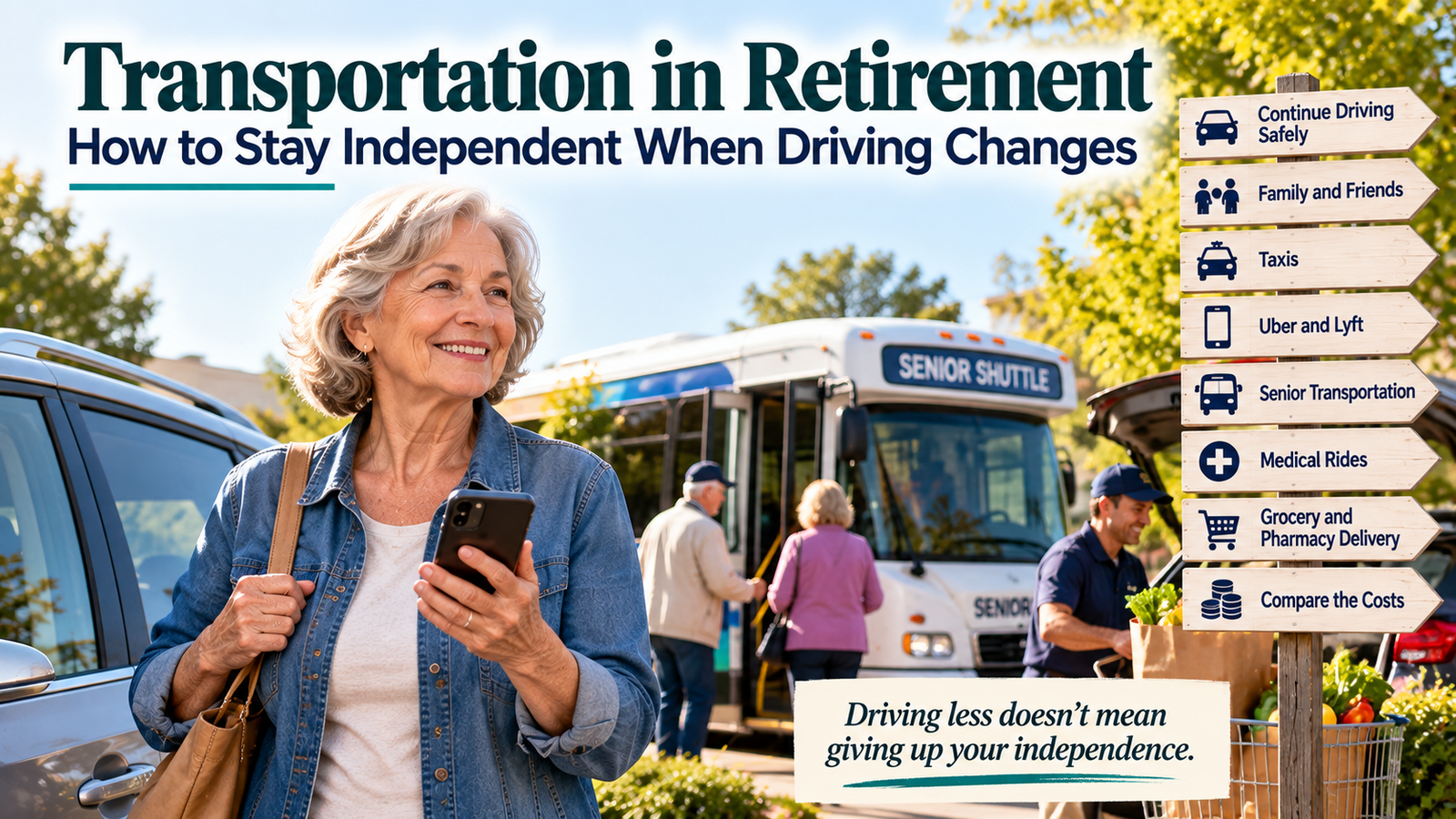
Transportation in retirement is about much more than whether you still drive. It is about being able to get groceries, keep appointments, see friends and family, attend activities, go to church, pick up prescriptions, eat out, volunteer and continue doing the ordinary things that make up everyday life.
Driving may remain part of that picture for many years. But if driving becomes uncomfortable, the person who normally drove is no longer available, or you simply want to drive less, having alternatives can protect your independence.
Transportation in Retirement: Good Planning Before a Crisis
It is much easier to plan transportation in retirement while you still have options than on the morning you suddenly need a ride.
Start by thinking about the places you go during a normal month. Include more than medical appointments. Write down groceries, pharmacy trips, banking, haircuts, restaurants, religious services, hobbies, volunteering, visits with friends and family, and anything else that gets you out of the house.
Then ask a simple question: If I could not drive myself tomorrow, how would I get to each of these places?
Driving Less Does Not Mean You Have to Stop Driving
Transportation in retirement does not have to be an all-or-nothing decision. Some people continue driving but change when, where or how they drive.
You might choose daytime trips instead of driving after dark, stay on familiar roads, avoid heavy traffic, make shorter trips, or ask someone else to drive when the route is unfamiliar.
The goal is not to prove that you can still drive exactly as you always have. The goal is to have reliable transportation while making choices that feel comfortable and sensible for you.
When Driving Starts to Feel Different
Sometimes the first change is confidence. You may feel less comfortable in heavy traffic, at night, during bad weather or on unfamiliar roads.
Do not ignore that feeling, but do not assume it automatically means giving up the keys either. Think about the situations creating the concern. Changing a few driving habits may solve much of the problem while you begin learning about other transportation choices.
If changing health, mobility or everyday routines are affecting more than transportation, our Health and Independence in Retirement guide looks at ways to preserve control and connection as life changes.
What If the Person Who Usually Drove Is No Longer Available?
In many couples, one person does most of the driving. If that person becomes ill, can no longer drive, or dies, the surviving partner can suddenly face a transportation problem they never expected.
Start with the trips that cannot wait. Then build alternatives for ordinary weekly life. You do not need to solve every possible transportation problem in one day.
If this change follows the death of a spouse or partner, our When a Spouse Dies guide can help with other household and financial changes that may need attention.
Family and Friends Can Help—But Build More Than One Option
A relative, neighbor or friend may be happy to help with an occasional ride. But relying on one person for every grocery trip, appointment and social activity can become difficult for both people.
Think of family and friends as one part of your transportation plan rather than the entire plan. Having several choices gives you more flexibility and can make it easier to ask for help when you really need it.
Taxis Still Have a Place
A traditional taxi can be a good transportation in retirement option, especially if you prefer making a phone call rather than using a smartphone app. Availability and price vary by community.
Ask how fares are calculated, whether rides can be scheduled ahead of time, whether the company accepts cash or cards, and whether someone can help with a walker or packages if needed.
Uber and Lyft Can Be Useful—If Someone Shows You How
Ride-share services such as Uber and Lyft can provide another option in many communities. But telling someone who is uncomfortable with smartphones to “just use Uber” is not very helpful.
If you want to try a ride-share service, have someone sit with you and explain the process rather than simply taking your phone and setting everything up for you. Learn how to open the app, enter a destination, review the ride and price, identify the correct car and driver, follow the trip, pay and request another ride later.
Write the steps down if that helps. You should understand what was installed on your phone and how to use it after the person helping you leaves.
Both Uber and Lyft provide rider information about how their services work.
Look for Senior and Community Transportation
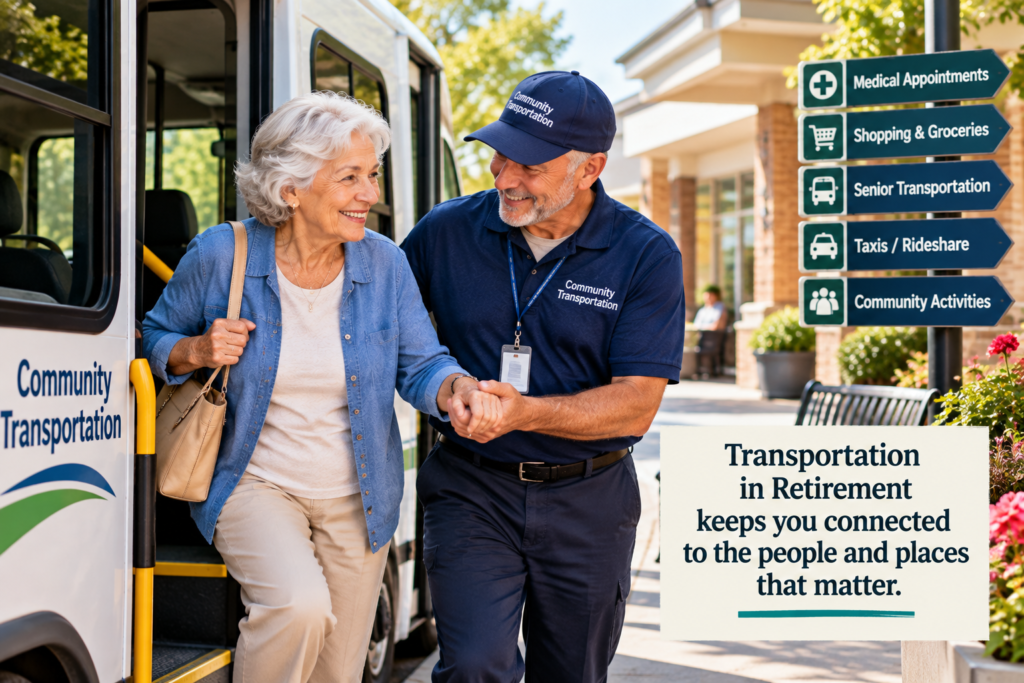
Many communities have transportation specifically for older adults or people who need additional assistance. These programs can become an important part of transportation in retirement. Depending on where you live, service might be provided by a county, city, transit agency, senior center, nonprofit organization or local aging program.
These services may require advance reservations and may use shared rides rather than taking you directly from one location to another on your preferred schedule. But the cost can be much lower than private transportation.
The federal Eldercare Locator can help connect older adults and families with local aging services. You can also call 1-800-677-1116 rather than searching online.
Medical Transportation May Be Available
Some health plans, Medicaid programs, Medicare Advantage plans, hospitals and community organizations offer transportation for certain medical appointments. Eligibility and coverage vary.
Do not assume transportation is included. Call the number on your insurance card and ask whether your plan includes a transportation benefit, what types of appointments qualify, how far ahead a ride must be scheduled and whether there is a limit on the number of rides.
Delivery Can Replace Some Trips Entirely
Transportation in retirement does not always mean finding another vehicle. Sometimes the easier solution is eliminating the trip.
Groceries, prescriptions, household supplies and restaurant meals can often be delivered. Some local stores offer their own delivery or curbside pickup, while services such as Instacart can shop at multiple stores.
Delivery usually costs something, so compare the fees with the cost and difficulty of making the trip yourself. For grocery spending ideas, see our How to Save Money on Groceries guide.
Compare the Real Cost of Keeping a Car
A ride that costs $15 or $25 can feel expensive when you are used to getting into your own car. But compare transportation costs fairly.
Owning a vehicle can include a car payment, insurance, registration, fuel, tires, oil changes, maintenance, repairs, parking and depreciation. If you drive very little, calculate what the car costs over an entire year and compare that with the likely cost of rides and deliveries.
This does not mean selling the car is automatically cheaper. It means the right comparison is total transportation cost versus total transportation cost.
If transportation expenses are putting pressure on the household budget, our Money & Income in Retirement guide can help you look at those costs alongside the rest of your retirement income and expenses.
Your Home’s Location Matters More If You Drive Less
A home that worked perfectly when you drove everywhere may feel very different when transportation changes. Distance from groceries, pharmacies, medical care, friends and activities can suddenly matter much more.
That does not mean transportation trouble should force you to move. But it should be part of the larger housing conversation. Our Home in Retirement guide can help you consider whether the home and neighborhood still support the way you want to live.
Make a Transportation Backup Plan
A good transportation in retirement plan does not need ten alternatives. Start with three:
- Your normal choice: How you usually get around now.
- Your backup: What you would use if your normal choice were unavailable.
- Your urgent option: Who you would call if you suddenly needed a ride and could not arrange one yourself.
Write down the phone numbers for services you might use. Do not depend entirely on a smartphone contact list. If a senior transportation service requires registration, complete that process before you urgently need a ride.
Transportation in Retirement Is Really About Staying Connected to Life
Driving is one way to remain independent, but it is not the only way.
Good transportation in retirement means being able to reach the people, places and services that matter to you. That might involve your own car, a friend’s car, a taxi, Uber or Lyft, a senior shuttle, medical transportation, delivery services—or a combination of several.
← Explore Retirement & Real Life
The best time to build those alternatives is before you are forced to use them. Driving less does not mean giving up your independence. Losing reliable access to everyday life is the problem we are trying to prevent.