
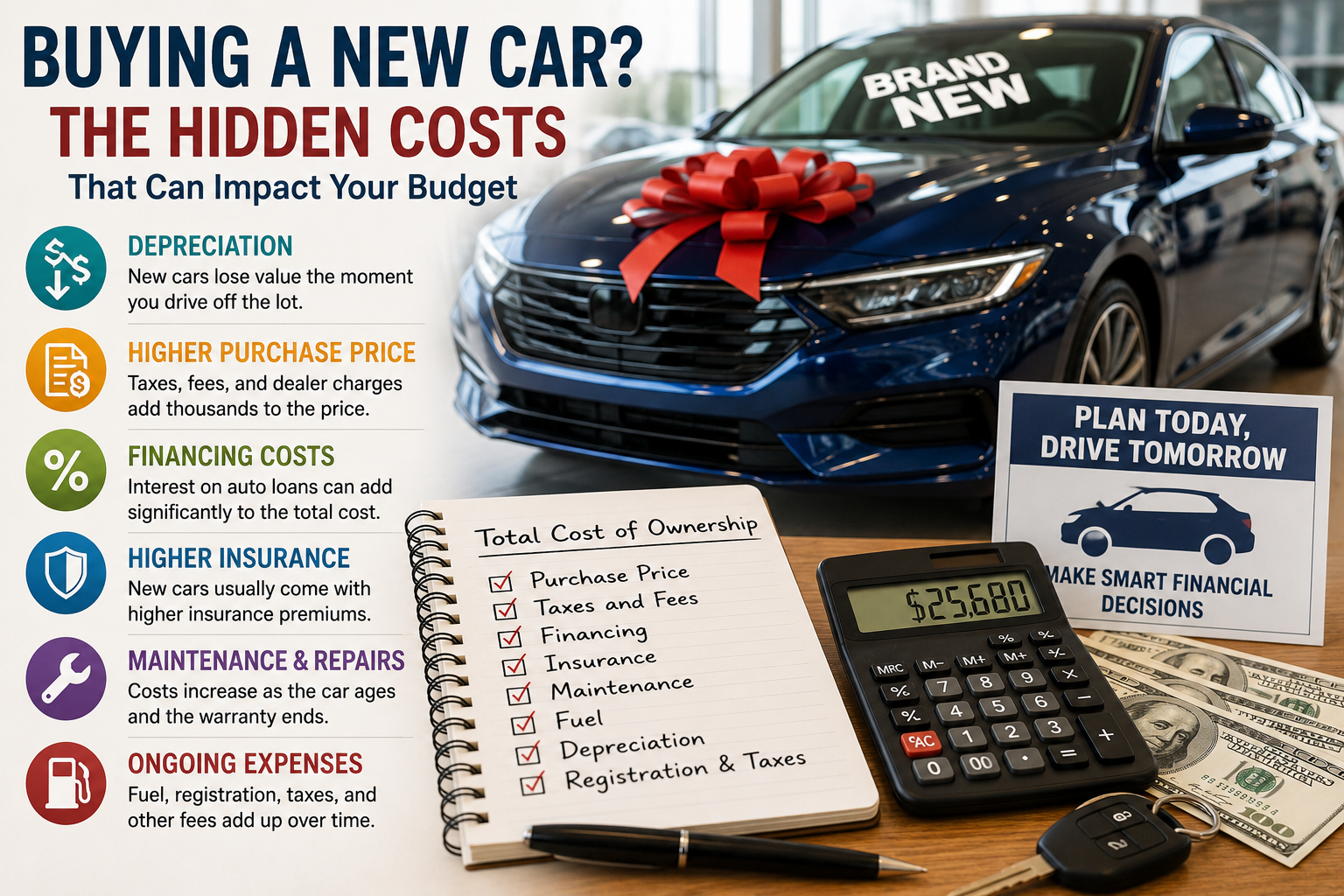
Buying a new car is one of the largest financial decisions many people make outside of purchasing a home. While it’s easy to focus on the monthly payment or the excitement of driving a brand-new vehicle, many buyers overlook the hidden costs that come with ownership. Understanding these expenses before buying a new car can help you make a smarter financial decision and avoid budget surprises after you drive off the lot.

The Purchase Price Is Only the Beginning
When shopping for a vehicle, many buyers concentrate on negotiating the sticker price. However, the purchase price is only part of the total cost.
You may also pay for:
- Sales tax
- Registration and title fees
- Dealer documentation fees
- Extended warranties
- Gap insurance
- Dealer-installed accessories
These additional expenses can add thousands of dollars to the total cost of buying a new car.
Depreciation Happens Immediately
One of the biggest hidden expenses of buying a new car is depreciation.
The moment you drive your new vehicle off the dealer’s lot, it begins losing value. While depreciation varies by make and model, many new vehicles lose a significant percentage of their value during the first few years of ownership.
If you decide to sell or trade in the vehicle after only a few years, you may discover that it’s worth far less than you expected.
Depreciation isn’t money you write a check for each month, but it’s still a real financial cost.
Financing Can Add Thousands to the Cost
Most people finance a new vehicle.
While financing makes ownership possible, it also increases the total amount you pay.
The longer your loan term, the more interest you’ll pay over time.
Before signing any loan agreement, consider:
- Your interest rate
- The total amount of interest paid
- The length of the loan
- Whether the monthly payment truly fits your budget
A lower monthly payment often comes at the cost of paying much more over the life of the loan.
Insurance Costs May Be Higher When Buying A New Car
Insurance is another expense that’s easy to underestimate.
New vehicles usually cost more to repair or replace than older vehicles, resulting in higher insurance premiums.
If you’re financing the vehicle, your lender will typically require comprehensive and collision coverage until the loan is paid off.
Before buying a new car, request insurance quotes to know what your actual monthly ownership costs will be.
Maintenance and Repairs Continue After the Warranty
Many buyers assume that a new vehicle won’t require much maintenance.
While warranty coverage helps with manufacturing defects, it doesn’t eliminate routine ownership expenses.
You’ll still need to budget for:
- Oil changes
- Tire rotations
- New tires
- Brake service
- Battery replacement
- Routine maintenance recommended by the manufacturer
Eventually, repairs will also become part of the cost of ownership.
Fuel Costs Add Up Over Time
Fuel is another expense that deserves careful consideration.
A vehicle with lower fuel efficiency may cost thousands more to operate over several years compared to a more efficient model.
When comparing vehicles, don’t just compare purchase prices—compare long-term operating costs.
Don’t Forget Taxes, Registration, and Other Annual Fees
Vehicle ownership includes recurring expenses that many buyers overlook.
Depending on where you live, these may include:
- Annual registration renewals
- Property or vehicle taxes
- Inspection fees
- Emissions testing
Although these costs may seem small individually, they add up over time and become part of your long-term transportation budget.
Calculate the Total Cost of Ownership
The smartest buyers look beyond the monthly payment.
Before buying a new car, estimate the total cost of ownership by considering:
- Purchase price
- Loan interest
- Insurance
- Fuel
- Maintenance
- Repairs
- Registration fees
- Depreciation
Looking at the complete financial picture helps you choose a vehicle that fits both your lifestyle and your budget.
Final Thoughts
Buying a new car can be exciting, but excitement shouldn’t replace careful financial planning. Understanding the hidden costs of ownership allows you to make an informed decision and avoid financial stress later. Before signing the paperwork, take time to evaluate the total cost—not just the monthly payment. A little planning today can save you thousands of dollars over the life of your vehicle while helping you stay on track with your long-term financial goals.