🎁 FREE 7-Day Money Habits Challenge — Build Better Money Habits One Day at a Time →

Build Better Money Habits, One Step at a Time

Whether you’re trying to get out of debt, build savings, start investing, or simply make smarter financial decisions, you’ll find practical, easy-to-follow guides to help you every step of the way.

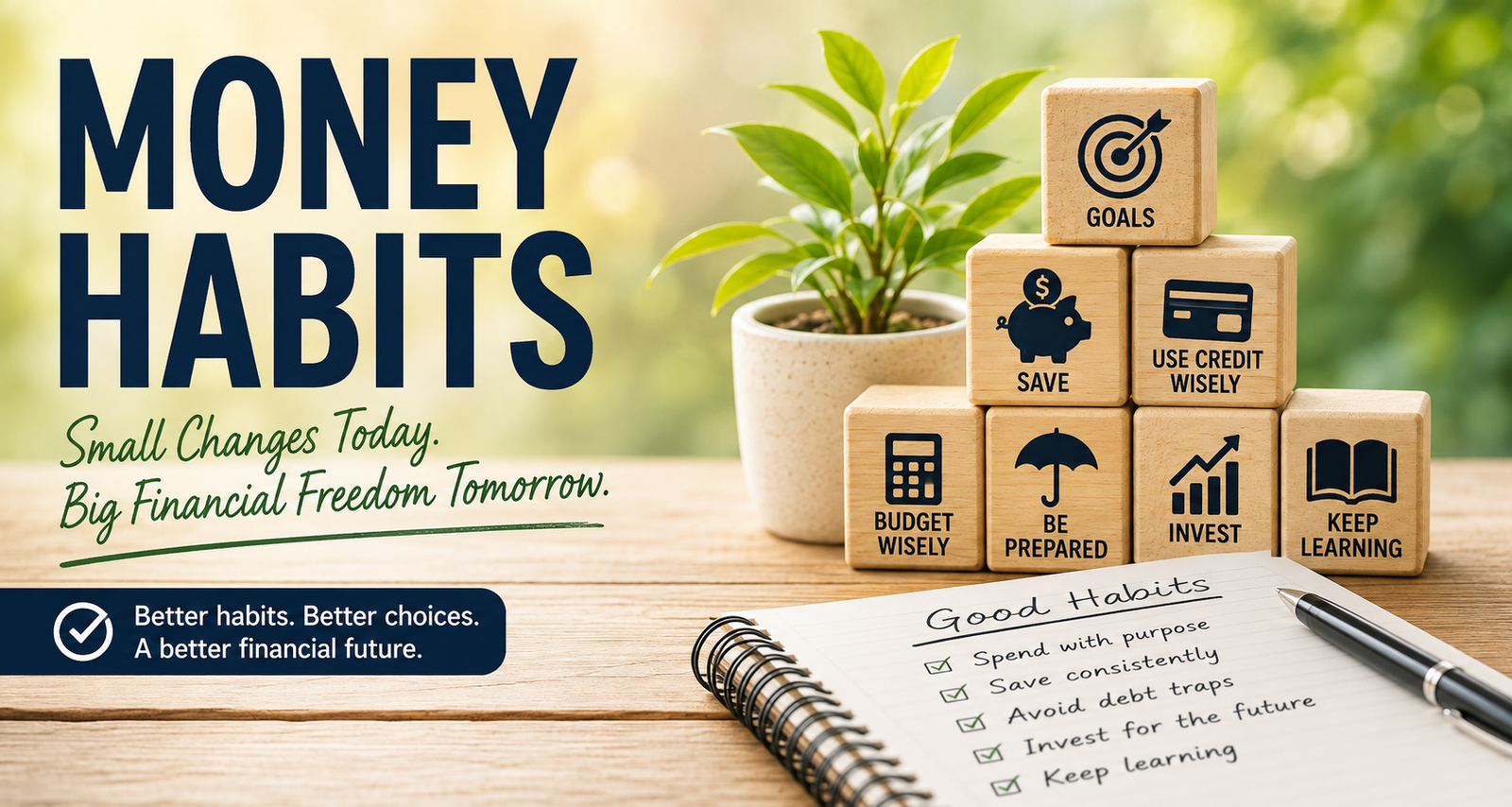
Stacked wooden blocks with financial tips like “Save,” “Invest,” and “Budget Wisely,” next to a notepad titled “Good Habits” with a checklist serve as visual reminders to develop strong money habits, while plants and a pen in the background symbolize growth and the importance of ending bad money habits.

New Here? Start with This Guide.

If you’re wondering where to begin, start with Money Habits: Small Changes That Can Transform Your Financial Life. It explains the everyday financial habits that lead to lasting success and connects you to the site’s most important guides on budgeting, saving, debt, investing, and financial planning.

Browse by Category

Looking for something specific? Explore our guides by category and find practical advice for every stage of your financial journey.

📊 Budgeting
Create a spending plan and take control of your money.

💳 Debt & Credit
Reduce debt, improve your credit, and borrow wisely.

🎓 Financial Education
Understand financial terms and build confidence with money.

📈 Investing & Wealth
Learn the basics of investing and long-term wealth building.

💡 Money Habits
Build better financial behaviors that last.

🏡 Real-Life Money
Practical advice for everyday financial situations.

🏩 Taxes & Banking
Understand banking, taxes, and managing your accounts.

Featured Articles

Split image compares impulse spending with fast food and shopping bags on the left, and intentional spending with a savings jar and emergency fund folder on the right. Text: "Buy Better: Which side are you on?.

Intentional Spending: Buy Better, Not Just More

Intentional spending sounds simple until you try to practice it. Most people recognize the moment it describes: you check your bank balance a week before payday, and the number is lower than it should be. You pay the bills, nothing unusual happens, yet the money disappears anyway. Then the easiest explanation feels most comfortable—you just

Read More »
Three people sit at a table with papers, notebooks, and a piggy bank, discussing finances. Text reads: "The Financial Literacy Challenge & How Parents Can Help.

Financial Literacy for Teens: The Hidden Challenge

Financial literacy for teens is supposed to prepare young people for adulthood. But in many schools, the subject is still treated as an occasional lesson rather than an essential life skill. A student might spend years studying subjects like geometry, chemistry, and world history. Yet the basics of money — budgeting, banking, credit, and saving

Read More »
A road sign reading "Financial Emergency Ahead" stands on an empty highway, with images of bills, taxes, and a concerned couple in the background—reminding us of the importance of having the right amount in an emergency fund.

My Emergency Fund: How Much Is The Right Amount?

An emergency fund is one of the most important pieces of personal financial stability, yet many people struggle with a simple question: how much is actually enough? Traditional advice often suggests saving three to six months of expenses, but the right emergency fund can vary widely depending on your situation, income stability, and financial responsibilities.

Read More »
A woman sits at a desk with a calculator, looking thoughtful. The graphic beside her explains the 50/30/20 budget rule, a realistic budgeting method for needs, wants, and savings that remains popular in 2026.

Is The 50/30/20 Budget Rule Still Realistic For 2026?

The 50/30/20 budget rule is a simple guideline for dividing your income into three categories: The idea is straightforward. Half your income goes to essential expenses. A portion goes to lifestyle spending. The remaining amount goes toward building your financial future. It’s easy to remember, which is why the rule became popular. But like many

Read More »
An older man sits at a kitchen table, looking concerned at a laptop screen, with scattered papers, envelopes, and a cup of coffee in front of him as he considers budgeting to stop living paycheck to paycheck.

How to Stop Living Paycheck to Paycheck for Good

If you have ever watched your bank account dwindle to nearly zero just days before your next deposit hits, you already understand what it means to live paycheck to paycheck. That quiet dread — the one that creeps in when an unexpected bill arrives, or the car makes a sound it shouldn’t — is something

Read More »
A smiling woman sits at a table filled with cash and coins; text reads, "Boost Your Budget: Try the No-Buy Challenge now" on a green background.

Try The No-Buy Challenge: Boost Your Budget Now

If you’ve spent any time around personal finance communities recently, you’ve probably heard people talking about the no-buy challenge. The idea is simple on the surface: for a set period of time — sometimes a month, sometimes longer — you intentionally stop spending money on non-essential items. No impulse purchases. No random online shopping. Just

Read More »

Join Our Newsletter

Newsletter Consent
By subscribing, you consent to us processing your email for newsletters. Your data is stored securely, used to send emails, and kept no longer than necessary. You can unsubscribe anytime and review details in our Privacy Policy

Each month, you'll receive a roundup of the latest articles, practical money tips, and new resources published on Money Habits For Me.