
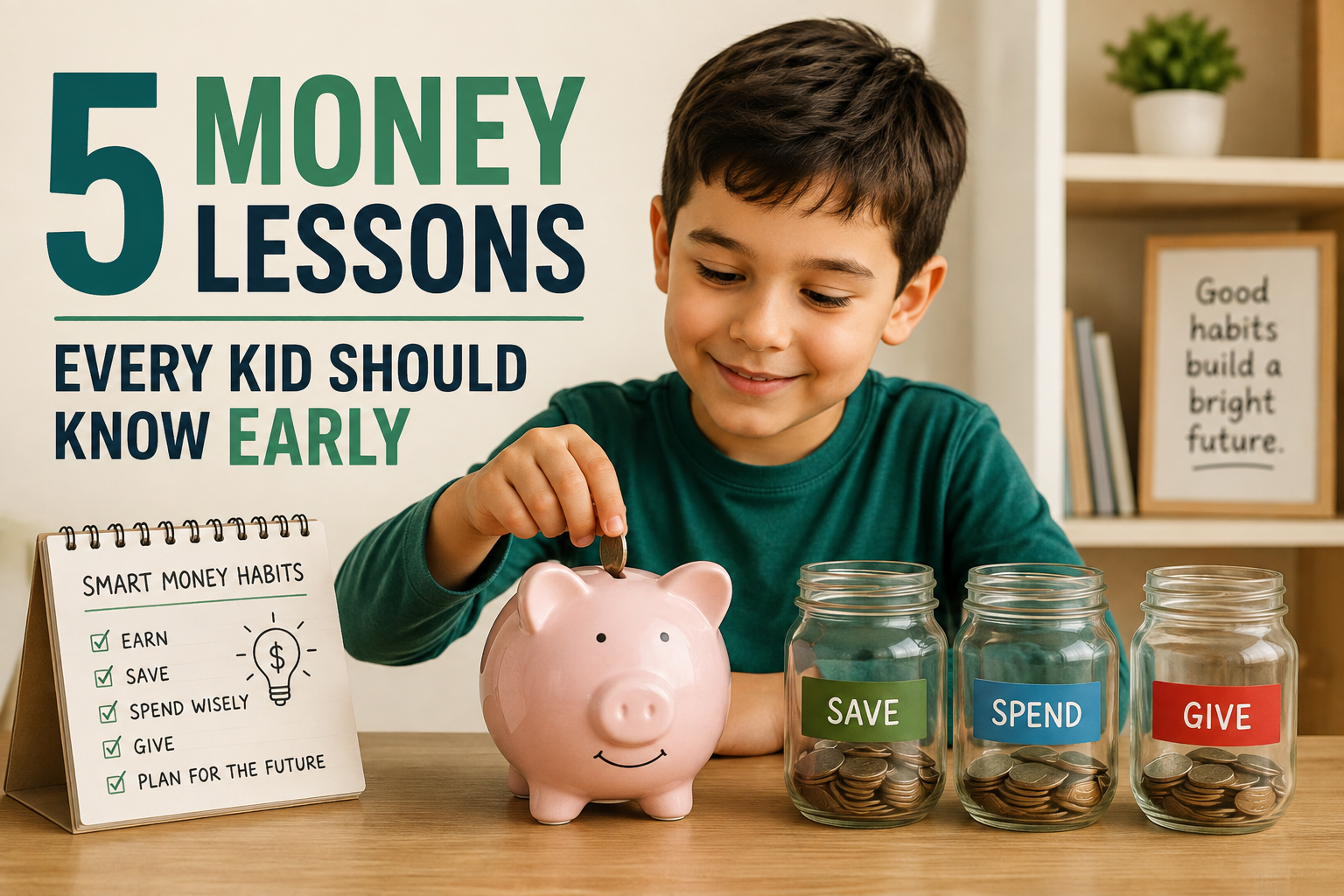
Money habits every kid should know do not have to wait until the first paycheck or credit card. Kids can start learning how to save, spend, make choices, and handle money while the stakes are still small.
That matters because a lot of young people reach adulthood without much experience managing money. A Junior Achievement survey found that many teens want financial education even when it is not available at school. The Consumer Financial Protection Bureau also emphasizes that financial knowledge, skills, and habits are important building blocks on the path to adult financial well-being.
There is a difference, though, between learning about money and developing good habits with it. Knowing what a budget is does not mean you will use one. Knowing you should save money does not mean you will actually save it when that new pair of sneakers is staring at you.
That is why the most useful money habits every kid should know are behaviors they can actually practice. Here are five worth starting early.
Money Habits Every Kid Should Know: Start by Saving
Give a kid $20 and the natural question is usually, “What can I buy?”
There is nothing wrong with spending some of it. Money is meant to be used. But one of the best habits a child can learn is that spending does not have to come first.
If they receive an allowance, birthday money, or their first paycheck, encourage them to put a little aside before deciding what to do with the rest. It does not have to be a complicated percentage. The amount matters less than developing the habit.
A kid who automatically saves $5 out of $20 is beginning to learn something many adults struggle with: saving works better when it happens before all the money disappears. The CFPB offers age-appropriate ideas for helping children practice saving, including setting a savings goal and breaking it into smaller steps.
2. Know the Difference Between “I Need It” and “I Want It”
Kids are not the only ones who have trouble with this one. Adults can turn a want into a need pretty quickly when we really want something.
A need is something necessary for everyday life. A want is something that would be nice to have. The point is not to teach kids that wants are bad. They are not.
The lesson is that money is limited, so choices matter. Try asking a simple question before a purchase: “Is this something you need, something you want, or a little of both?”
You do not even have to tell them the answer. Let them think about it. That small pause starts building one of the money habits every kid should know: making a decision instead of simply reacting to whatever they want at the moment.
3. Wait Before Making an Impulse Purchase
We have all bought something that seemed absolutely necessary at 2:00 in the afternoon and considerably less impressive by dinner.
Kids deal with the same impulses. One simple habit can help: wait 24 hours before buying something that was not already planned.
For a small child, the waiting period might only be until tomorrow. For a teenager considering a more expensive purchase, it might be several days. The goal is not to prevent them from buying things they enjoy. It is to put some space between wanting and buying.
Sometimes they will wait and still want it. Fine. Other times the urge disappears, and they still have their money. That is a lesson they will remember.
4. Keep Track of Where the Money Went
Ever look at your bank balance and think, “Where did all that money go?” That lesson can start surprisingly early.
A child does not need a spreadsheet with 14 categories and a pie chart. A notebook, phone note, or simple list will do. If they receive $30, have them keep track of what happens to it: $10 saved, $8 for lunch with friends, $5 for a game, and $7 left.
Now money is not mysteriously disappearing. They can see it.
This becomes especially useful when a teenager gets a first job. Their paycheck may look like plenty of money until food, entertainment, gas, clothes, and everything else start taking pieces of it. Keeping track teaches them to pay attention—and paying attention is one of the foundations of managing money well.
For a simple example of how planning where money goes works, take a look at the Money Habits budget calculator or the simple spending plan lesson.
5. Understand That Borrowed Money Has to Be Paid Back
Credit can look almost magical when you first encounter it. You buy something today and worry about paying for it later.
Unfortunately, “later” always arrives.
Before a teenager gets a credit card, they should understand one basic rule: using credit does not make something cheaper. It can make it more expensive.
If a credit-card balance is not paid in full, interest can be added. Then part of the next payment goes toward the cost of borrowing instead of whatever was originally purchased.
This is where a real-world example can help. Show them the price of something they want. Then show what happens if that purchase sits on a credit card collecting interest. Suddenly, borrowing does not look quite as much like free money.
That does not mean teaching kids to fear credit. Used responsibly, credit can be useful. The habit you want them to develop is simple: before borrowing money, understand how and when you are going to pay it back. Our article on the minimum-payment trap shows what can happen when small payments stretch debt out for years.
Let Kids Practice These Money Habits
This may be the hardest part for parents and grandparents. If kids are going to develop the money habits every kid should know, they need opportunities to make decisions with actual money. And occasionally, they are going to make lousy ones.
That can be useful.
Spending $25 of birthday money on something they regret two days later is a relatively inexpensive financial lesson. Making the same kind of mistake at 25 with a credit card can cost considerably more.
Give them some room to choose, spend, save, and occasionally wish they had chosen differently. Then talk about it.
You do not need to give a lecture. Sometimes the best question is simply: “Would you make the same choice again?”
Money Habits Every Kid Should Know Before Adulthood
Children do not need to understand every part of personal finance before they turn 18. Most adults do not understand every part of it either.
What matters is giving kids a few basic habits they can carry with them: save something, think before spending, know where your money went, understand what you are borrowing, and make choices instead of letting money make them for you.
Those habits will not guarantee that a child never makes a financial mistake. Nobody gets that deal. But these money habits every kid should know give them a much better place to start.
And when the first paycheck, checking account, apartment, car loan, or credit card eventually arrives, money will not feel quite so unfamiliar.

Want to Help a Young Person Learn the Basics?
You do not need to teach everything yourself.
Understanding Money: A Beginner’s Guide to Personal Finance walks younger and beginning readers through budgeting, saving, banking, credit, scams, and other everyday money topics in plain language.
If you have a teenager approaching their first job, bank account, or credit card, this is a good time to start the conversation.