
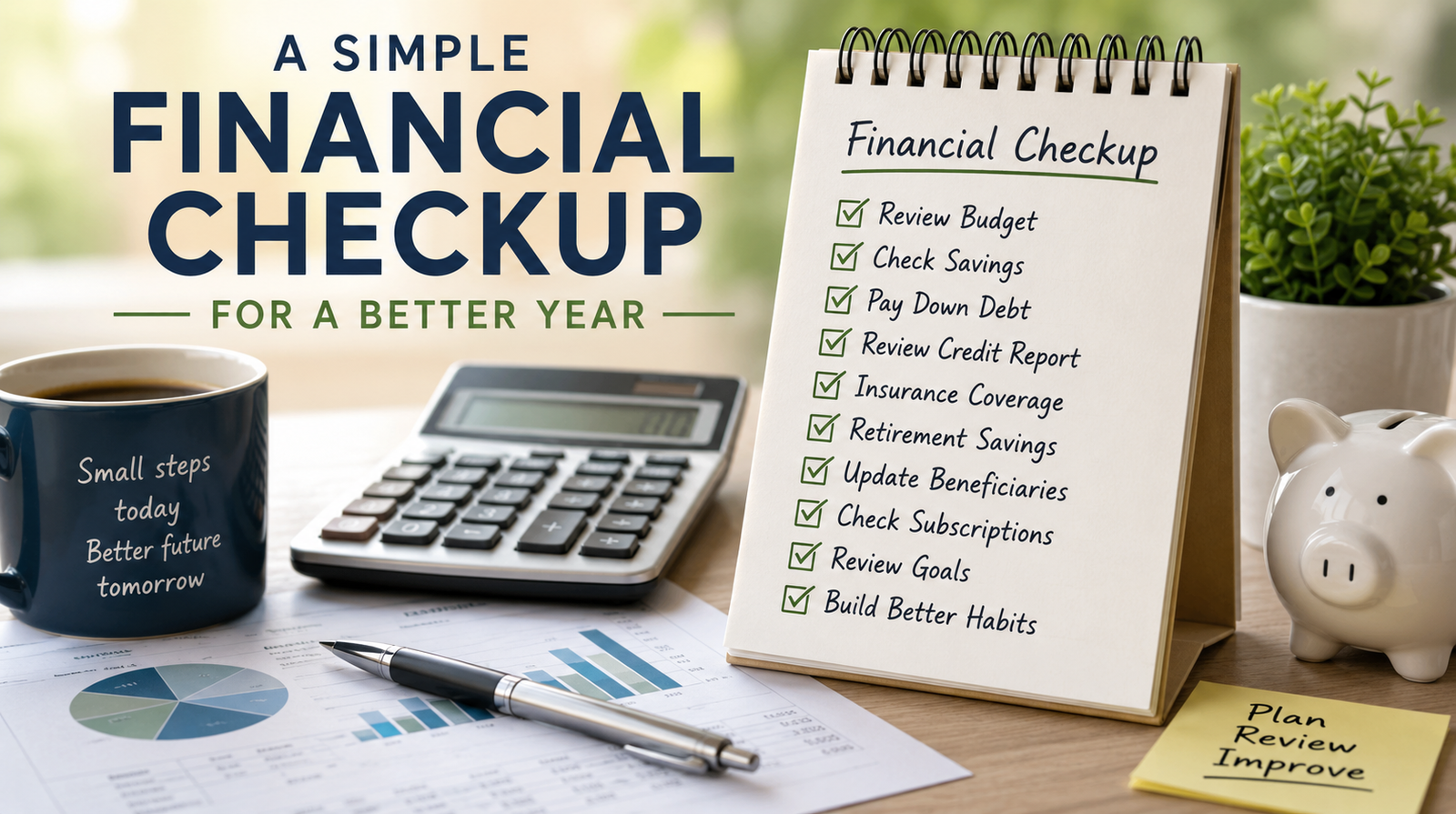
Most people think about a financial checkup at the beginning of a new year. January feels like the natural time to set goals, review spending, and promise ourselves we’ll do better with money.
But the truth is, there isn’t a “right” month to review your finances. Life doesn’t wait for the calendar to turn. Jobs change, families grow, expenses increase, and financial goals evolve throughout the year. Whether it’s January, July, or any month in between, taking time to review your financial picture is one of the healthiest money habits you can develop.
A financial checkup doesn’t require complicated spreadsheets or hours of work. In most cases, an hour or two is enough to review where you stand, identify areas that need attention, and make a few adjustments that can improve the months ahead. The important thing isn’t when you do it—it’s making sure you do it at least once every year.

Why a Financial Checkup Matters
Life changes constantly. Income changes. Expenses change. Interest rates rise and fall. Insurance needs evolve. Even your financial goals may be different today than they were a year ago.
Without reviewing your finances periodically, it’s easy to drift off course without realizing it. Our Financial Education guide explains the money concepts behind this checkup.
A yearly review helps you:
- Identify problems early.
- Measure your progress.
- Confirm that your financial goals still make sense.
- Build confidence through small improvements.
- Reduce financial stress by spotting issues you can prepare for.
Think of it as pressing the reset button—not because you’ve failed, but because every journey benefits from an occasional course correction.
Financial Checkup: 10 Questions to Ask Yourself
1. Am I spending less than I earn?
This remains the foundation of every healthy financial plan. If your expenses consistently exceed your income, long-term financial success becomes much more difficult.
Review your monthly spending honestly. If necessary, identify one or two areas where you can cut back without sacrificing what matters most. Our practical budgeting guide can help you organize the numbers.
2. Has my emergency fund grown?
Unexpected expenses happen to everyone.
Whether it’s a medical bill, home repair, vehicle breakdown, or temporary job loss, an emergency fund provides breathing room when life doesn’t go according to plan.
If you used emergency savings for an unexpected expense, the fund did its job. That is not a failure. Review what remains and choose an affordable way to rebuild it. If you have room in your budget, a small automatic transfer can help; if money is tight, start with what you can manage.
3. Am I making progress toward paying off debt?
Debt rarely disappears on its own.
Review your balances, interest rates, and monthly payments. Celebrate the progress you’ve already made, then decide what your next milestone should be.
Steady progress often beats aggressive plans that are difficult to maintain.
4. Have I reviewed my credit report?
Your credit report affects far more than loan approvals.
Errors can appear, accounts may be reported incorrectly, and identity theft sometimes goes unnoticed until someone checks.
Review your report at least once each year and dispute any inaccurate information promptly.
5. Have I reviewed my insurance coverage?
Many people buy insurance and never think about it again.
Life changes such as marriage, children, retirement, or purchasing a home may require updating your coverage.
Ask yourself whether your policies still provide the protection your family needs.
Financial Checkup: Protecting Your Future
6. Does my retirement plan fit my stage of life?
If you are still working, review whether your retirement savings fit your goals and what you can afford. Retirement planning does not require finding a perfect investment.
If you are already retired, review your income, spending, and withdrawals from savings. Check whether your plan still covers your needs and whether a change in expenses calls for an adjustment.
While you are working, a small increase in retirement contributions may help if your budget allows. In retirement, the useful next step may be reviewing how you use what you have saved. Choose the action that fits your circumstances today.
7. Have I reviewed my beneficiaries?
Beneficiary designations on retirement accounts, life insurance policies, and other financial accounts often override what’s written in a will.
Reviewing them only takes a few minutes but can prevent major problems later.
8. Am I paying for subscriptions I no longer use?
Automatic payments are convenient, but they also make it easy to overlook recurring charges.
Review your bank and credit card statements for subscriptions, memberships, and streaming services you no longer use or value.
Even small monthly charges add up over the course of a year.
9. Have my financial goals changed?
Your financial goals should reflect your current life—not the life you had five years ago.
Perhaps you’re preparing for retirement, saving for a home, helping aging parents, or planning a major purchase. If your priorities have changed, revisit how to create a financial plan that works and adjust your next steps.
Make sure your financial priorities match where you are today.
10. What is one money habit I want to improve?
You don’t need to overhaul your entire financial life overnight.
Choose one habit that would make the biggest difference.
It might be tracking expenses, saving automatically, reducing impulse purchases, paying extra on debt, or simply reviewing your finances more regularly.
Small improvements practiced consistently often produce remarkable results.
A Year-End Financial Checkup Without the Rush
If you are reviewing your finances before year-end, give yourself time to check account and benefit deadlines. Gather recent statements, insurance notices, workplace benefit information, and your latest pay details. You do not need to make every possible change. Identify what applies to your household and which question needs an answer before you act.
For insurance, compare your current coverage, deductibles, exclusions, and renewal cost with what your household needs now. Write down one gap or question and contact the insurer before changing the policy. A lower premium is only useful if you understand the protection you are giving up.
If you have a health savings account, check your eligibility, contributions already made, and the current rules in IRS Publication 969. Avoid relying on contribution figures from an older article. If investment gains or losses could affect your taxes, gather the records and ask a qualified tax professional about your situation before selling or replacing investments.
Use Taxes and Banking for the broader tax-and-account overview and Investing and Wealth for goals, investment risk, and account choices. Your financial checkup should produce a short list of informed actions, rather than a rush to use every year-end strategy.
Finally, choose a date to follow up on one task. The Money Habits pillar guide shows how to turn that checkup into a routine you can repeat.
Keep It Simple
Many people believe improving their finances requires dramatic changes.
In reality, lasting financial success is usually built through ordinary habits repeated over time.
Review your finances once a year. Make a few thoughtful adjustments. Continue doing the things that are working well.
You don’t have to be perfect. You simply need to keep moving in the right direction.
If you haven’t reviewed your finances this year, there’s no reason to wait until January. A mid-year financial checkup gives you time to correct course before another year slips by. Small adjustments made today can have a meaningful impact on your financial progress by the end of the year.
Final Thoughts
A financial checkup isn’t about finding everything you’ve done wrong. It’s about recognizing how far you’ve come and identifying your next opportunity to improve.
Every positive financial decision builds on the one before it.
If you make reviewing your finances an annual habit, you’ll spend less time reacting to financial surprises and more time making intentional choices that support the future you want.
Sometimes the best investment you can make is simply taking an honest look at where you stand today.