
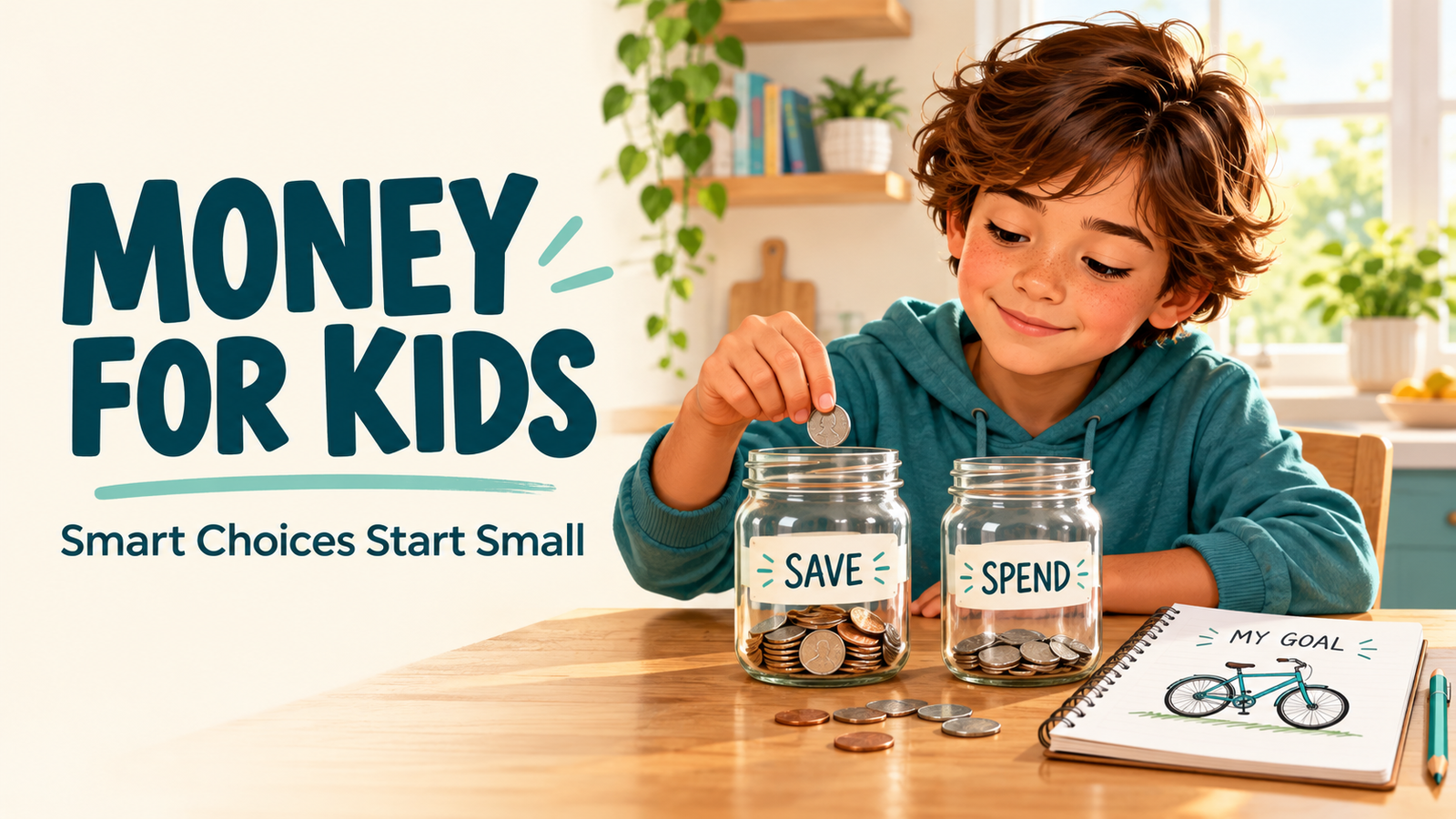
Ever saved for something you wanted, then spent some of it on something else? Learning about money for kids starts with choices like that. You can practice earning, spending, and saving with the money you have now. And the good news? Money isn’t complicated. It’s just a tool. Once you understand how it works, you can start using it to build choices, freedom, and a future you’re excited about.
This money for kids guide uses small, everyday examples. Choose one idea to try with a parent or another trusted adult.
Let’s break this down in a fun, simple way that makes sense at any age.
Money for Kids: What Money Does
Money is something people accept in exchange for goods and services. You might earn $10 for helping with a task, then use some of it to buy a snack or save toward a game.
Think of it like this:
- A movie ticket gets you into a movie.
- A bus pass lets you ride the bus.
- Game tokens let you play arcade games.
A movie ticket works for a particular movie, and a bus pass works for transport. Money is more flexible: you can use it for different things, depending on how much you have and what they cost.
Understanding money for kids means learning to ask: What do I want this money to do?
Why Practicing Money Choices Helps
You do not need to understand every money topic at once. Start with a small choice you can explain.
Practice now, and you will have examples to draw on when bigger decisions arrive.
Learning about money for kids gives you a chance to practice these skills:
- Make smarter choices
- Set better goals
- Ask questions before spending
- Compare choices before deciding
It’s like learning to ride a bike when everyone else is still reading the instruction manual.
How Kids and Teens Actually Get Money
You might think the only way kids get money is from parents… nope. You’ve got options:
✔ Allowance
Some families give a regular allowance; others link it to agreed tasks. Talk about what your family expects.
✔ Small Jobs
Dog walking, mowing lawns, babysitting, and helping neighbors.
✔ Part-Time or Seasonal Work
Older teens may be able to take part-time or summer work. Ask an adult to help check the requirements for the job.
✔ Gifts
Birthdays, holidays, or family events.
✔ Side Hustles
Kids and teens today start all kinds of mini-businesses:
- Selling art or crafts
- Reselling items online
- Helping with tech setups
- Making YouTube videos
- Tutoring younger kids
Ask a parent or trusted adult before arranging work, selling online, or sharing personal information. Choose tasks that suit your age and abilities.
The Three Things You Can Do With Money
Here are three ways to think about money for kids: spending now, saving for later, and learning about investing.
1. Spend it
The fun stuff.
2. Save it
In the future, you will thank yourself.
3. Grow it
Investing means putting money into assets, such as stocks, with the aim of earning a return. Investments can lose value. You can learn the idea with a trusted adult before deciding whether to invest. Investor.gov explains saving and investing.
One example is splitting $10 into $5 to spend, $4 to save, and $1 to discuss setting aside for longer-term goals. This is a 50•40•10 example, not a rule everyone needs to follow:
- 50% Spend — enjoy some
- 40% Save — bigger goals later
- 10% Longer-term goals — discuss the options with an adult
Choose amounts that fit your goal. If you want a $20 game and save $4 each week, you would reach $20 in five weeks, starting from zero. You can also decide to give some money to a cause you care about.
Yes, Kids Can Have a Simple Money System
A piggy bank is a great start — but a bank account is a bigger step.
Ask a parent or guardian about accounts available for your age. The bank or credit union can explain who must be on the account and any fees.
A Savings Account
For money you want to keep safe and untouched.
A Checking Account or Teen Debit Card
For everyday spending and learning how to track money.
A useful money for kids exercise is checking a balance together. If you have $15 and spend $6, you have $9 left. Parents can find more saving activities from the CFPB.
Practice With the Money You Have
Here’s the truth:
Both the amount you have and the choices you make matter. A plan helps you decide what your available money can cover.
If you get $10 a week:
- Spend some
- Save some
- Discuss longer-term goals with an adult
For example, save $4 from each $10 you receive and keep a record of your progress.
Small habits turn into big results.
Five Simple Money Steps You Can Start This Week
Here’s your action plan:
✔ 1. Decide on your money goal
Maybe it’s a game, headphones, a bike, or saving for a car someday.
✔ 2. Choose one way to earn
Chores, a small side job, or a simple teen-friendly hustle.
✔ 3. Choose your spending and saving amounts
Choose how much to spend and save. You can adjust the example above to match your goal.
✔ 4. Talk to your parent about opening a savings account
A real bank account is your first “money milestone.”
✔ 5. Track what you earn
A notebook or notes app works perfectly.
That’s it — that’s your starter money system.
Keep Learning About Money for Kids
For your next lesson, read Understand Money. Parents can explore the Financial Education guide for more learning topics.
For a longer introduction, see the page about my beginner’s guide, Understanding Money.
Adults who may want to explore these lessons together include:
- Kids
- Teens
- Parents teaching kids about money
- Teachers
- Homeschool families
- Youth programs