
Insurance is one of those financial topics that many people don’t think much about—until they need it. The right insurance can protect your finances from unexpected events that might otherwise take years to recover from. Understanding the different types of insurance available can help you make informed decisions about protecting yourself, your family, and your assets.
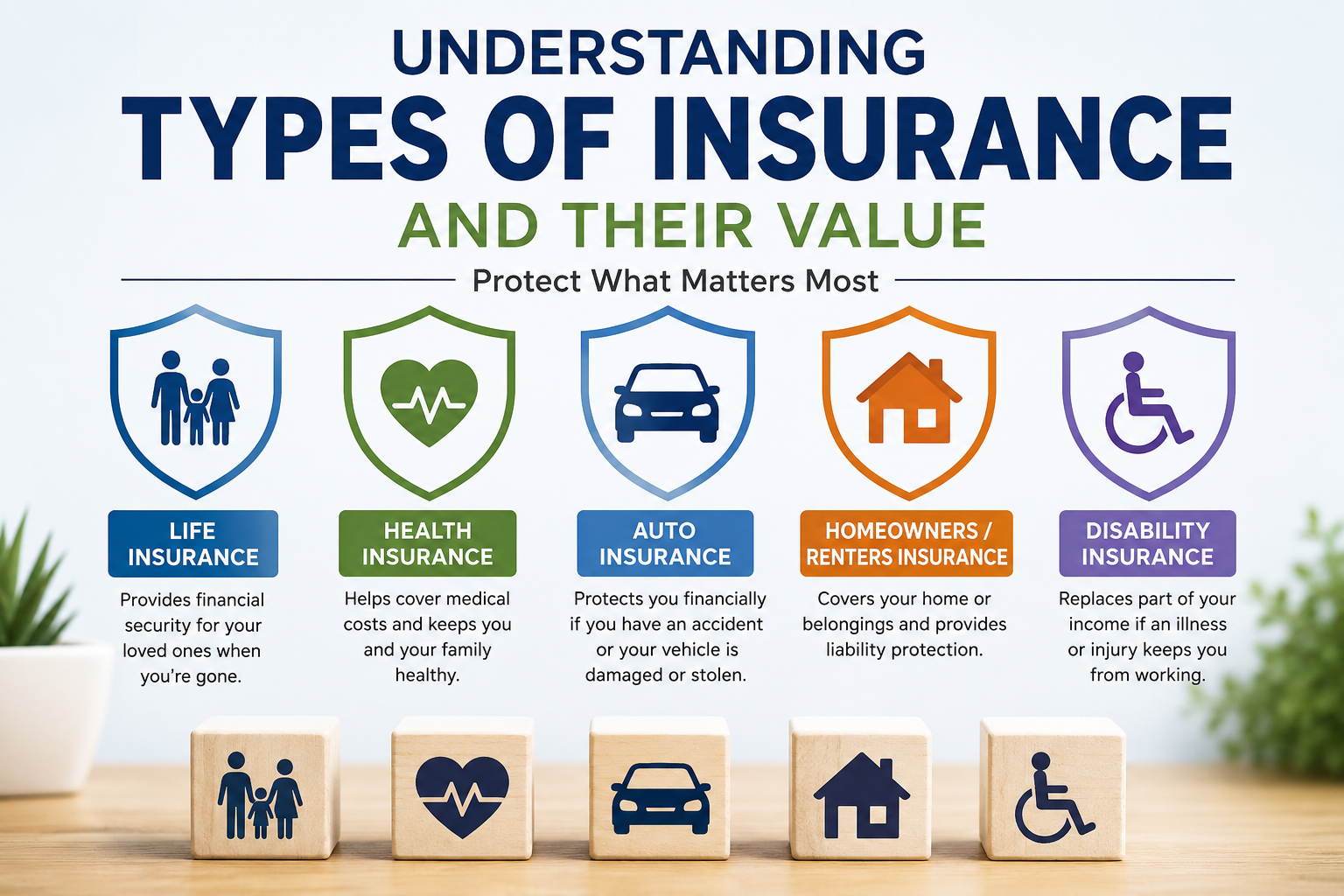
While everyone’s needs are different, most people will benefit from having some combination of life, health, auto, homeowners or renters, and disability insurance. Let’s look at what each one does and why it matters.
Life Insurance
Life insurance provides financial support to the people who depend on your income if you pass away. It helps replace lost income, pay off debts, cover funeral expenses, or provide for future financial needs.
The two most common options are:
- Term life insurance provides coverage for a specific period, such as 10, 20, or 30 years. It is generally the most affordable choice and works well for families with mortgages, young children, or other temporary financial responsibilities.
- Permanent life insurance, including whole life and universal life policies, provides lifelong coverage as long as premiums are paid. These policies may also build cash value over time but typically cost more than term insurance.
The right choice depends on your financial goals, budget, and family situation.
Health Insurance
Health insurance helps reduce the financial burden of medical care. A single hospital stay or unexpected illness can be expensive, making health coverage an important part of almost every financial plan.
Health insurance often helps pay for:
- Doctor visits
- Hospital care
- Emergency services
- Prescription medications
- Preventive care
Many people receive coverage through an employer, while others purchase individual policies or qualify for programs such as Medicare or Medicaid.
Auto Insurance
Auto insurance helps protect you financially if you’re involved in a vehicle accident or your vehicle is damaged or stolen.
A typical policy may include:
- Liability coverage
- Collision coverage
- Comprehensive coverage
- Uninsured or under-insured motorist coverage
Coverage requirements vary by state, so it’s important to understand the minimum requirements where you live and consider whether additional protection makes sense for your situation.
Homeowners and Renters Insurance
Whether you own your home or rent an apartment, protecting your belongings is important.
Homeowners insurance generally covers damage caused by covered events such as fire, theft, wind, or certain natural disasters. It also usually includes personal liability protection if someone is injured on your property.
Renters insurance protects your personal belongings and typically provides liability coverage as well. Many renters mistakenly believe their landlord’s insurance covers their possessions, but that’s usually not the case.
Disability Insurance
For many people, their ability to earn an income is their greatest financial asset.
Disability insurance replaces part of your income if an illness or injury prevents you from working for an extended period. It can help you continue paying everyday expenses while you recover.
There are two primary types:
- Short-term disability insurance
- Long-term disability insurance
Without disability coverage, even a temporary loss of income can create financial hardship.
Choosing the Right Types of Insurance
Not everyone needs the same insurance coverage. Your ideal mix depends on factors such as:
- Your age
- Your income
- Your family responsibilities
- Your assets
- Your debts
- Your health
- Your stage of life
As these factors change, your insurance needs may change as well. Reviewing your coverage every few years helps ensure your protection keeps pace with your life.
Why Understanding Types of Insurance Matters
Insurance isn’t about expecting the worst. It’s about preparing for the unexpected so that one accident, illness, or loss doesn’t become a long-term financial setback.
Understanding the different types of insurance allows you to make informed decisions about protecting what matters most. By reviewing your needs regularly and maintaining appropriate coverage, you can reduce financial risk and gain greater confidence in your overall financial plan.
Insurance may never be the most exciting part of managing your money, but it can easily become one of the most valuable.f managing your money. It can easily become one of the most valuable.