
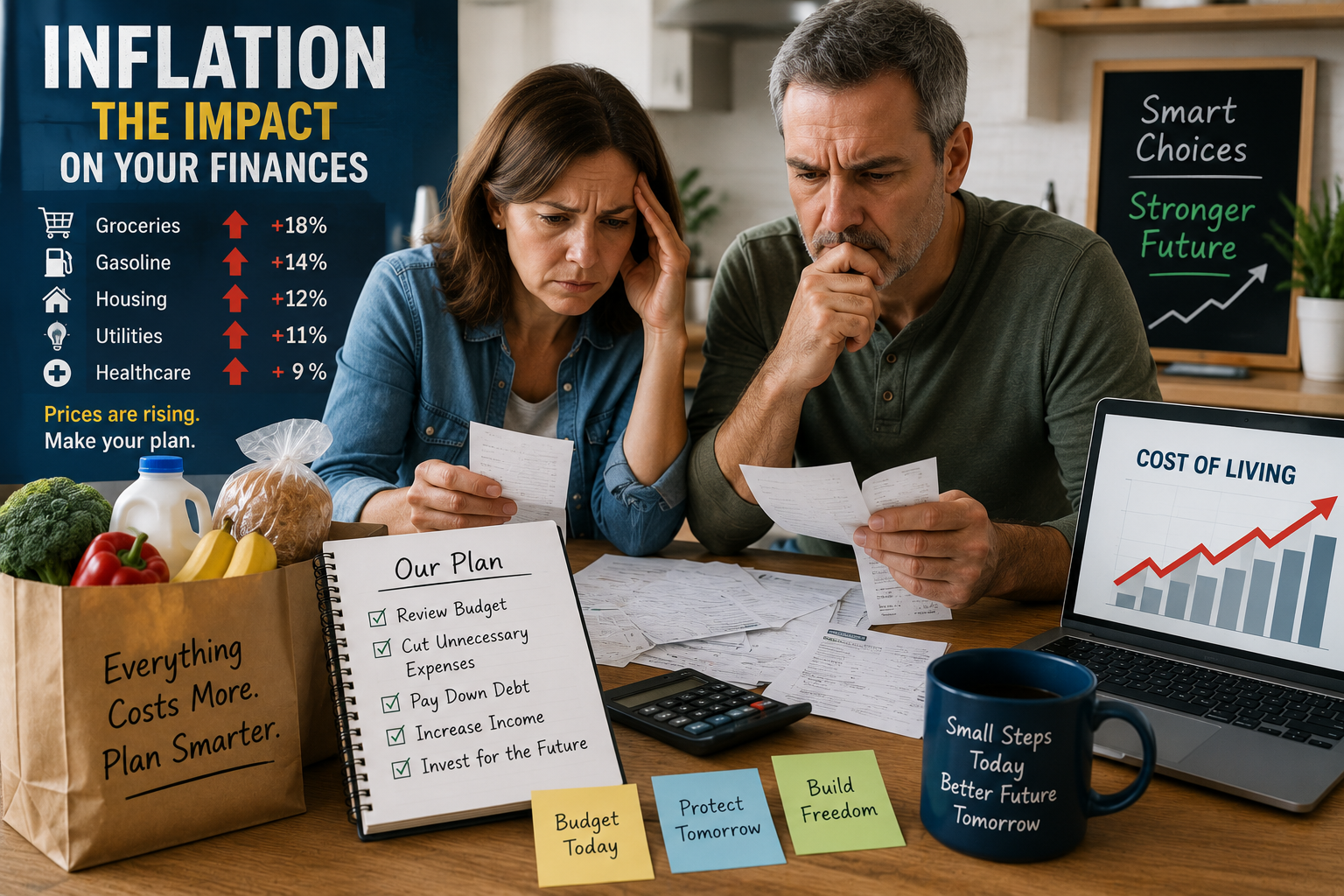
The impact of inflation isn’t just something economists talk about on television.
You feel it every time you buy groceries, fill your gas tank, pay your utility bill, or renew your insurance.
Even when prices don’t seem to increase dramatically overnight, small increases across dozens of everyday expenses can quietly change your financial life.
The good news is that while you can’t control inflation, you can make financial decisions that help reduce its impact.
What Is Inflation?
Inflation is the gradual increase in the prices of goods and services over time.
As prices rise, each dollar buys a little less than it did before.
That’s why something that cost $100 a few years ago may cost $110 or $120 today.
The impact of inflation isn’t about one expensive purchase—it’s about almost everything becoming a little more expensive over time.

How Inflation Affects Everyday Life
Inflation touches almost every part of your budget.
You may notice higher costs for:
- Groceries
- Gasoline
- Housing
- Utilities
- Insurance
- Healthcare
- Dining out
- Travel
When several expenses increase at the same time, your paycheck doesn’t stretch as far.
That’s why many families feel financial pressure even if their income hasn’t changed.
Your Purchasing Power Declines
One of the biggest effects of inflation is the loss of purchasing power.
Imagine receiving the same paycheck for several years while your expenses continue increasing.
Even though your income hasn’t gone down, it buys less.
That’s why reviewing your budget regularly becomes especially important during periods of higher inflation.
Small adjustments today can prevent larger financial problems later.
Inflation Can Affect Borrowing
Interest rates often rise during periods of higher inflation.
That can make borrowing more expensive.
Higher interest rates may affect:
- Mortgage payments
- Auto loans
- Credit cards
- Personal loans
- Home equity loans
If you’re considering borrowing money, compare loan options carefully and understand how interest rates affect your monthly payment.
Whenever possible, avoid carrying high-interest credit card balances, especially when rates are increasing.
Saving Money Becomes More Challenging
Many people believe their savings are growing simply because the account balance increases.
However, inflation changes that picture.
If your savings earn less than inflation over a long period, your purchasing power gradually declines.
Savings are still essential—especially for emergencies—but long-term money often needs the opportunity to grow through appropriate investments that match your goals and risk tolerance.
Investing Helps Fight Inflation
One reason many people invest for long-term goals is to help their money grow faster than inflation over time.
No investment guarantees a positive return, and markets naturally rise and fall.
However, historically, long-term diversified investments have generally provided greater growth potential than simply leaving money in a low-interest savings account for decades.
That’s why investing often plays an important role in retirement planning.
Inflation Can Affect Retirement
Retirement planning becomes more difficult when everyday expenses continue rising.
The amount that supports your lifestyle today may not provide the same lifestyle twenty years from now.
That’s why retirement planning isn’t simply choosing a dollar amount.
It’s preparing for future costs that may be much higher than today’s prices.
Reviewing your retirement plan regularly allows you to adjust your savings as your circumstances change.
Ways to Reduce the Inflation Impact
Although inflation is outside your control, several habits can help reduce its effect.
Consider:
- Reviewing your spending plan every few months.
- Eliminating unnecessary subscriptions.
- Paying down high-interest debt.
- Building an emergency fund.
- Increasing retirement contributions whenever possible.
- Shopping carefully for insurance and other recurring expenses.
- Looking for opportunities to increase your income through raises, new skills, or side hustles.
Small financial adjustments often have a larger impact than trying to predict what inflation will do next.
Don’t Let Inflation Lead to Panic
Periods of rising prices often create emotional financial decisions.
People may stop investing.
Delay important planning.
Or make large purchases simply because they fear prices will continue rising.
Most of those decisions deserve careful thought.
A long-term financial plan should guide your choices—not headlines or temporary economic conditions.
Final Thoughts
The impact of inflation is real, but it doesn’t have to control your financial future.
Understanding how inflation affects your budget, savings, borrowing, and long-term planning helps you make thoughtful decisions rather than emotional ones.
Inflation will continue to influence the economy, just as it always has.
The most effective response isn’t trying to predict every economic change.
It’s building strong financial habits that help you adapt no matter what the economy is doing.
Consistent saving, careful spending, thoughtful investing, and regular financial reviews remain some of the best ways to protect your financial future—even when prices continue to rise.