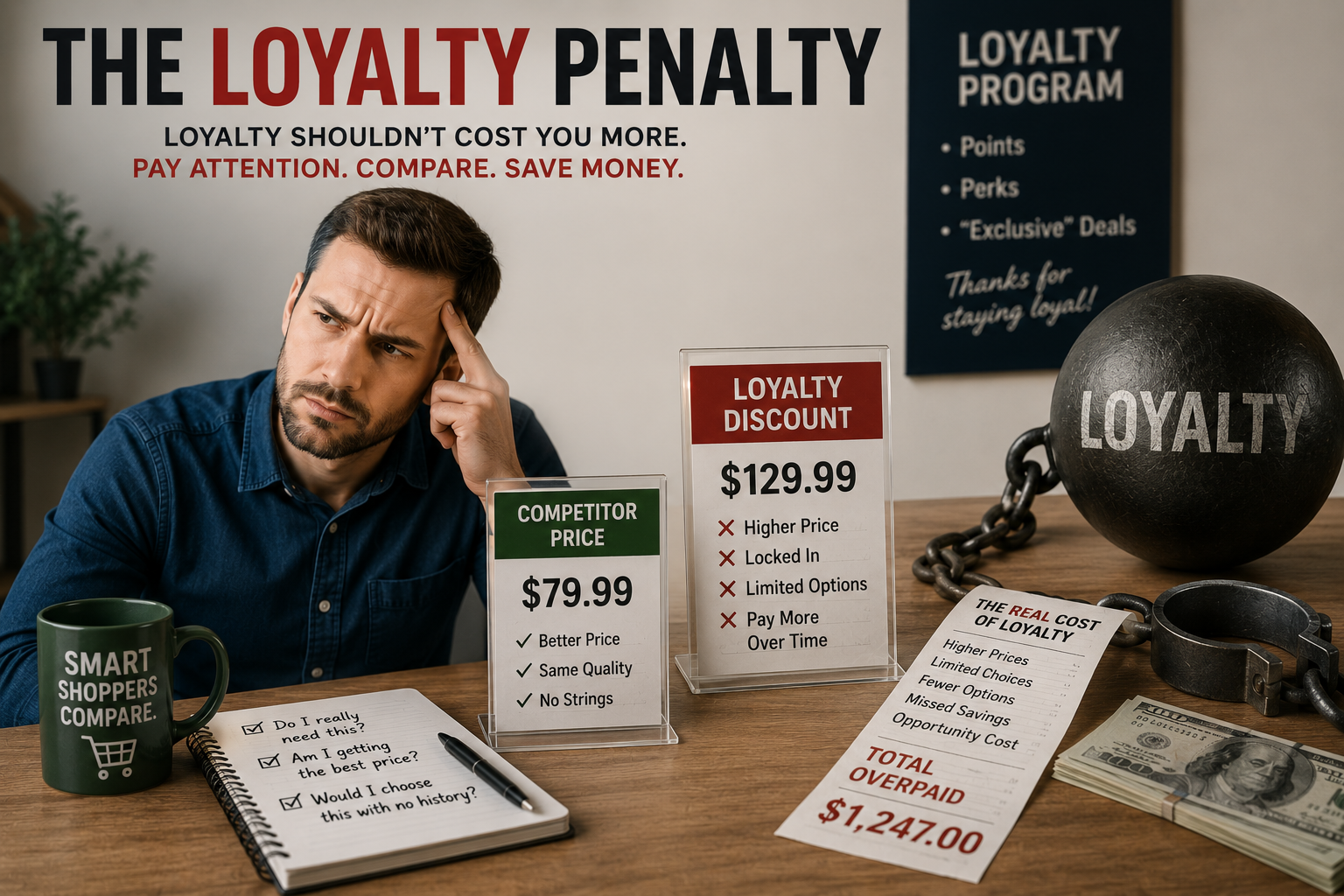
You’d think staying loyal to a company would pay off. In many industries, you get the loyalty penalty instead, and it works the other way around.
Cable providers, streaming services, insurance companies, even some subscription boxes all seem to run the same playbook. They quietly raise your bill year after year while you’re a customer, then the moment you call to cancel, a much better rate suddenly appears. Once you notice the pattern, you can’t unsee it, and it’s common enough that consumer advocates in the UK have formally called it out as a market-wide problem.
This isn’t just an annoying quirk of doing business. It’s a pricing strategy, and it says a lot about how some companies actually think about the customers who stick around.
How the Loyalty Penalty Works
Here’s the pattern in a nutshell. You sign up for a service at a decent rate. Over the following months and years, your bill creeps up a little at a time, usually explained away as inflation, new features, or “market adjustments.” Meanwhile, a brand-new customer signing up today gets a much better deal for the exact same service you’ve been paying for all along.
You don’t usually notice it happening in real time. It’s not one big price hike that sets off alarm bells. It’s small increases spread out over months, so by the time you compare notes with a new customer, the gap has quietly grown into something that feels unfair.
Why Retention Offers Only Show Up When You Try to Leave
The second part of this pattern is what really gets people. You finally get fed up, call to cancel, or start shopping around, and suddenly the company can offer you a much lower rate to stay. The retention deal is real, and it can save you real money. But it also raises an obvious question: if they could offer this price all along, why didn’t they?
This reactive approach works because it plays on urgency and loss aversion. Companies bet that most customers won’t bother making that call, and for the ones who do, a last-minute discount is cheaper than losing them entirely. It’s not that they don’t value you. It’s that they’ve calculated you’re worth more to fight for once you’re already halfway out the door than you are as a quiet, paying customer.
The Real Cost of the Loyalty Penalty Is Trust, Not Just Money
The loyalty penalty doesn’t just cost you dollars. It costs trust. Finding out a brand-new customer is paying less than you for identical service can make you feel taken for granted, especially after years of on-time payments and zero complaints.
And the retention offer, as good as it might look on paper, tends to leave a sour taste too. Getting a fair price only after threatening to cancel isn’t a reward. It’s a reminder that the company was willing to overcharge you until you pushed back.
Loyal customers who feel this way don’t usually stay quiet about it either. They tell friends, they leave reviews, and they start shopping every renewal instead of trusting the company to treat them fairly by default. That’s the part a lot of businesses seem to miss.
Why This Strategy Backfires Long-Term
The logic behind loyalty penalty pricing usually comes down to short-term revenue targets outweighing long-term relationships. It’s easier to hit this quarter’s numbers by squeezing existing customers than to build pricing that rewards loyalty from the start.
But that math misses something important: loyal customers are worth more than new ones, not less. They provide steadier revenue, are more likely to buy additional products or upgrade, and often refer other customers without being asked. Meanwhile, research from Harvard Business Review has long shown that acquiring a brand-new customer costs significantly more than keeping one a company already has. Chasing new sign-ups with better pricing while quietly overcharging existing customers is, in many cases, the more expensive strategy, not the cheaper one.
What Fair Pricing Could Look Like Instead
Companies that want long-term customer relationships, instead of a revolving door, tend to do a few things differently. They keep pricing transparent instead of burying increases in fine print. They build real loyalty perks into the relationship instead of reserving the best deals for people threatening to leave. And they check in with customers to understand what they actually want, rather than waiting for a cancellation call to start paying attention.
None of this is complicated. It just requires treating current customers like they’re worth keeping happy, not squeezing them until they push back.
What You Can Do About the Loyalty Penalty
If you suspect you’re paying it, the fix is usually pretty simple: call and ask. Companies rarely offer their best rate unprompted, but plenty will match or beat it if you ask directly, especially if you mention you’re comparing other providers. The FTC’s guidance on canceling subscriptions and negotiating bills is a good place to start if a company makes it difficult to leave or unclear how to get a better rate. It’s worth doing this once or twice a year for any recurring bill you’ve had for a while, whether that’s cable, insurance, streaming, or a subscription service.
You shouldn’t have to threaten to leave just to get treated fairly. But until companies change how they price loyalty, a little bit of squeaky-wheel persistence is often what it takes to get what a new customer would’ve been offered from day one.