
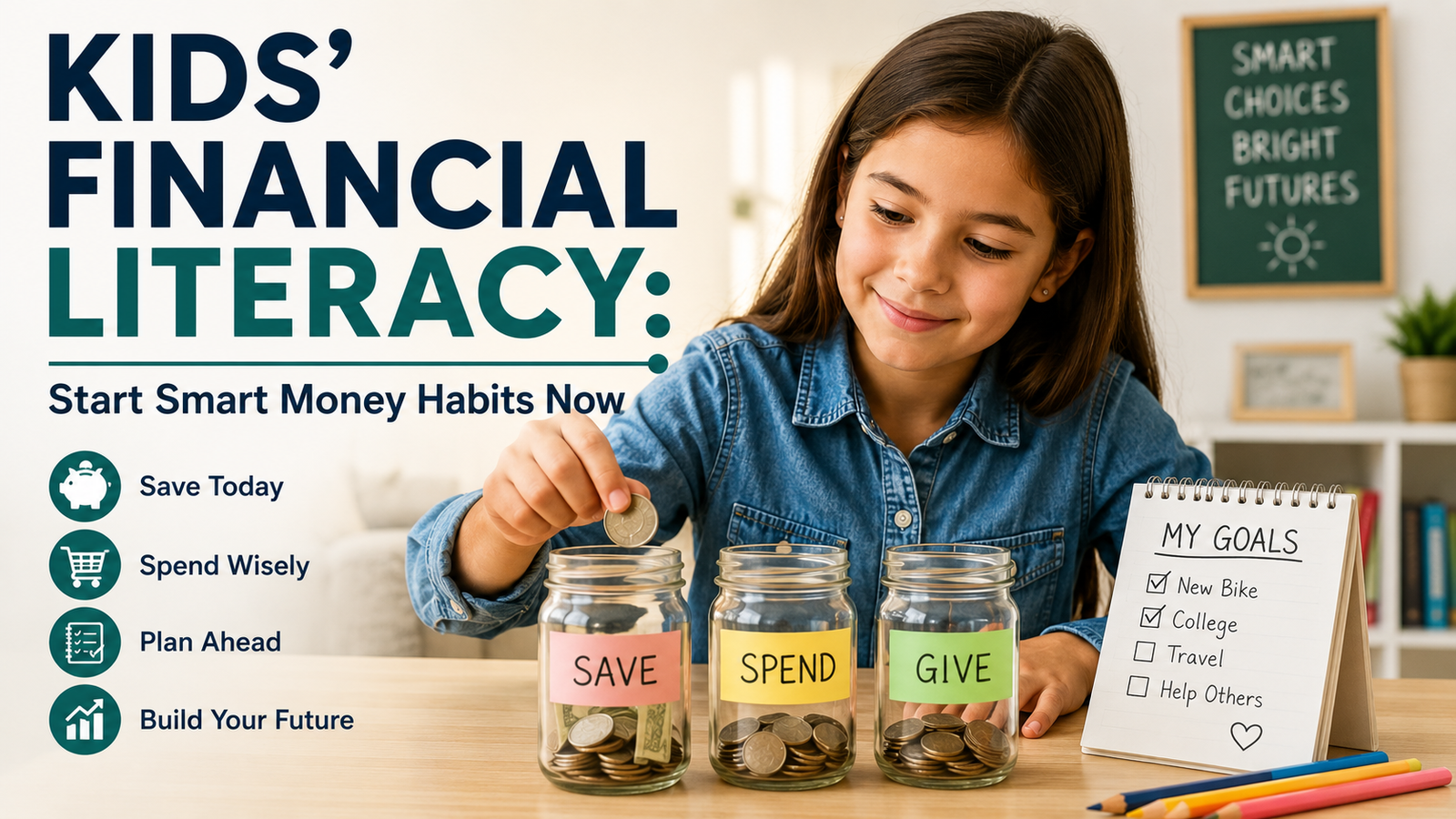
Kids’ financial literacy doesn’t have to start with a lesson about stocks, credit scores, or compound interest. It can start with something a lot simpler: “Do I spend my $20 now, or save it for something I want more?”
That’s a real financial decision. And those everyday moments are exactly where kids start learning how money actually works.
You don’t need to turn the kitchen table into a finance classroom. You just need to give your kids age-appropriate chances to earn, save, spend, plan, and occasionally make a small money mistake while the stakes are still low.
Here’s where to start.
Start With Real Money in Their Hands
Money can feel abstract to kids, especially now that so many purchases happen with a card, a phone, or a click. So let them handle some money of their own.
It could come from an allowance, gifts, chores, a part-time job, or whatever setup works for your family. About 71% of U.S. parents already give their kids some form of allowance, and the amount matters less than you’d think. What matters is giving your kid actual responsibility for deciding what happens to it.
Instead of telling them what to do with it, try asking:
- What do you want to do with this money?
- Is there something you’re saving for?
- If you buy this today, what won’t you be able to buy later?
- How much do you want to keep instead of spend?
Those small conversations introduce a lesson adults deal with every day: money is limited, so choices matter.

Teach Needs vs. Wants Before Anything Else
This might be the single most useful money lesson a kid can learn. Needs are things you must have. Wants are things you’d like to have. Sounds simple, until you start applying it to real purchases.
A basic pair of sneakers is a need. The limited-edition pair is a want. Food is a need. Delivery from a restaurant isn’t. A phone might be a genuine need for an older kid in some families. The newest model every single year probably isn’t.
The goal here isn’t to make kids feel bad about wanting things. Adults want things too. The goal is helping them recognize the difference before the money leaves their hands.
Try asking, “Is this a need, a want, or a little of both?” You might be surprised where the conversation goes.
Let Them Save Toward Something They Actually Want
Telling a kid to “save your money” doesn’t land the same way as giving that saving a purpose. Say your child wants something that costs $60 and they’ve got $15 saved up. Now you’ve got a real savings lesson on your hands.
How much more do they need, and how much could they realistically save each week? How long would it take to hit $60? Would they still want it after waiting that long?
A clear jar or envelope works well for younger kids because it makes progress visible. Older kids might be ready for an actual savings account. Either way, they’re building a habit that sticks: saving means choosing something later over something now. That’s delayed gratification, minus the lecture.
Give Them a Simple Spend, Save, Give Plan
Kids don’t need a 12-category household budget. They can start with three buckets: spend, save, give.
Adjust the categories to match your family’s values, but the point is showing kids that getting money doesn’t automatically mean spending all of it. If your child gets $20, help them decide how much stays available to spend and how much goes toward a goal.
As kids get older, the plan can get more detailed. A teenager with a part-time job might start budgeting across entertainment, clothing, gas, phone costs, savings, and longer-term goals. The exact numbers matter less than the habit underneath them: make a plan before you spend, not after.
Let Small Money Mistakes Happen
This one’s tough for a lot of parents. Your kid has $25. They spend $20 on something you already know they’ll regret. Your instinct is to stop them.
Sometimes stepping in is the right call. But sometimes the mistake is the lesson. If they spend it all today and can’t afford something they really want next week, they’ve just learned about opportunity cost in a way no worksheet could teach them. You don’t even need to say “I told you so.” They already know.
A $20 mistake at age 12 is a lot cheaper than learning the same lesson with a credit card at 22.
Explain How Borrowing Actually Works
As kids get older, financial literacy needs to expand into credit and debt. Start with the basic idea: borrowing lets you use someone else’s money now in exchange for paying it back later, usually with an added cost. That added cost is interest.
Show them a real example. Borrow $100 but end up repaying $115, and the item never really cost $100. Financing it cost $115. That’s the lesson they need before they start worrying about credit scores or loan applications.
It’s also worth skipping the oversimplified idea that debt is just “good” or “bad.” Borrowing for something like education, a car, or a home can support a real goal, but it still creates an obligation. A better question to teach them: what will this debt cost, can I actually afford the payments, and is what I’m borrowing for worth that price?
That’s a question they’ll use for the rest of their life.
Introduce Credit Before They Need It
Teens should understand that credit isn’t extra income. A credit card doesn’t add to how much money someone has. It just changes when they pay for something, and potentially how much they end up paying overall.
Only 17 states currently require a personal finance course to graduate high school, so a lot of teens reach adulthood without ever covering this in a classroom. Before your teen gets their first card, walk through a few basics with them:
- Credit card balances have to get repaid.
- Interest can make a purchase far more expensive than the price tag.
- Paying on time matters more than almost anything else.
- Carrying a balance isn’t required to build credit.
- Missed payments cause more than just a late fee.
- A credit score can affect what they pay to borrow later in life.
You don’t have to explain the entire scoring system. Just give them enough to understand that credit comes with responsibility attached.
Show Them How Compound Growth Works
Eventually, saving leads to another question: what if your money could earn money too? That’s investing.
Keep the first lesson simple. Money invested over a long stretch of time has a chance to grow, and those returns can generate more returns on top of themselves. The earlier someone starts, the more time compounding has to work in their favor.
You can bring in terms like stocks, bonds, index funds, diversification, and risk once your kid is ready for them. But don’t rush toward picking specific investments. The first real lesson should be about time, patience, and consistency, not chasing the next hot stock. That’s a much sturdier foundation to build on.
Talk About Money Where They Can Hear It
One of the best tools for kids’ financial literacy costs nothing: just talk about everyday money decisions out loud.
You don’t need to share every detail of the household budget or hand your kids adult-sized financial worries. Just let them hear the thinking behind normal choices.
At the grocery store: “That’s cheaper per ounce, so I’m buying the bigger one.” Planning a trip: “We’re setting money aside each month so we can afford it.” Replacing something: “We could get the pricier one, but I’m not sure the extra features are worth another $200.” Skipping a purchase: “We can afford it. I just don’t think it’s worth the money.”
That last one matters more than it sounds like it should. Being able to afford something doesn’t mean you have to buy it.
Match the Lessons to Their Age
Financial education should grow alongside your kid. A six-year-old doesn’t need to understand diversification. A 16-year-old probably should understand interest before you hand them a credit card.
Think of it as building in layers. Young kids can learn about coins and bills, spending and saving, needs and wants, and waiting for something they want. Older kids can start on simple budgets, savings goals, comparing prices, earning money, and weighing tradeoffs. Teens can move into banking, credit, interest, taxes, paychecks, investing, and bigger goals like college or a car.
You don’t have to cover it all at once. You’re building understanding one decision at a time, and that adds up faster than you’d expect. Only around 24% of teens say they actually understand how to build and stick to a budget, which tells you how much this groundwork matters before they’re on their own.
The Goal Isn’t a Financial Expert. It’s a Kid Who’s Practiced.
Your child doesn’t need to leave home knowing every financial term or running a flawless investing strategy. What they need is more practical than that.
Money involves choices, and they should understand that going in. Knowing how to save toward something, pause before spending, and weigh what borrowing really costs matters more than any vocabulary list. Most of all, they need real chances to practice.
Kids’ financial literacy was never really about how much information a child can memorize. It’s about the habits they’ll still be using long after you’ve stopped standing beside them.
Start small. Next time your kid wants to buy something, don’t jump straight to yes or no. Ask, “What do you think you should do with your money?” Then let the lesson happen on its own.