
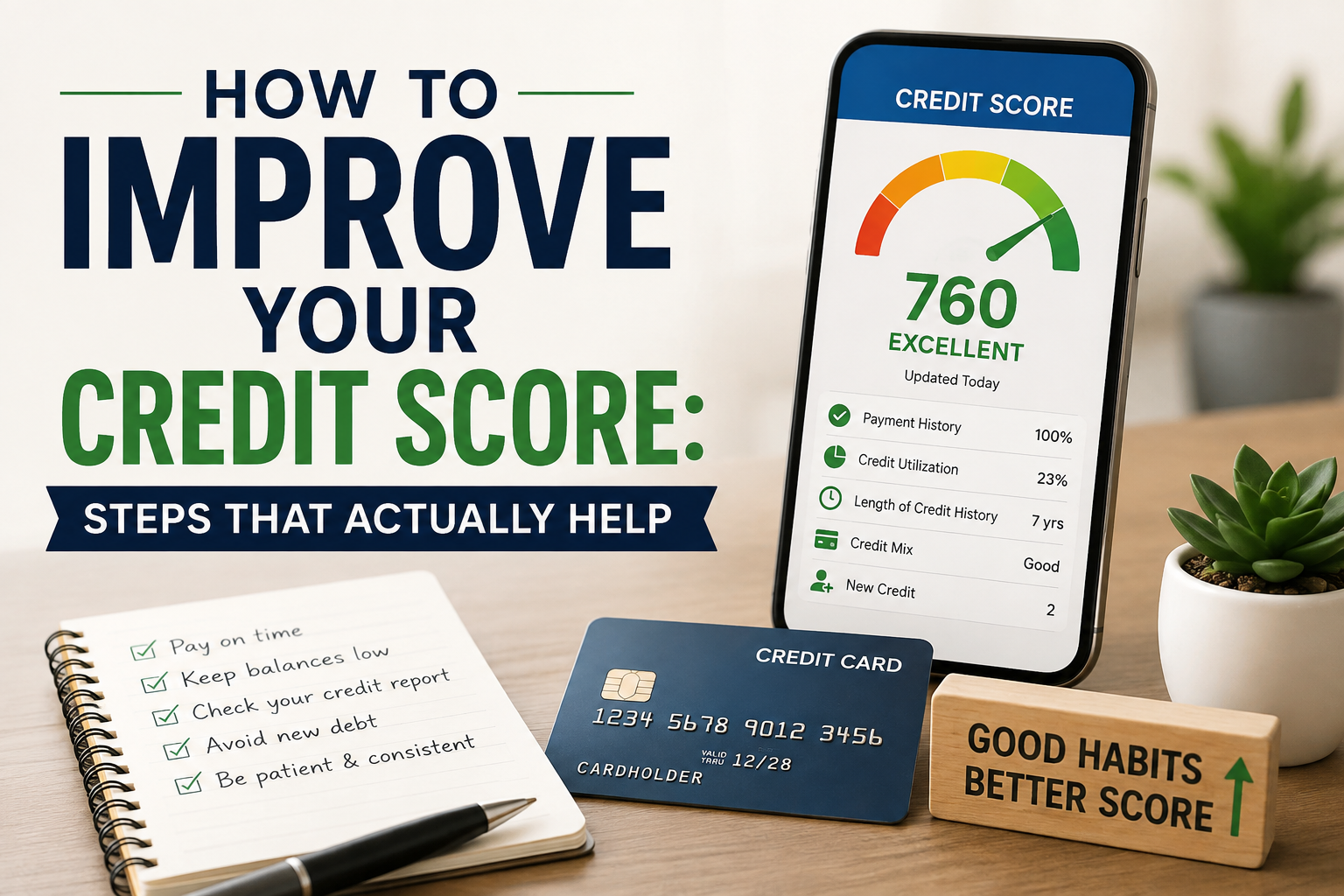
You pay down a card, check your score, and find that the number has barely moved. Meanwhile, an advertisement promises a dramatic increase if you buy its service. It is easy to wonder whether you are doing credit improvement the hard way.
Learning how to improve your credit score starts with identifying what actually needs attention in your record. An inaccurate late payment, a high reported card balance, and a very short credit history are different problems. They should not all receive the same generic advice.
The practical goal is to prevent new damage, correct what is wrong, and make affordable changes you can maintain. You do not need to pay interest to prove you can borrow, and no one can honestly guarantee an exact number of points by a particular date.
Photo by Eric Rothermel on Unsplash.
How to Improve Your Credit Score Starts With Your Report
Get your reports through AnnualCreditReport.com and review the current access options. Check the three nationwide bureaus because their information can differ. If a score service provides factors explaining the result, read those alongside the reports.
Look for the issue most relevant to you. Are payments being missed? Are revolving balances high relative to limits? Is the record thin? Is there information you believe is wrong? Write down what you found before applying for anything new.
For an unfamiliar account, investigate possible fraud using our identity theft guide. For an incorrect payment or balance, gather statements and dispute the error with the reporting company and information provider. Our credit disputes article explains how to keep supporting records.
Accurate unfavorable history is different from an error. Paying someone to dispute everything does not turn accurate information into inaccurate information. If the report is correct, work on the underlying behavior and obligations instead of buying a promise to erase them.
If Payments Are Slipping, Fix the System First
If you are working out how to improve your credit score, preventing another missed payment comes before complicated tactics. List each account’s due date, minimum required payment, and source of payment. Put them beside your income dates so you can see when cash needs to be available.
Automatic payments can help, but only if the account has sufficient funds. Review statements and check that withdrawals succeed. If your bills cluster before payday, ask whether an issuer permits a due-date change and when the change would begin.
If the problem is insufficient income rather than forgetting, a reminder will not solve it. Contact the creditor before the payment is missed and ask about assistance. Record the terms of any arrangement, including charges and how the account will be reported.
The CFPB rebuilding-credit guide provides a useful foundation. Paying as agreed is an everyday habit; it needs a workable cash-flow plan rather than a burst of enthusiasm once a year.
How to Improve Your Credit Score When Card Balances Are High
Credit utilization compares revolving balances with available credit limits. Consider a card with a $3,000 limit and a $900 reported balance. Its utilization is 30%. If the reported balance falls to $300 and the limit stays unchanged, utilization becomes 10%.
Those percentages describe the account; they do not predict a particular score increase. Models can consider individual cards and overall usage. There is no single threshold that guarantees approval, and getting just below a familiar percentage is not a reason to stop paying down expensive debt.
A statement balance, current balance, and reported balance can differ because they represent different dates. Paying the statement balance in full by the due date can avoid purchase interest when your card’s grace-period conditions apply, while an earlier reported balance may still appear on your report.
Ask the issuer about reporting practices if timing matters, particularly before a major application. Do not assume every lender updates on the same day. More important, do not leave rent or essential bills unfunded just to make one reporting snapshot look better.
When deciding how to improve your credit score while carrying several balances, consider your financial pressure as well as the number. Our snowball and avalanche comparison helps choose a sustainable repayment order.
Closing a Card Is a Financial Decision, Too
Closing an account can reduce available revolving credit. If balances remain, the same debt may use a larger share of your remaining limits. The CFPB explains this possible effect. If rewards are the reason you are considering a change, first check whether credit card rewards actually leave you ahead after annual fees, interest, and purchases made to earn bonuses.
Learning how to improve your credit score does not mean keeping every card open forever. An annual fee, difficulty monitoring the account, or a serious overspending risk may outweigh the benefit of retaining its limit. Ask about a suitable no-fee product change if the fee is the main concern.
Do not assume closing your oldest account instantly removes its history from the reports. Account retention and scoring effects depend on the record and model. Before acting, consider remaining balances, costs, recurring charges, and whether continued access helps or harms your budget.
How to Improve Your Credit Score With Little Credit History
A thin record needs time and reliable reporting. A suitable secured card or other credit-building product may help, but compare fees, deposit requirements, and which bureaus receive the account information. Not every product marketed to beginners offers good value.
The CFPB describes ways to establish or rebuild history. A prepaid spending card is not automatically a credit-building product. Read what the account does rather than relying on the product’s name.
If you choose a card, one small planned purchase paid in full can be easier to manage than several new accounts. Reserve the money for the bill. There is no need to increase spending or take an unnecessary loan solely to create a broader mix of credit.
Give Progress a Consistent Measuring Stick
To judge whether your plan for how to improve your credit score is working, use a consistent monitoring source. Note the scoring model, bureau, and date; a number from a different service is not a fair before-and-after comparison. Our credit score introduction explains why you can have several scores.
Allow time for payments and corrections to reach the reports. If something remains wrong, follow up using your records. If a balance has updated but the score moved less than expected, do not assume the payment was wasted. You still reduced an obligation and potentially future interest.
Before a home purchase, ask the lender before opening, closing, or financing anything new. Our mortgage credit scores article explains why the lender’s requirements matter more than matching an app’s number.
Make the Next Action Small Enough to Finish
Put what you have learned about how to improve your credit score into practice with a task that matches your record: dispute one documented error, arrange a payment reminder with enough funds behind it, or pay a sustainable extra amount toward a revolving balance. Write down when you will complete it and when you will check the result.
That is how to improve your credit score without turning it into another expensive hobby. The number matters because it can affect borrowing options. The habits matter because they also help you keep bills current, reduce debt, and make future decisions with less pressure.