
Have you ever been surprised by a loan denial or wondered why someone else qualified for a lower interest rate? In many cases, the answer comes down to your credit score.
Your credit score is one of the most important numbers in your financial life. It can affect whether you’re approved for a mortgage, qualify for a credit card, rent an apartment, or even how much you pay for insurance. The good news is that understanding how credit scores work makes it much easier to improve yours over time.
Let’s take a closer look at what a credit score is, why it matters, and the habits that help keep it healthy.
What Is a Credit Score?
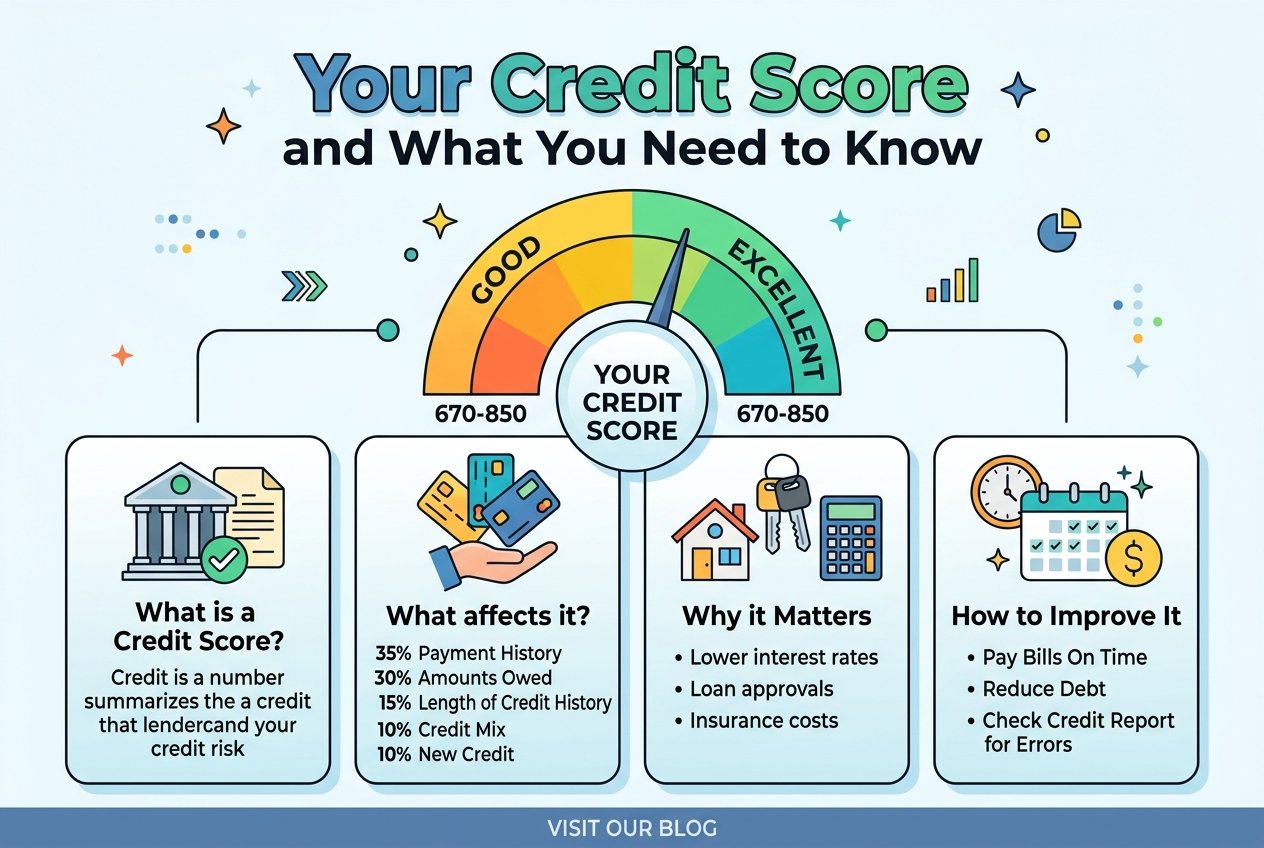
A credit score is a three-digit number that estimates how likely you are to repay borrowed money. Most scores range from 300 to 850, with higher scores showing lenders that you’ve managed credit responsibly.
While several scoring models exist, lenders commonly use versions of FICO® and VantageScore®. Regardless of the model, they all look at many of the same financial behaviors.
Think of your credit score as a financial report card. It doesn’t measure how much money you have—it measures how well you’ve handled the credit you’ve already been given.
What Affects Your Credit Score?
Although the exact formulas are proprietary, the major factors are well known.
Payment History
Your payment history has the greatest impact on your credit score. Paying your bills on time consistently shows lenders you’re reliable.
Even one missed payment can stay on your credit report for years.
Credit Utilization
Credit utilization is the percentage of your available credit that you’re using.
For example:
- Credit limit: $10,000
- Current balance: $2,000
- Credit utilization: 20%
Many financial experts recommend keeping utilization below 30%, and even lower is often better.
Length of Credit History
Older accounts generally help your score because they provide a longer history of responsible borrowing.
Closing your oldest credit card isn’t always the best decision, especially if it has no annual fee.
Credit Mix
Having experience with different types of credit—such as credit cards, auto loans, or mortgages—can slightly benefit your score.
That doesn’t mean you should borrow money simply to improve your credit. Only take on debt when it serves a legitimate financial purpose.
New Credit Applications
Each time you apply for new credit, lenders may perform a hard inquiry on your credit report.
One inquiry usually has only a small effect, but applying for several accounts within a short period can temporarily lower your score.
Why Your Credit Score Matters
Your credit score influences much more than borrowing money.
A strong credit score may help you:
- Qualify for lower interest rates
- Receive higher credit limits
- Get approved for mortgages and auto loans
- Rent an apartment more easily
- Pay less for certain insurance policies
- Obtain utility services with smaller deposits
Poor credit can make many of these financial milestones more expensive.
Simple Ways to Improve Your Credit Score
Improving your credit score doesn’t happen overnight, but consistent habits make a big difference.
Pay Every Bill on Time
Payment history carries the most weight. Setting up automatic payments or reminders can help you avoid costly late payments.
Lower Your Credit Card Balances
Reducing balances lowers your credit utilization ratio and can improve your score fairly quickly.
Avoid Closing Old Accounts
Older accounts contribute to the length of your credit history. If the account has no annual fee, keeping it open may benefit your score.
Apply for Credit Only When Necessary
Every application creates a hard inquiry. Limit new applications unless you genuinely need additional credit.
Review Your Credit Reports
Mistakes happen. Review your credit reports regularly to make sure the information is accurate and to spot potential identity theft early.
Building Good Credit Takes Time
Many people hope for a quick fix, but building a strong credit score is more like running a marathon than a sprint.
Responsible financial habits practiced month after month eventually lead to stronger credit and more financial opportunities.
The goal isn’t simply to achieve a high number. It’s to build financial habits that support long-term stability.
Final Thoughts
Your credit score is one of the most valuable financial tools you have. While you can’t change the past, you can influence your future by paying bills on time, keeping debt under control, and using credit responsibly.
Small improvements today can lead to lower borrowing costs, more financial flexibility, and greater peace of mind in the years ahead.