
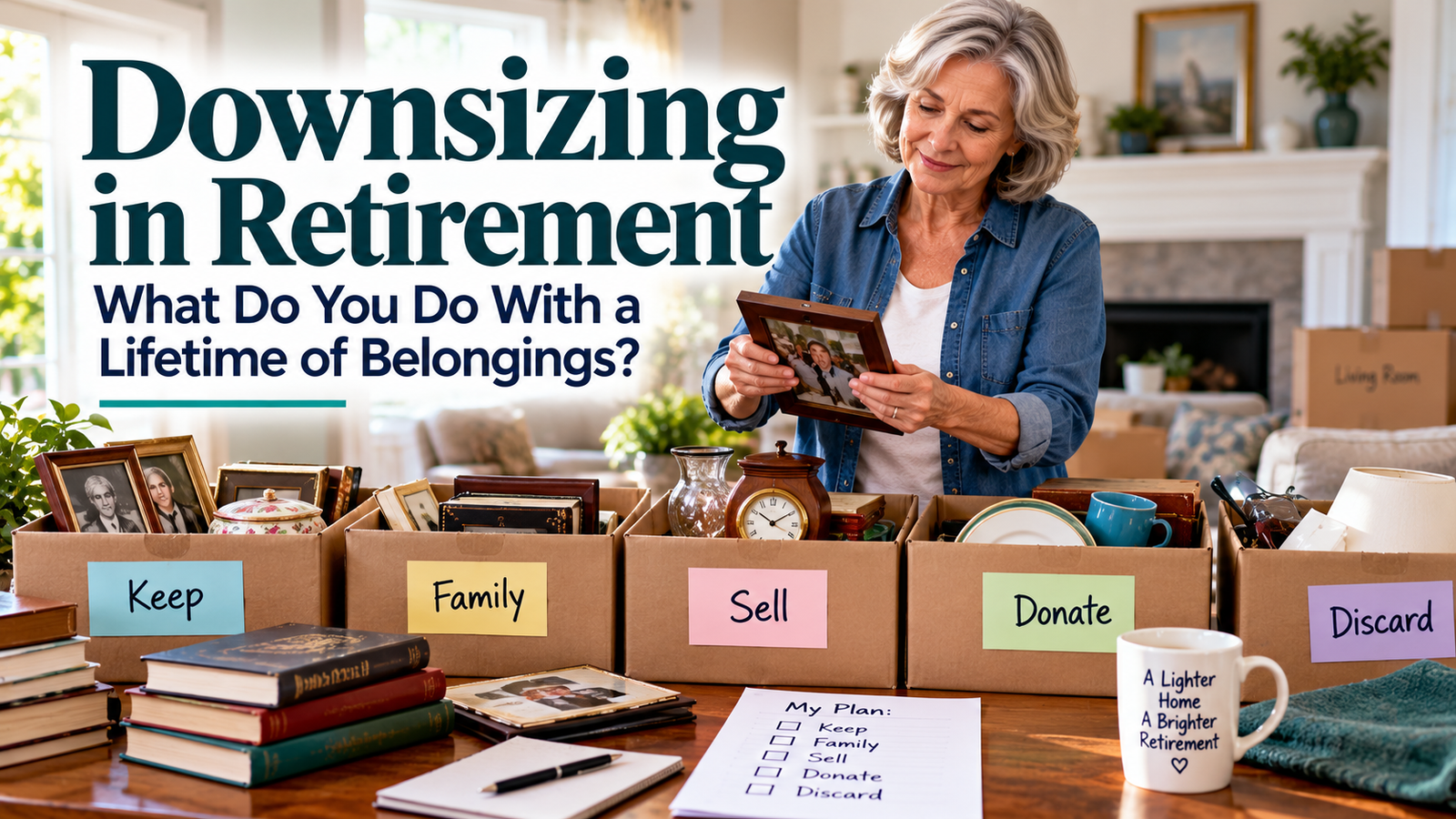
Downsizing in retirement is not just about moving to a smaller home. It is about deciding what to do with a lifetime of belongings. Furniture, photographs, tools, dishes, collections, clothing, paperwork, holiday decorations, keepsakes and things that once belonged to people you loved can fill a home one room at a time.
If you try to deal with everything at once, the job can become overwhelming very quickly. A better approach is to make smaller decisions, one category or one area at a time.
Downsizing in Retirement Can Start Before You Ever Move
You do not need a moving date to begin. In fact, downsizing in retirement often works better when there is no deadline because you have more control. You can take your time with sentimental belongings, ask family members what they actually want, research items that may have value, and stop when you are tired.
If you are also deciding whether your current house still fits your life, read Home in Retirement: Is Your Home Still Right for You?. The housing decision and the belongings decision are connected, but they do not have to happen at the same time.
Use Five Simple Choices: Keep, Family, Sell, Donate or Discard
When downsizing in retirement, give each item one of five destinations:
- Keep: You use it, need it, love it or know where it will go in your next home.
- Family: Someone genuinely wants it and is willing to take it.
- Sell: It has enough market value to justify the time and effort required to sell it.
- Donate: It is useful and in reasonable condition, but selling it is not worth the effort.
- Discard: It is broken, unsafe, badly worn, expired or unlikely to be useful to anyone else.
Do not create a sixth category called “decide later” for half the house. A small undecided box is reasonable. An undecided room simply postpones the problem.
Start With the Easy Things, Not the Most Emotional Things
Do not begin with wedding photographs, your spouse’s belongings or a box of your children’s school projects. When downsizing in retirement, begin somewhere easier: expired pantry items, duplicate kitchen tools, old towels, clothes you no longer wear, outdated electronics or a garage shelf you rarely use.
Early progress builds confidence. Sentimental decisions are easier after you have developed a rhythm.
Ask Family What They Want—Do Not Assume
Many parents have spent years thinking, “One of the kids will want this.” Sometimes they do. Sometimes they do not.
Ask. A dining-room set, china cabinet, silver service or collection may mean a great deal to you while not fitting your children’s homes or lifestyles. That does not make the item—or the memories attached to it—less important. Downsizing in retirement becomes much easier when family expectations are clear before boxes start moving.
Give family members a reasonable opportunity to choose. If several people want the same meaningful item, decide on a fair method while you are able to make the decision yourself.
Separate Sentimental Value From Market Value
An object can be priceless to your family and worth very little on the resale market. The reverse can also happen: something sitting unnoticed in a drawer or cabinet may have real value.
Before selling or donating jewelry, coins, art, antiques, signed items, collections or anything you suspect may be valuable, consider getting an independent appraisal or knowledgeable opinion. Avoid letting the person who wants to buy the item be your only source for what it is worth.
Decide Whether Selling Is Worth the Work
Selling belongings can bring in money, but it also takes time. Online listings require photographs, descriptions, messages, price negotiations, payment arrangements and often meeting strangers or shipping items.
For a few valuable pieces, the effort may make sense. For dozens of low-value household items, an estate-sale company, consignment shop, auction service or donation may be more practical.
When downsizing in retirement, your time and energy have value too.
Donating Can Be the Easiest Good Decision
Items that still have useful life can often help someone else. Local charities, thrift organizations, shelters, veterans’ organizations, churches and community groups may accept different types of household goods.
If you plan to claim a charitable tax deduction, keep appropriate records and check the current rules. The IRS guidance on charitable contributions explains documentation and deduction requirements. Household items generally must be in good used condition or better for a deduction, and special rules can apply to higher-value property.
Be Careful With Storage Units
A storage unit can be useful during a temporary move or renovation. It can also become an expensive way to avoid making decisions. For many people, downsizing in retirement is delayed for years because storage becomes a substitute for deciding what to keep.
Before renting one, calculate the annual cost—not just the monthly price. Then ask whether the belongings inside are worth paying that amount year after year to keep.
If you do use storage, set a date to review it. Otherwise “temporary” storage can quietly become permanent.
Photographs, Letters and Family History Deserve Their Own Plan
Old photographs and letters are different from ordinary household goods. Work through them slowly. Label people, places and approximate dates while someone still remembers them.
Digitizing selected photographs can make them easier to share with children and grandchildren, but you do not need to scan every photograph you have ever taken. Keep the images that tell the story.
Do Not Throw Away Important Papers While Clearing Clutter
Old stacks of paper can contain current deeds, insurance policies, tax records, military records, pension information, wills, trusts, beneficiary information and other documents that should not go into the recycling bin.
Create a separate “important documents” box before you begin sorting paperwork. Review it later when you can concentrate on what needs to be kept, shredded or updated.
For the estate-planning side of this work, see our Estate Planning Guide.
Downsizing After the Death of a Spouse Requires More Time
If you are downsizing after losing a spouse or partner, their belongings may carry a different emotional weight. There is rarely a need to empty closets or remove personal items simply because someone says it is time.
Handle urgent financial and household matters first. Then work through belongings when you are ready. Our guide When a Spouse Dies: Financial Steps for the Surviving Partner can help identify the financial tasks that may need attention sooner.
Do One Room—or One Drawer—at a Time
You do not need to “downsize the house” this weekend. Choose something small enough to finish.
One kitchen drawer. One closet shelf. One filing cabinet. One box in the garage.
Finishing a small area is more useful than pulling everything out of three rooms and becoming too exhausted to make decisions.
The Goal of Downsizing in Retirement Is Not to Erase Your Life
Your belongings tell pieces of your story. Downsizing does not mean those years no longer matter. It means choosing which things still deserve space in the life you are living now.
Keep what is useful. Keep what is meaningful. Share what someone else will treasure. Sell what is worth selling. Donate what can help another person. And give yourself permission to let the rest go.