
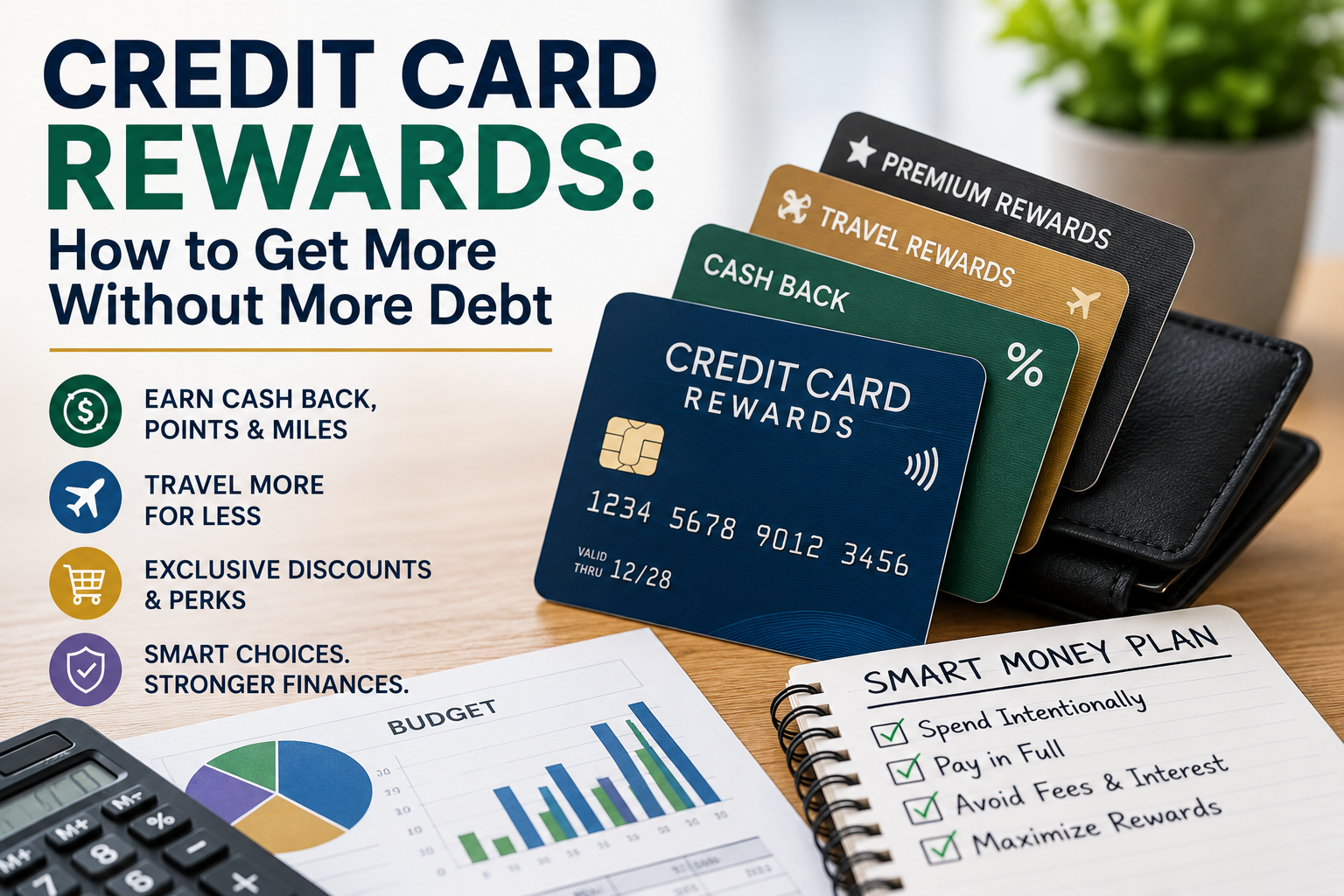
Credit card rewards can sound like free money. Swipe your card for groceries, gas, travel, or everyday purchases, and cash back, points, or miles show up along the way.
There’s a catch, though. Credit card rewards only work in your favor when the card itself isn’t costing you more than it pays back. If you’re carrying interest, overspending to chase a bonus, or racking up debt on purchases you couldn’t otherwise afford, that adds up fast. Those rewards stop being a deal.
So before you worry about maximizing points, start with the rule that actually matters. Never spend more just because you’re earning rewards. With that in place, here’s how credit card rewards really work. And how to use them without letting the rewards program use you.
What Are Credit Card Rewards, Really?
Rewards are incentives card issuers offer for using their card. Depending on the card, you might earn rewards on nearly everything you buy. Some cards only boost rewards in certain categories. Three types show up most often: cash back, points, and travel miles.
Cash Back
Cash-back cards return a percentage of what you spend. A card offering 2% cash back earns you $2 on a qualifying $100 purchase. Depending on the issuer, you might redeem that as a statement credit or a deposit into an account. Some offer other ways to cash out too. Cash back tends to be the easiest reward to understand, since its value is stated in plain dollars.
Points
Points programs award points on eligible spending. You can usually redeem them for travel, statement credits, gift cards, merchandise, or purchases through the issuer’s rewards portal. Here’s where it gets messier: a point doesn’t have one fixed value. The same stack of points can be worth very different amounts depending on how you redeem them. Figure out what yours are actually worth before assuming you’ve landed a great deal.
Travel Miles
Travel cards generally award miles or points you can put toward flights and other travel costs. Some let you transfer rewards to airlines or hotel programs. Others require booking through the issuer directly. Travel rewards can deliver real value for the right person. They also come loaded with rules, blackout dates, and transfer ratios. If you don’t travel much, a complicated travel card probably isn’t worth having just because the rewards sound impressive.
The Credit Card Rewards Math That Actually Matters
Say your card earns 2% cash back. You spend $1,000 and earn $20 in rewards. Not bad. But carry that $1,000 balance and start paying interest, and it doesn’t take much. That $20 disappears fast.
The average credit card APR sits around 22% right now. A balance sitting on a rewards card can erase its rewards value in a matter of weeks. That’s why chasing a reward percentage while ignoring the bigger picture is a mistake.
Ask yourself how much you’re actually earning from a card. Then ask how much it’s costing you. Factor in interest, annual fees, foreign transaction fees, and late fees. That question applies to more people than you’d guess. Nearly half of cardholders carried a balance for at least a month in the past year. If you’re routinely carrying a balance, maximizing rewards shouldn’t be the priority. Paying down that debt is worth a lot more than squeezing out another percentage point in rewards.
Choose Rewards That Match Spending You Already Do
A rewards card shouldn’t change your spending habits. It should reward the spending that was already going to happen. If groceries eat up most of your household budget, a grocery-heavy rewards card might make sense. If you travel a lot, travel rewards could be worth the complexity. And if your spending is scattered across categories, a simple flat-rate cash-back card is probably easier.
Notice the word normal in all of that. Don’t pick a card first and then go looking for ways to spend enough to justify having it. That’s backward. Your card should fit your spending, not the other way around.
Be Careful With Welcome Bonuses
Welcome bonuses can be tempting. A card might dangle a big pile of points, miles, or cash back for spending a certain amount early on. That’s genuinely worthwhile when the spending requirement matches expenses you already had planned.
Look closely at the requirement, though. Say you need to spend $4,000 in three months to earn the bonus. If you’d hit that number anyway through normal spending, great. If you find yourself buying things you don’t need just to clear the threshold, you haven’t earned a bonus. You’ve been talked into spending more money. Never spend $500 you didn’t need to spend to earn a reward worth $200. The credit card company will happily take that trade every time.
Don’t Chase Every Bonus Category
Some cards offer extra rewards on groceries, gas, restaurants, travel, streaming, or online shopping. Plenty rotate those categories throughout the year or require you to activate an offer first. Taking advantage of those is fine.
Just don’t turn everyday shopping into an accounting exercise unless you genuinely enjoy that kind of thing. Juggling four different cards to squeeze a few extra dollars out of your spending usually isn’t worth the complexity. For most people, simple and consistent beats perfectly optimized.
Annual Fees Need to Earn Their Keep
A card with a $95, $250, or higher annual fee isn’t automatically a bad deal. But the benefits need to justify that cost for you specifically. If a $95 fee comes with rewards worth considerably more based on how you actually spend, it can pay for itself.
Just don’t count a benefit at full advertised value if you’d never actually use it. A $100 credit toward something you never planned to buy isn’t worth $100 to you. A better test: would you still pay for these benefits if the card weren’t giving them to you for free?
Know What Your Points Are Actually Worth
This matters most with points and miles. Ten thousand points sounds impressive on paper, but what can you actually get for them? Check the redemption value before deciding how to use anything you’ve earned.
Depending on the program, you might get very different value redeeming for cash, travel, gift cards, or merchandise. Also check whether points expire and whether there’s a minimum redemption amount. Find out what happens to unused rewards if you close the account too. The number of points you have doesn’t matter nearly as much as what those points can actually buy.
Use Multiple Cards Only If You Can Manage Them
There’s a legitimate strategy in using different cards for different categories, one for groceries, one for travel, and so on. But more cards also mean more due dates, more statements, and more accounts to monitor. They also mean more chances to overspend or miss something.
If you’re organized and pay every balance in full, juggling several cards can work fine. If you occasionally miss a payment or already carry credit card debt, simplifying is probably the smarter move. The goal isn’t to win the rewards game. It’s to actually improve your finances.
Available Credit Isn’t Available Money
This trap catches a lot of people. A $10,000 credit limit doesn’t mean you have $10,000. It means the card issuer is willing to lend you up to that amount under the terms of your account. That’s a very different thing.
Before charging something to a rewards card, ask yourself a simple question. Would you still buy it if you had to pay for it directly from your checking account today? If the answer’s no, the rewards shouldn’t be what tips the decision.
The Best Credit Card Reward Might Be No Interest at All
There’s real irony in how people approach rewards. Americans paid roughly $253 billion in credit card interest and fees in 2025 alone. A lot of that came from people chasing an extra 1% or 2%. Meanwhile, they carried balances at rates many times higher. That’s chasing pennies while dollars walk out the door.
If you’re currently carrying credit card debt, the smartest move is probably to forget about maximizing rewards for now. Focus on stopping new unnecessary charges and paying on time. Put more than the minimum toward the balance when you can, and build an actual repayment plan. Once you’re not paying interest every month, rewards get a lot more rewarding.
Make Credit Card Rewards Work for You
Credit card rewards can add real value to your finances. There’s nothing wrong with earning cash back on groceries you were buying anyway. Or using points to knock down the cost of a trip you already had planned.
Just keep the priorities in order. Spend intentionally. Pay on time. Avoid interest whenever you can, understand the fees, and pick rewards that match your normal spending. Redeem them for something you’d actually value. Then let the points, miles, or cash back be exactly what they were meant to be. A bonus for spending you were already going to do, not a reason to spend more.