
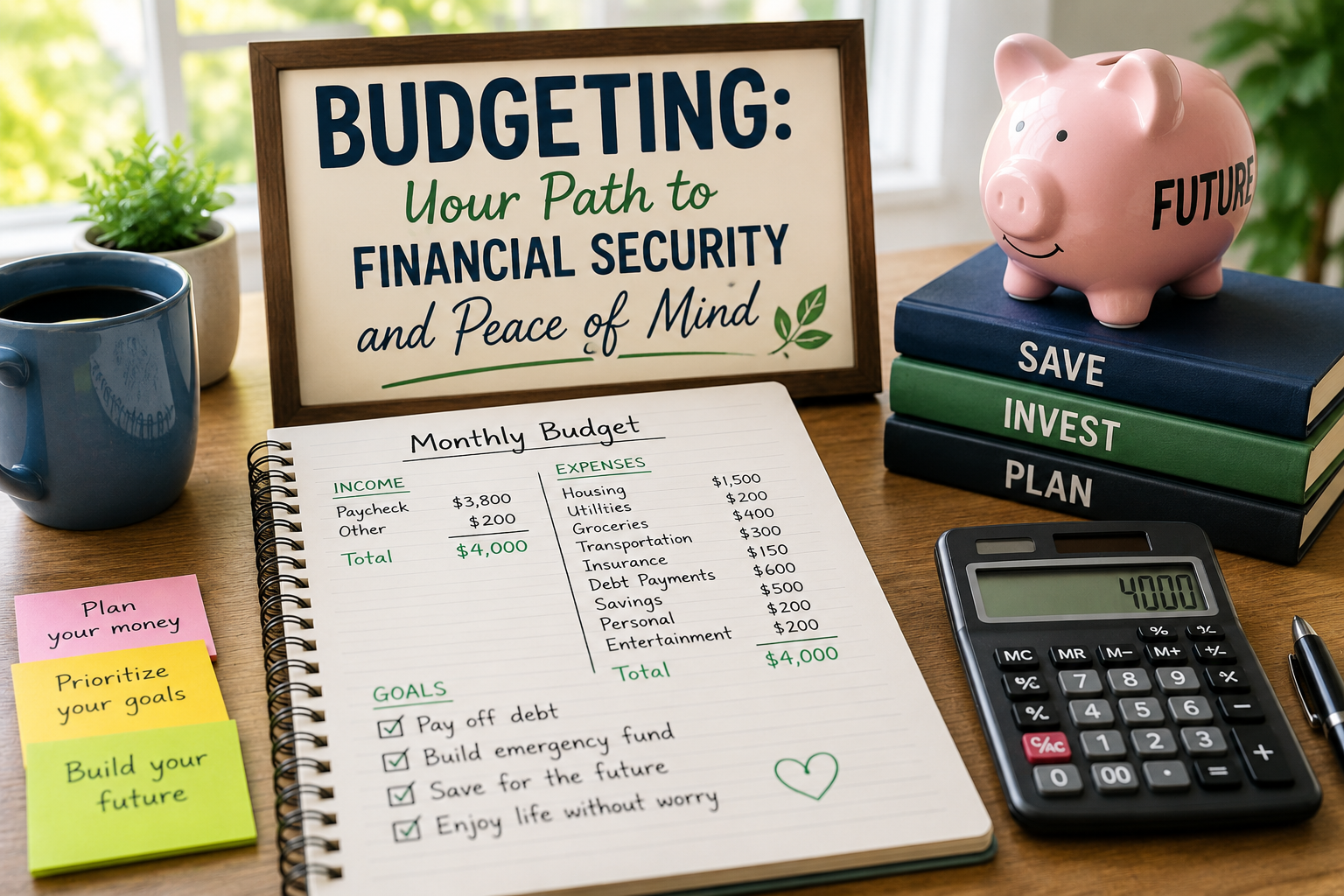
Budgeting is one of the most important financial habits you can develop. If you’ve ever wondered where your paycheck went before the month was over, you’re not alone. Many people struggle to balance their income with everyday expenses, leaving little room for savings or unexpected costs. The good news is that budgeting gives you a clear plan for your money, helping you reduce financial stress and make steady progress toward your goals.
A budget isn’t about restricting your spending. It’s about giving every dollar a purpose so you can spend with confidence while building a stronger financial future.

Why Budgeting Matters
Many people think budgeting is only necessary when money is tight. In reality, budgeting benefits everyone, regardless of income.
A good budget helps you:
- Know exactly where your money is going.
- Avoid unnecessary debt.
- Save for emergencies.
- Reach financial goals faster.
- Reduce money-related stress.
- Prepare for retirement and other long-term goals.
Instead of wondering where your money disappeared, budgeting allows you to tell your money where it should go.
Understand Your Current Financial Situation
The first step in budgeting is understanding your finances today.
Take a close look at:
- Your monthly income
- Fixed expenses like housing, insurance, and loan payments
- Variable expenses such as groceries, dining out, entertainment, and shopping
- Savings and investment contributions
- Outstanding debts
Many people are surprised to discover how much they spend on small purchases that quickly add up over the course of a month.
Once you understand your spending habits, you can make informed decisions instead of guessing.
Create a Budget That Works for You
There isn’t one perfect budgeting method.
Some people prefer detailed spreadsheets, while others use budgeting apps or even a simple notebook.
The important part is creating a realistic spending plan that reflects your lifestyle.
Your budget should include:
- Essential living expenses
- Savings
- Debt payments
- Retirement contributions
- Personal spending
- Entertainment
A budget that is too restrictive is difficult to maintain. Give yourself room to enjoy life while still making progress toward your financial goals.
Budgeting Helps You Reach Financial Goals
One of the greatest benefits of budgeting is that it turns financial dreams into achievable goals.
Whether you want to:
- Build an emergency fund
- Pay off credit card debt
- Buy your first home
- Save for college
- Retire comfortably
Budgeting helps you set aside money consistently instead of hoping there’s something left over at the end of the month.
Small monthly contributions often grow into significant achievements over time.
Build an Emergency Fund
Unexpected expenses happen to everyone.
Cars break down.
Appliances fail.
Medical bills appear when you least expect them.
Without savings, these surprises often become new debt.
Budgeting allows you to set aside money each month to build an emergency fund that protects your financial progress when life doesn’t go according to plan.
Even saving a small amount consistently can provide peace of mind.
Control Spending Without Feeling Deprived
Many people assume budgeting means giving up everything they enjoy.
The opposite is usually true.
Budgeting simply helps you spend intentionally.
When you know you’ve already planned for dining out, hobbies, vacations, or entertainment, you can enjoy those purchases without guilt because they fit within your financial plan.
The goal isn’t perfection.
The goal is making conscious spending decisions.
Use Budgeting to Reduce Debt
If paying off debt is one of your priorities, budgeting provides the roadmap.
By identifying unnecessary spending, you can redirect more money toward:
- Credit cards
- Personal loans
- Student loans
- Auto loans
Every extra payment reduces future interest costs and brings you closer to becoming debt-free.
Build Wealth Over Time
Budgeting isn’t just about paying bills.
It’s also about creating opportunities.
As your debt decreases and your savings grow, you’ll have more money available for investing and preparing for retirement.
Consistently investing even modest amounts over many years allows compound growth to work in your favor.
Budgeting today helps create financial security tomorrow.
Review Your Budget Regularly
Life changes.
Income changes.
Expenses change.
Your budget should change too.
Review your budget every month to make adjustments as needed.
A budget is a living financial tool—not something you create once and forget.
The more often you review it, the more effective it becomes.
Final Thoughts
Budgeting is the foundation of good financial health. It gives you control over your money instead of allowing your money to control you. By understanding your spending, setting realistic goals, building an emergency fund, reducing debt, and planning for the future, budgeting becomes one of the most powerful habits you can develop.
The sooner you begin budgeting, the sooner you’ll gain confidence in your financial decisions and move closer to the financial security you deserve.