
Financial terms people pretend to understand come up in nearly every money conversation you’ll ever have. Inflation, the Federal Reserve, ETFs, credit scores- someone mentions one of these, and everyone around the table just nods like it all makes perfect sense. You’re far from the only one faking it.
A 2026 TIAA Institute study reported by CBS News found that U.S. adults now answer only 47% of basic financial literacy questions correctly, the lowest decade-long score on record. Gen Z scored lowest of any generation, at just 38%. So if you’ve been quietly nodding along in meetings, at the dinner table, or during the news, you’re in very good company.
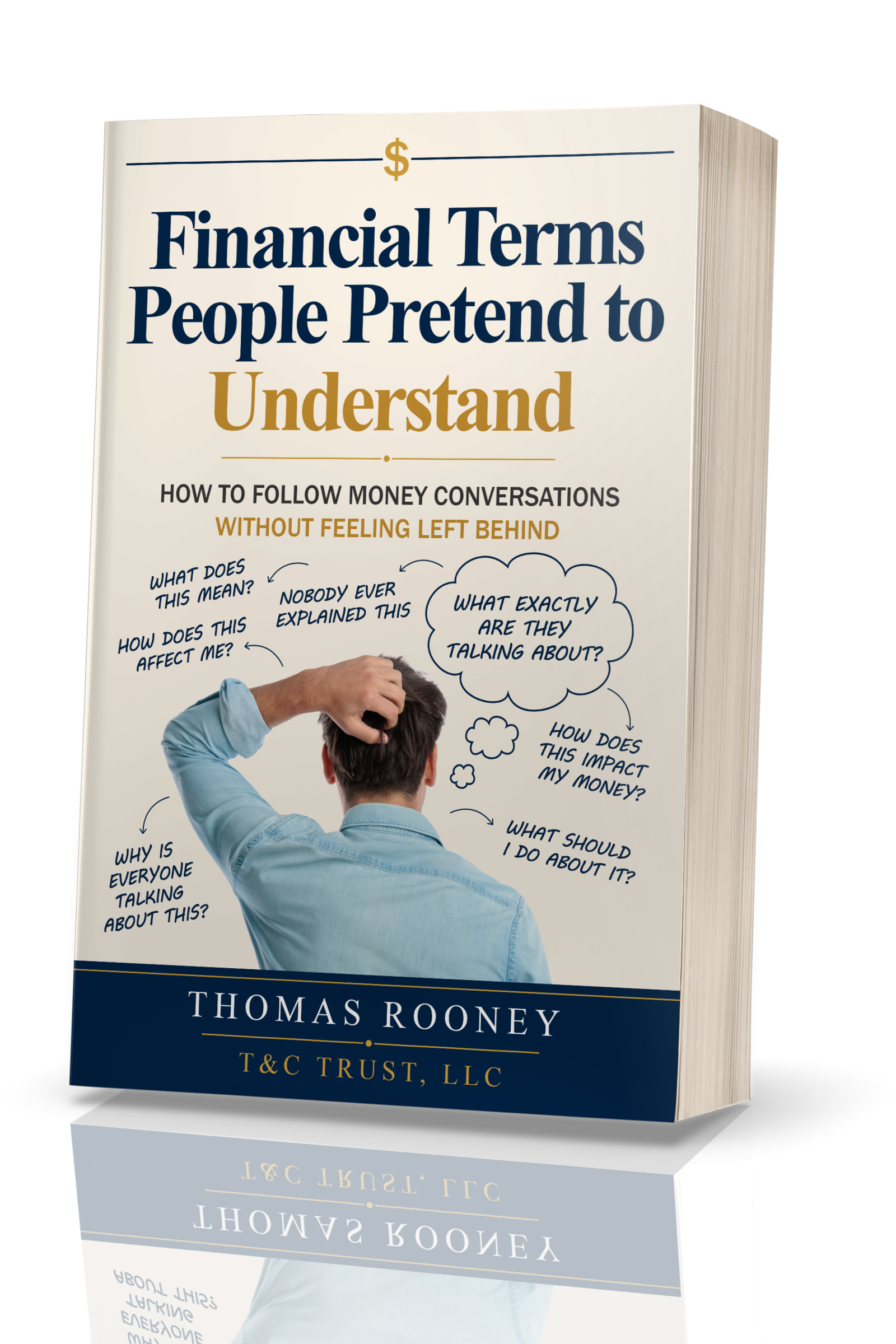
That’s exactly why I wrote Financial Terms People Pretend to Understand: How to Follow Money Conversations Without Feeling Left Behind, and I’m excited to say it’s now live on Amazon in both Kindle and paperback editions.
What This Book Actually Is
This isn’t a book about becoming a financial expert or mastering some complicated investment strategy. It’s a plain-English guide for anyone who’s tired of nodding along to money conversations they don’t fully follow, whether that’s in the news, at work, around the dinner table, or while planning for their own future.
Inside, I walk through the terms that come up again and again but rarely get explained clearly:
- Inflation and purchasing power
- Interest rates and borrowing
- Credit scores and credit cards
- Mortgages and loans
- Stocks, bonds, mutual funds, and ETFs
- The Federal Reserve
- Economic growth and recessions
- Retirement accounts
- Reading financial news with real confidence
Every chapter assumes you’re starting from zero, not that you already speak the language. The goal isn’t to overwhelm you with jargon. It’s to replace that jargon with something you can actually use.
I wrote it this way on purpose. Most financial books either assume you already know the basics, or they bury the basics under so much technical detail that you give up halfway through. This one starts wherever you’re starting, whether that’s “I’ve genuinely never known what a mutual fund is” or “I nod along when people mention the Fed, but I couldn’t explain what it actually does.” Either way, you’ll find a straight answer instead of another wall of jargon.
Why I Wrote a Book About Financial Terms People Pretend to Understand
After writing Understanding Money: A Beginner’s Guide to Personal Finance, I kept running into a different problem that a lot of adults share. They don’t need budgeting advice. It’s that they hear financial terms constantly and feel too embarrassed to ask what those terms actually mean.
This book answers that. Knowing the language of money won’t make anyone wealthy overnight, but it makes it easier to ask better questions, evaluate the advice you’re given, and make decisions from a place of understanding instead of guesswork. Confidence with money starts with actually understanding it, not just pretending to.
Think about how many decisions get made off the back of a term you half-understand. You sign a mortgage without really knowing how the interest breaks down. You hear “the Fed raised rates” on the news and nod, without knowing what that actually means for your own credit card or savings account. None of that is a personal failing. It’s just what happens when nobody ever sits down and explains the vocabulary in plain terms. That’s the gap this book is built to close.
Now Available on Amazon
Financial Terms People Pretend to Understand is available now in Kindle and paperback. If you’ve ever sat in a room feeling like everyone else was in on something you weren’t, this book was written with you in mind.
I hope it helps you trade a little uncertainty for understanding, one term at a time.