
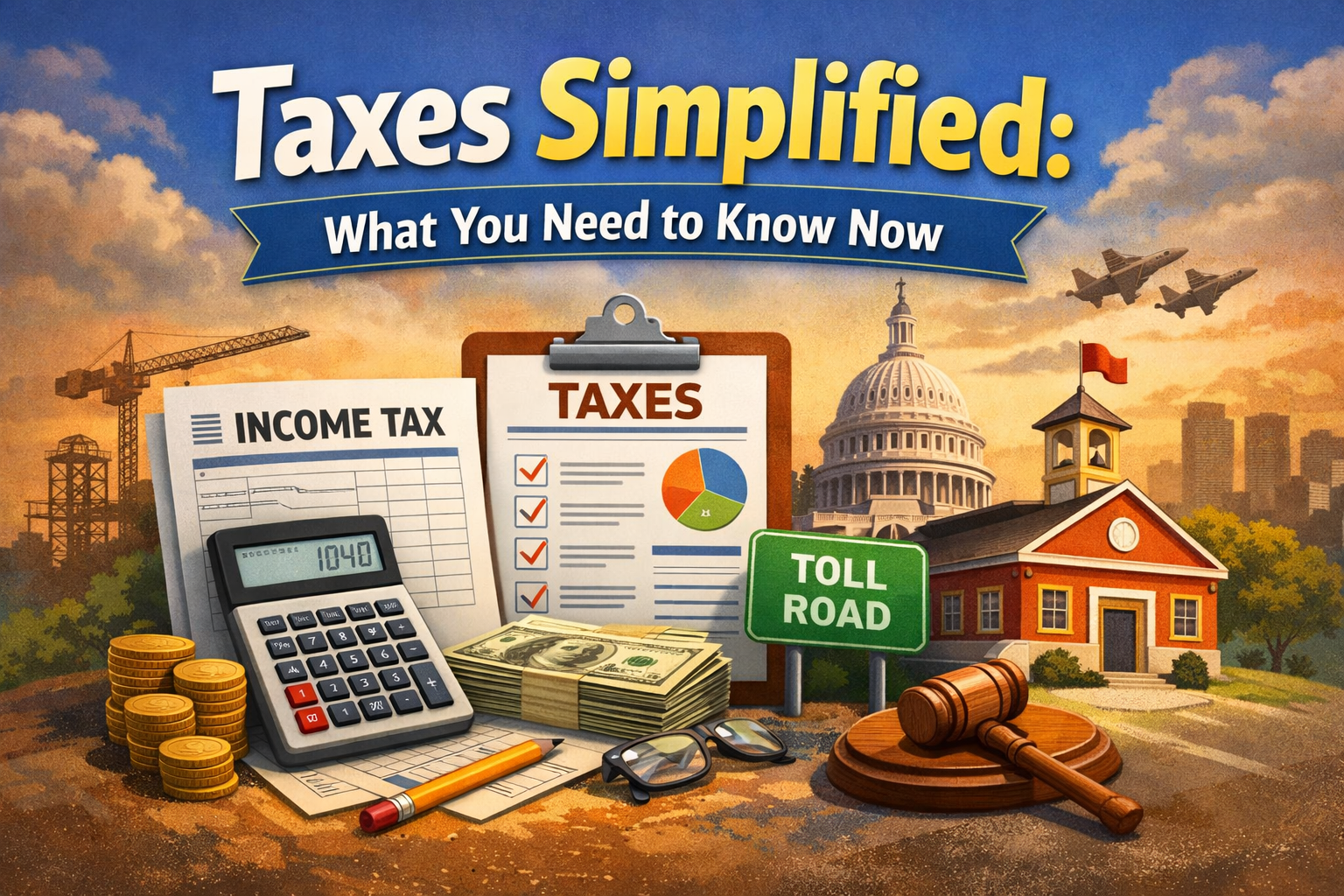
If you have ever opened your paycheck, stared at the deductions column, and quietly wondered where all that money actually goes, you are not alone. Taxes simplified means cutting through the noise and understanding the system for what it actually is — a mechanism that has existed for thousands of years because organized societies have always needed shared resources to function. The goal isn’t to turn you into a tax attorney. The goal is to give you the bigger picture so the numbers on your stub start to make more sense.
Taxes Simplified: A Brief History Worth Knowing
Taxation did not begin with the IRS or the Sixteenth Amendment. It began with ancient civilizations that needed a way to fund large projects no single person could pay for alone. In Egypt, farmers paid taxes with grain. In Rome, the government collected revenue to build roads, maintain aqueducts, and support a military. During the Middle Ages, taxes sometimes came in the form of labor—farmers working land owned by local rulers as direct payment to the state.
American history carries its own chapter on the subject. The phrase “no taxation without representation” became a rallying cry for colonists who resented being taxed by a government in which they had no voice. Once independence was established, however, the new nation still needed revenue. Governments have to operate, and operating costs money. That reality has never changed, no matter who holds power or what era we live in.

Why Governments Tax in the First Place
To make sure you get this subject taxes simplified; here’s the core reason. Certain things that benefit everyone—national defense, highways, courts, emergency services, public health infrastructure—cannot be funded individually at any meaningful scale. Taxes allow governments to pool resources, enabling shared services for the benefit of the entire population.
In an ideal model, everyone contributes something, and the resulting system supports everyone in return. Whether the current system lives up to that ideal is a fair question, and one people have argued since the first tax collector knocked on the first door. But the foundational logic behind taxation is not complicated. It is about building things together that none of us could build alone.
The Different Types of Taxes You Encounter
When most people think about taxes, income tax comes to mind first. That is the federal — and often state — tax applied to what you earn, typically structured on a progressive scale where higher income levels carry higher rates. But income tax is only one piece of a much larger picture.
Payroll taxes fund programs like Social Security and Medicare, and are split between you and your employer, with deductions taken before you ever see the money. Sales taxes are applied at the point of purchase and vary by state. Local governments assess property taxes, which commonly fund schools and municipal services. Excise taxes apply to specific goods like gasoline, tobacco, and alcohol — sometimes serving a dual purpose of raising revenue while discouraging certain behaviors. Road tolls round out the list as a direct user fee for access to infrastructure.
Each of these taxes serves a slightly different purpose, but together they form the financial framework that keeps governments at every level running.
The Fairness Question
Once you understand how taxation works, the next natural question is whether it is fair. That debate has no clean answer, and it has gone on for a long time.
Progressive taxation — the idea that people who earn more pay a higher percentage — rests on the argument that greater financial capacity should translate into a greater contribution to the public systems that made that success possible. Critics argue that higher earners already contribute a disproportionate share and that steep rates can reduce incentives to produce, invest, and grow.
A deeper fairness question also lies beneath the numbers. People who pay more in taxes generally receive the same public services as people who pay less. National defense, public roads, and emergency response are shared goods. That disconnect between contribution and benefit keeps the conversation alive and, at times, contentious.
Debates That Still Deserve Attention
Some of the most persistent arguments about taxation involve specific groups and specific circumstances. Retirees often ask why they still pay school property taxes after their children have long since graduated. The counterargument is that strong local schools raise property values and improve the broader community for everyone who lives there. Neither side is entirely wrong.
Renters sometimes assume they are off the hook for property taxes since they do not technically own real estate. In practice, landlords often build property tax costs into rent, meaning renters contribute indirectly, whether they realize it or not. Tourist-heavy communities have their own version of this conversation — visitors use roads, parks, and public services, which is why hotel taxes and tourism fees exist to ensure residents don’t absorb those costs entirely.
In taxes simplified, these are not abstract policy debates. They are decisions that affect how much money stays in your pocket and how your community allocates its resources.
What You Can Actually Do About It
Taxes simplified doesn’t mean taxes disappear — it means you can actively manage their impact on your finances. Tax-advantaged accounts — traditional and Roth IRAs, 401(k) plans, health savings accounts — exist specifically to let your money grow while reducing your taxable income in the present or future. Understanding the difference between deductions, which lower your taxable income, and credits, which directly reduce what you owe, is one of the most practical pieces of financial literacy available to any working adult.
It helps to know where things stand for the current tax year, too. The IRS adjusts the standard deduction annually for inflation, and that shift can meaningfully change what you owe — see the latest tax bracket breakdown for up-to-date numbers and how they affect your paycheck.
Long-term investment strategy matters too. Assets held for more than a year are generally taxed at lower rates than short-term gains, which gives patient investors a meaningful advantage. Working with a qualified tax professional, especially as your financial picture grows more complex, is rarely a wasted expense, and staying on top of tax preparation throughout the year keeps that relationship productive instead of reactive. The goal is never to avoid the system entirely — it is to understand it well enough to use it to your advantage legally and responsibly.
The Bottom Line
Taxes simplified is not about stripping out complexity for its own sake. It is about recognizing that the system, for all its frustrations, has roots in the earliest organized societies and exists for fundamentally practical reasons. Shared services require shared funding. The debates about how that funding should be structured, and who should bear how much of the burden, reflect the ongoing negotiation that defines civic life.
When you understand how the system works — where the taxes come from, what they pay for, and what choices are available to you — you move from feeling like a passive subject of the tax code to someone who can plan, decide, and act with clarity. That shift in understanding is worth more than any single deduction.