
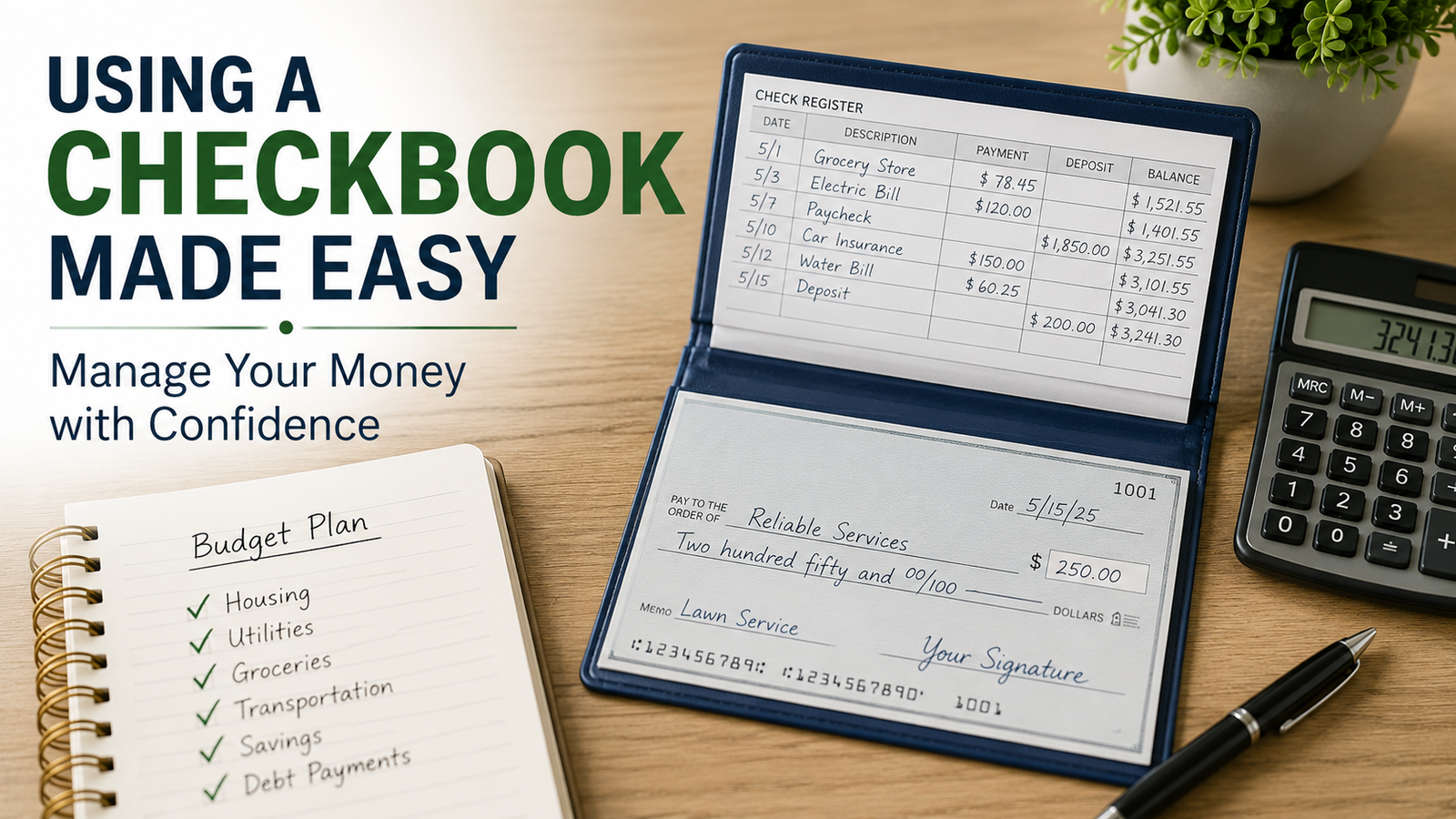
Between debit cards, online banking, and mobile payment apps, you might wonder if a checkbook still has a place in your wallet. It does.
People write fewer checks than they used to, sure. But checks still get used all the time — paying contractors, rent, charitable donations, government fees, and plenty of other transactions where electronic payment just isn’t an option.
Knowing how to use a checkbook is one of those practical skills that saves you time, keeps you from making dumb mistakes, and helps you manage your money with a little more confidence.
What Is a Checkbook?
A checkbook is a set of preprinted checks tied to your checking account at a bank or credit union. Each check lets you authorize a payment straight from that account.
Most checkbooks also come with:
- A check register for logging transactions
- Deposit slips for adding money to your account
- Built-in security features to help cut down on fraud
Even if you barely touch a checkbook these days, understanding how one works is still part of being financially literate.
How to Write a Check
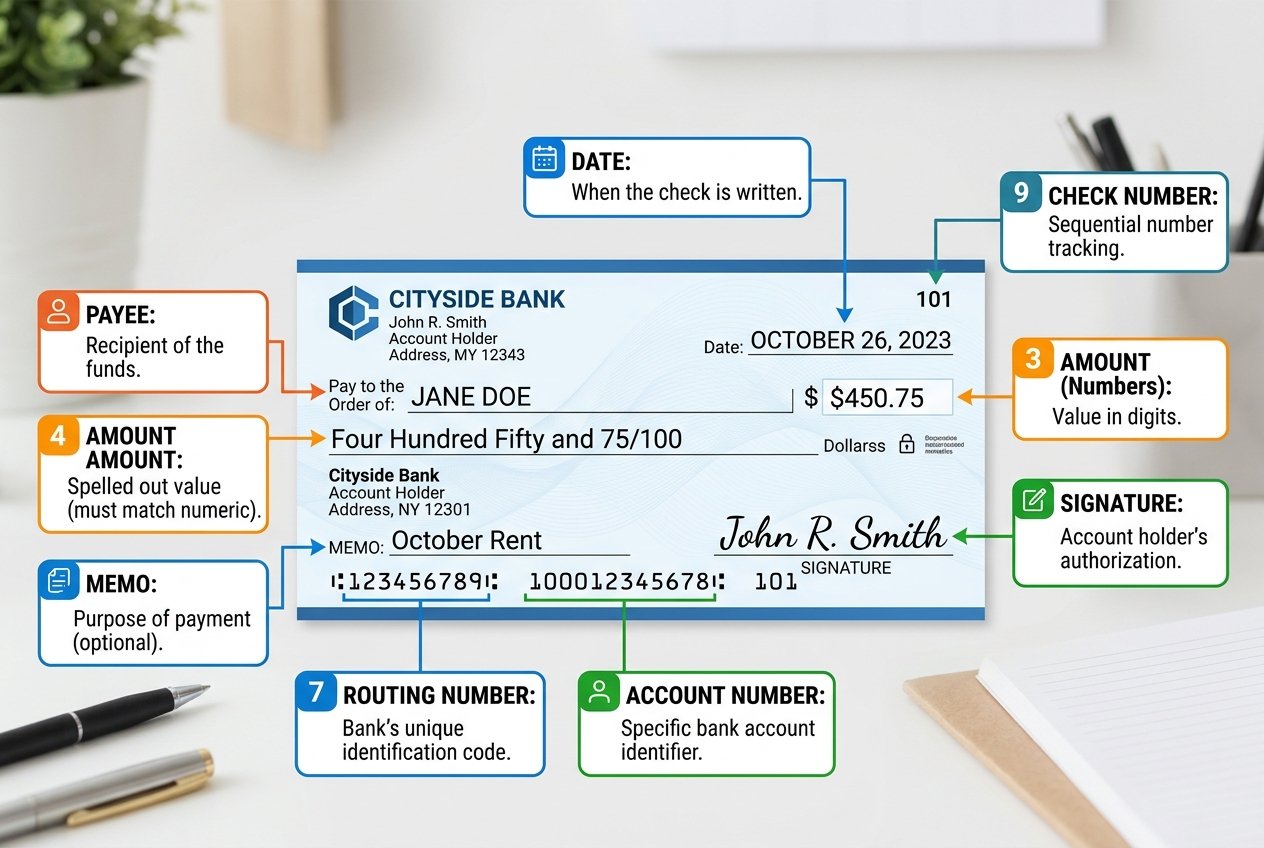
Writing a check isn’t complicated once you know what goes where.
- Write the current date
- Write the name of the person or business getting paid
- Enter the payment amount in numbers
- Write that same amount out in words
- Add a memo if you want to note what the payment’s for
- Sign it with your normal signature
Before you hand it over, glance it over one more time. Make sure everything’s filled in and legible.
Do You Still Need a Check Register?
Years ago, balancing a paper check register every month wasn’t optional — it was just how you managed your money. Today, most people rely on online banking or a mobile app instead, and those tools automatically log debit purchases, ATM withdrawals, transfers, and deposits for you.
That said, a check register still earns its keep if you:
- Write paper checks fairly often
- Want a backup record of your transactions
- Prefer tracking your money on paper
- Need to account for checks that haven’t cleared yet
Paper or digital, the goal’s the same: know how much money you actually have before you spend it.
Why Reconcile Your Checking Account?
Reconciling just means lining up your records against your bank statement to make sure they match.
Doing this regularly helps you:
- Catch bank errors
- Spot fraudulent transactions
- Avoid overdraft fees
- Confirm that outstanding checks have cleared
- Keep your balance accurate
The FDIC recommends reviewing your account regularly, and it really only takes a few minutes a month. That small habit can head off much bigger headaches later.
Protect Yourself From Check Fraud
Electronic fraud gets most of the headlines these days, but check fraud is still very much alive. The FTC warns that fraudulent checks remain a common tool scammers use to steal money.
A few simple habits go a long way:
- Keep your checkbook somewhere secure
- Never sign a blank check
- Use permanent black or blue ink
- Check your account regularly
- Report missing checks right away
- Shred unused checks and old banking documents before tossing them
If someone steals a check, they may try to alter the payee or the dollar amount — which is exactly why careful record-keeping matters so much. If you ever suspect fraud, you can also report it directly to the FTC.
When Should You Actually Use a Check?
Plenty of payments can go electronic these days, but checks still make sense for things like:
- Paying certain contractors or small businesses
- Sending gifts
- Making charitable donations
- Paying government agencies
- Any transaction where electronic payment isn’t accepted
For your regular monthly bills, though, online bill pay or automatic payments are usually faster and more convenient.
A Skill Worth Keeping
Technology keeps changing how we manage money, but the checkbook hasn’t gone anywhere.
Knowing how to write a check, keep an eye on your checking account, and protect yourself from fraud gives you one more tool in your financial toolkit. Even if you only write a handful of checks a year, understanding how they work keeps you in control.
Financial confidence isn’t about chasing the newest payment method out there. It’s