
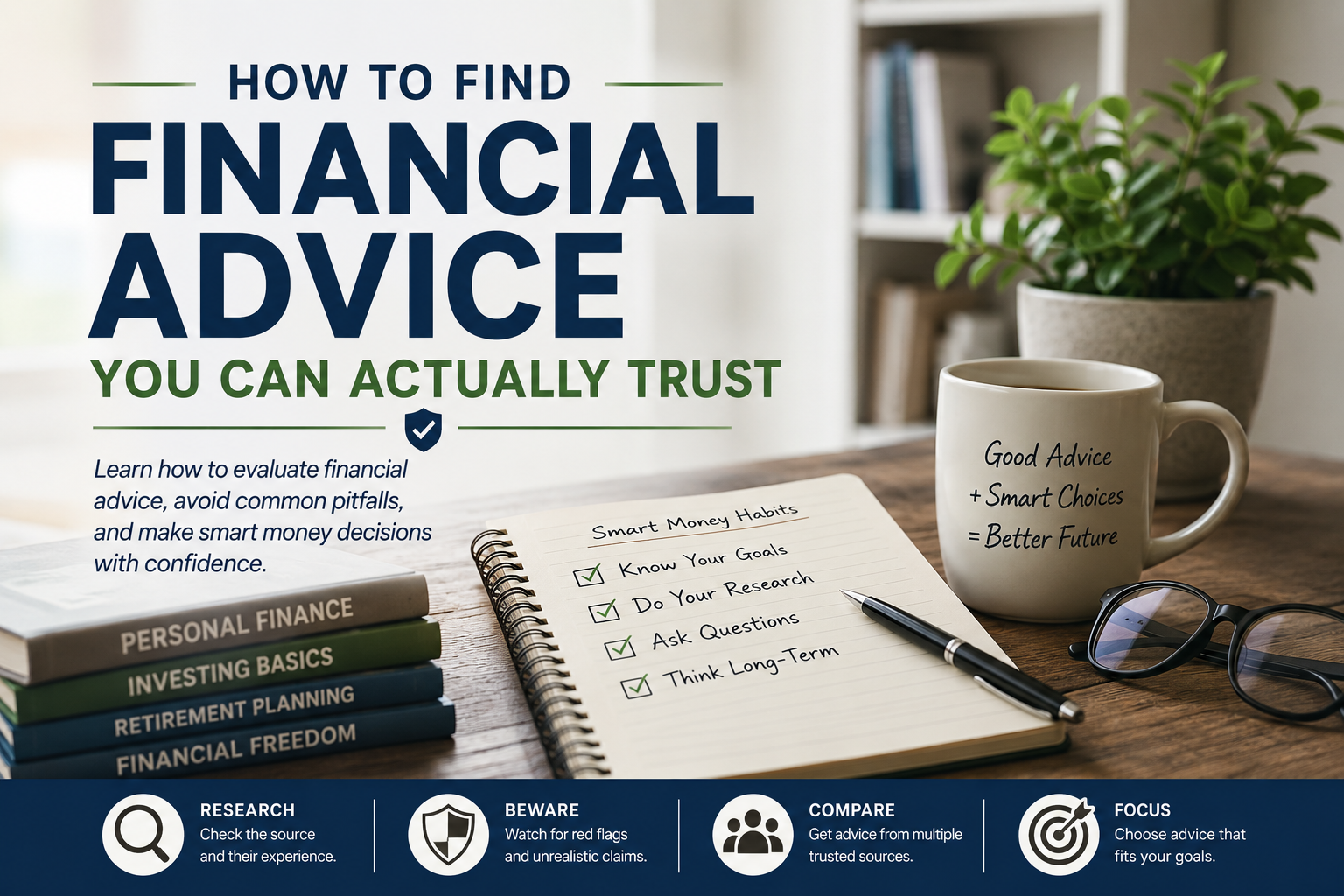
The internet has made financial advice easier to find than ever before. Unfortunately, it has also made it harder to know who to believe. From social media influencers and YouTube personalities to financial advisors and investment firms, everyone seems to have an opinion about the “best” way to manage your money.
The truth is that there is no one-size-fits-all financial strategy. What works for one person may not work for another. Learning how to evaluate financial advice is just as important as the advice itself.

Start with Your Financial Goals
Before following anyone’s recommendations, take a step back and ask yourself what you’re trying to accomplish.
Are you trying to:
- Pay off debt?
- Build an emergency fund?
- Save for retirement?
- Buy a home?
- Start investing?
- Improve your credit score?
The best financial advice is the advice that helps you reach your goals—not someone else’s.
Look for Experience, Not Just Popularity
A large following on social media doesn’t automatically make someone a financial expert.
When evaluating a source of financial advice, consider questions such as:
- What experience do they have?
- Do they explain why their recommendations work?
- Are they educating people or simply trying to sell something?
- Do they acknowledge that different financial situations require different solutions?
Trustworthy educators focus on helping people understand financial concepts instead of promising quick riches or guaranteed success.
Be Careful of “One-Size-Fits-All” Advice
You’ll often hear statements like:
- “Everyone should buy real estate.”
- “Credit cards are always bad.”
- “You should never finance a car.”
- “This investment can’t lose.”
Financial decisions are rarely that simple.
Your income, family situation, debt level, age, career, and financial goals all influence what makes sense for you. Good financial advice recognizes that personal finance is exactly that—personal.
Learn From Multiple Trusted Sources
Some financial educators specialize in investing. Others focus on budgeting, debt reduction, retirement planning, or financial independence.
Reading from a variety of reputable sources gives you a broader perspective and helps you recognize common principles instead of following a single personality.
For example, you might learn long-term investing principles from Warren Buffett, debt reduction strategies from Dave Ramsey, or retirement planning ideas from Suze Orman. While each has valuable insights, they also have different philosophies and audiences. Rather than trying to copy one person’s approach, focus on understanding the principles behind their advice.
Use Financial Institutions as Educational Resources
Many banks, credit unions, brokerages, and investment companies publish free educational articles, calculators, videos, and retirement planning tools.
These resources can help you learn the basics of budgeting, investing, credit, and saving. Just remember that financial institutions also offer products and services, so it’s wise to compare information from several reputable sources before making important financial decisions.
Watch for Red Flags
Some financial advice should raise immediate concerns.
Be cautious if someone:
- Promises guaranteed investment returns.
- Claims you’ll become wealthy quickly.
- Pressures you to act immediately.
- Says their strategy works for everyone.
- Focuses more on selling a product than educating you.
- Encourages borrowing money to invest.
- Uses fear or hype instead of facts.
Building wealth takes time, discipline, and consistent money habits. Anyone promising shortcuts deserves extra scrutiny.
Verify What You Read
Whenever possible, confirm important financial information through multiple reliable sources.
Government agencies, nonprofit organizations, respected financial publications, and established financial institutions often provide excellent educational material. Comparing information helps you identify advice that is widely accepted rather than based on opinion alone.
Build Knowledge Instead of Following Personalities
One of the best ways to improve your financial future is to understand the basic principles of personal finance.
When you understand topics like budgeting, debt management, investing, taxes, insurance, and retirement planning, you’ll be able to evaluate new advice with confidence instead of relying on someone else to make decisions for you.
The goal isn’t to find a financial guru. It’s to become informed enough to recognize good advice when you see it.
Final Thoughts
There are many trustworthy people and organizations willing to help you improve your finances, but no single expert has all the answers. The best financial advice is honest, balanced, supported by sound principles, and appropriate for your personal situation.
As you continue building better money habits, focus on learning, asking questions, and making informed decisions. Over time, you’ll develop the confidence to separate helpful guidance from empty promises—and that’s a skill that will benefit you for the rest of your financial life.