
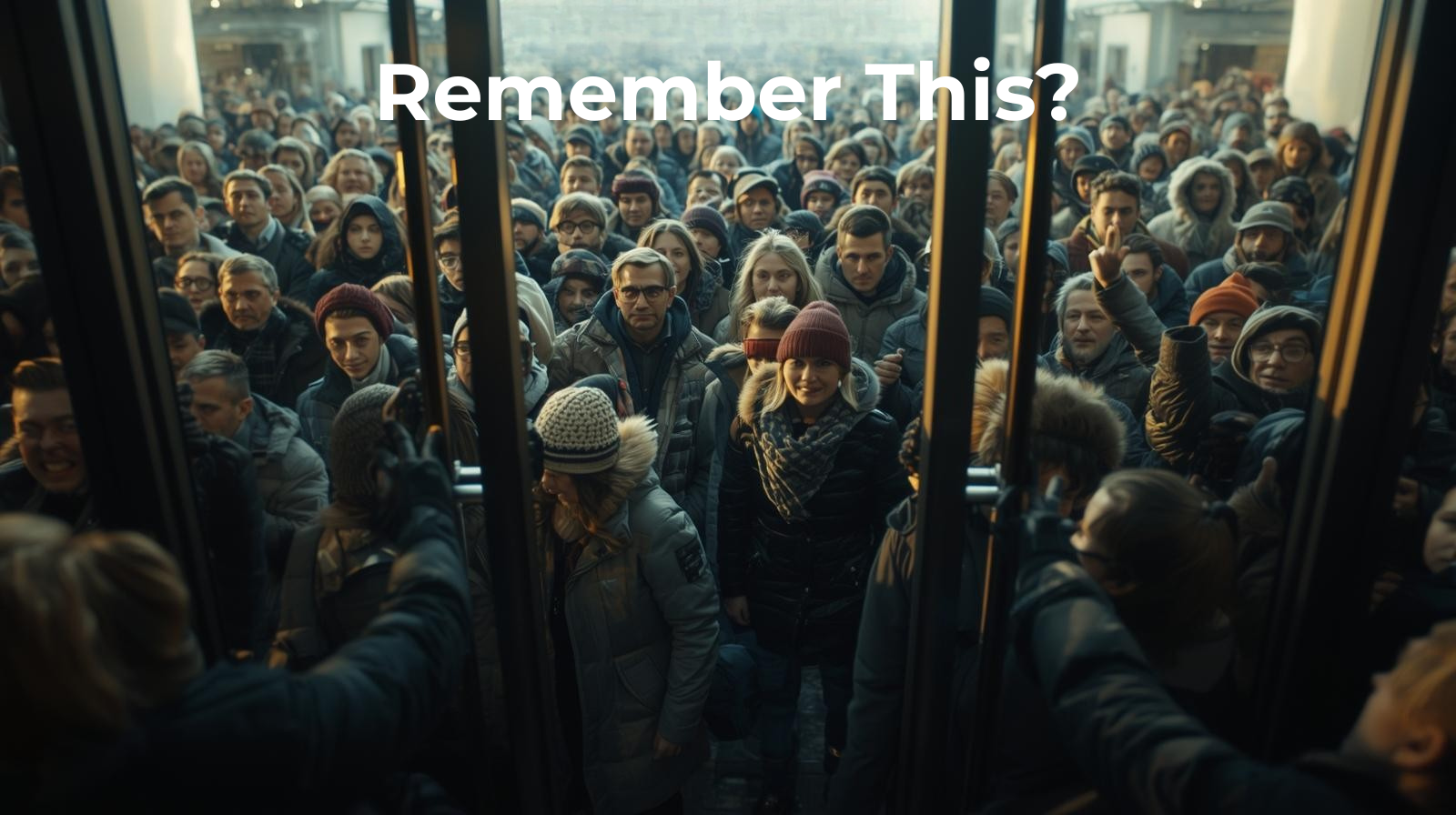
If you grew up watching footage of people lining up at 3 a.m., racing through store doors, and wrestling over TVs, you might be wondering: are those Black Friday shopping trends still a thing in 2025?
Do people still pull an all-nighter to camp outside the mall? Or has Black Friday quietly moved online, where the only thing you wrestle with is your Wi-Fi?
The short answer: Black Friday is very much alive—but it’s changed in ways that would surprise the 2010 version of you. The crowds are different, the timing is different, and honestly, the vibe is different. Let’s walk through what’s actually happening now, what the numbers say, and how to shop smarter in this new version of Black Friday.
From One Wild Day to a Whole “Cyber Week”
If you rewind to around 2010–2015, Black Friday felt like a one-day event with an almost sporting-event level of hype:
- Doors open at midnight
- Limited “doorbuster” deals
- Lines wrapped around buildings
- News cameras are stationed outside big box stores
In 2019, the National Retail Federation (NRF) estimated about 165 million people would shop at some point between Thanksgiving Day and Cyber Monday.ABC News+1
Fast-forward to the last few years, and those numbers have grown, not shrunk:
- 200.4 million people shopped during the Thanksgiving–Cyber Monday window in 2023The Toy Association
- 197 million shopped over the same period in 2024, National Retail Federation+1
- And for 2025, NRF expects about 186.9 million shoppers over the long weekend—still more than in 2019. National Retail Federation+1
So no, Black Friday hasn’t died. In some ways, it’s bigger than ever. But here’s the catch:
Instead of one giant day, Black Friday has stretched out into an entire season of promotions starting in early November. Retailers now roll out “Black Friday” or “Early Black Friday” deals weeks in advance.Reuters+1
Chart 1: Shoppers Over Thanksgiving Weekend
You can show this visually with a line chart titled:
US Shoppers Over Thanksgiving Weekend (2019 vs Recent Years)
Plot these points (millions of shoppers):
- 2019 – 165.3M
- 2023 – 200.4M
- 2024 – 197.0M
- 2025 – 186.9M (projected)
You can use the chart file we generated:
Download the shoppers’ trend chart
The key story: more people are shopping than before—but they’re not all doing it in person, and not all on Friday.
In-Store vs Online: How Black Friday Shopping Trends Have Shifted
So what about the classic question:
“Do people still line up in the cold at 5 a.m.?”
Some do. But the center of gravity has shifted.
In-store traffic: up… then down
Retail analytics firm Sensormatic reported that in-store traffic on Black Friday 2022 was up 2.9% compared to 2021, and up 4.6% in 2023—one of the strongest in-store growth years post-pandemic.Sensormatic+1
But in 2024, their early analysis showed Black Friday store traffic was down 8.2% compared to 2023. Chain Store Age+1
That paints a clear picture of recent Black Friday shopping trends:
- In-store traffic rebounded after pandemic disruptions
- Then started to soften again as online shopping and extended deals took over
People still go in person—but the stampede moments are more the exception than the rule.
Online sales: the new Black Friday star
While physical foot traffic has been wobbling, online Black Friday sales have been breaking records year after year:
- 2022: US shoppers spent about $9.12 billion online on Black Friday, Reuters+1
- 2023: Online Black Friday spending jumped to around $9.8 billionEcommerceBytes
- 2024: US online Black Friday sales hit $10.8 billion, up over 10% from 2023—the highest ever recorded.Digital Commerce 360+1
Meanwhile, Adobe expects the entire 2025 holiday season (Nov 1–Dec 31) to reach around $253 billion in online sales, with Cyber Week (Thanksgiving through Cyber Monday) accounting for a big chunk of that. Adobe Business+1
Chart 2: US Black Friday Online Sales
A simple line chart titled:
US Black Friday Online Sales (2022–2024)
Use these points (billions USD):
- 2022 – $9.12B
- 2023 – $9.8B
- 2024 – $10.8B
You can use the chart file we generated:
Download the online sales trend chart
The message is obvious:
Online Black Friday shopping trends are climbing steadily, even when in-store traffic dips.
The Hybrid Era: Clicks + Aisles, Not One or the Other
One of the big stories in 2025 is that Black Friday has become a hybrid experience.
A Deloitte survey found that for Black Friday–Cyber Monday, about 60% of shoppers plan to shop online and 40% in-store, mixing and matching depending on the deal or category.Deloitte+1
Other surveys show:
- Around 71–82% of consumers say they’ll shop during Black Friday week, with younger shoppers (especially Gen Z) participating at very high rates. Retail Dive+1
- Many consumers plan to shop both online and in person, not just one or the other.Euroconsumers+1
So instead of asking “Do people still go out early?” the better question is:
“How are people combining in-store and online to get what they want without losing their minds or their money?”
What people still go in-store for
In-store Black Friday shopping trends show people are more likely to visit for:
- Big appliances (fridges, washers, etc.)
- Certain electronics (TVs, laptops)
- Items they want to see and touch before buying
- A sense of tradition or the “fun” of the outing
Some data shows that for categories like appliances, in-store shopping still outpaces online on Black Friday.Drive Research
What people are happy to buy online
Online wins for:
- Electronics and gadgets (once you’ve read the reviews)
- Clothing and accessories
- Toys and smaller gifts
- Gift cards (which remain one of the most popular, practical choices)Drive Research+1
And with mobile driving more than half of online holiday purchases in recent seasons, Black Friday has literally moved into people’s pockets.Adobe Newsroom+1
So… Is Black Friday Still a Thing in 2025?
Let’s answer this straight:
1. Yes, Black Friday is still a huge shopping moment
The number of people participating in Black Friday/Cyber Week is at or near record highs. NRF is projecting around 186.9 million shoppers over the 2025 Thanksgiving weekend. National Retail Federation+1
The difference is how they shop:
- Less waiting in the cold
- More browsing from the couch
- More “I’ll just check Amazon/Target/Walmart’s app” moments
2. No, it’s not the same midnight stampede culture
Narratively, Black Friday has shifted from:
“Line up at 2 a.m. or miss the deal”
to
“Deals started two weeks ago; I’ll shop when it’s convenient.”
Retailers moved many of the extreme early-morning doorbusters into online and early-launch promotions, partly to avoid staffing chaos, partly to reduce bad PR around overworked employees on Thanksgiving, and partly because online is simply more profitable and scalable.The Washington Post+1
Many major retailers have also pulled back from opening stores on Thanksgiving Day itself, after backlash around making employees work on the holiday.
3. Black Friday is now more symbolic than singular
Instead of one intense day, Black Friday has become:
- A marketing anchor for a 3- to 6-week promotional period
- A label retailers use to signal “deep discounts,” even when the calendar doesn’t say Black Friday
- One piece of a broader holiday money juggling act for consumers
Some analysts now describe Black Friday as more “symbolic” than central: the emotional kickoff of holiday shopping, but not the only big moment.Reuters+1
What Changed: Inflation, Tech, and Tired Shoppers
If you feel like the old “camp outside and trample each other for $200 off a TV” era has cooled off, you’re right—and there are some very practical reasons.
1. Inflation and tighter budgets
Consumers in 2024–2025 are navigating:
- Higher grocery bills
- Rising housing costs
- Higher interest rates and credit card balances
Reports show shoppers are more cautious and selective, often prioritizing necessities or smaller “treat yourself” items over big, splurge-y shopping sprees. Average expected spending per shopper has even dipped slightly year-over-year in some forecasts.Financial Times+1
So instead of Black Friday being a wild shopping party, it’s more like:
“Okay, I have this much to spend. Let me find the smartest deals I can.”
2. Tech made comparison shopping too easy
We’re not stuck with a pile of paper flyers anymore.
- Price comparison websites
- Browser extensions
- AI tools that help find discounts or suggest cheaper alternatives
All of this makes it easier to:
- Avoid fake “deals.”
- Spread purchases over weeks.
- Decide whether that “doorbuster” is actually worth losing sleep over
Some shoppers even use AI and budgeting apps to plan their entire holiday spending strategy before Black Friday even starts.Reuters+1
3. People value their time differently now
After the pandemic and a few chaotic years economically, people are placing a higher value on time, comfort, and mental health.
Dragging yourself out of bed at 4 a.m. to maybe get a discounted blender doesn’t have the same appeal it used to.
Clicks are winning over chaos.
How to Use 2025 Black Friday Shopping Trends to Your Advantage
Let’s bring this back to you and your money habits.
If Black Friday is no longer about the spectacle and more about strategy, how do you use it wisely?
1. Treat Black Friday as a tool, not an event
Instead of thinking:
“Black Friday is here, I should buy something.”
Flip it:
“I already know what I need. Let’s see if Black Friday helps me get it cheaper.”
Go in with:
- A short list of fundamental needs (or pre-planned gifts)
- A max budget you won’t cross
- A decision that you won’t buy something just because it’s 70% off
2. Don’t chase every “deal.”
Remember, retailers now stretch deals over weeks for a reason:
The longer you’re “in shopping mode,” the more chances they have to get your money.
Use comparison tools and check price histories when possible. A lot of so-called deals are just slight markdowns from inflated “original” prices.
3. Use the online to your advantage
Black Friday shopping trends clearly show online is where the growth is—and for good reason:
- Easier to compare prices
- No crowds
- Often, online-only promo codes or bundles
If you enjoy browsing in-store, great—just let your phone be your ally. Look up prices, check reviews, and don’t be afraid to walk away.
4. Remember: it’s okay to skip it
Here’s the part nobody with a sales target will tell you:
You don’t have to participate in Black Friday at all.
If the season triggers stress, FOMO, or financial strain, the healthiest money habit might be to sit this one out or keep it extremely small and targeted.
Conclusion: Black Friday Is Still Here—It Just Grew Up
So, are Black Friday shopping trends still “a thing” in 2025?
Absolutely.
But Black Friday today isn’t the chaotic, elbows-out brawl that lived on viral videos a decade ago. It’s:
- A hybrid approach (online + in-store)
- Stretched out (weeks of deals, not one day)
- More strategic (consumers watching their budgets)
- Much more digital (record online sales, mobile-first shopping)
In other words, Black Friday didn’t disappear. It matured.
For you, that’s actually good news.
It means you can:
- Take advantage of real savings
- Avoid panic-buying and all-nighters
- Make decisions that fit your budget, values, and sanity
Because at the end of the day, the healthiest money habit isn’t about mining every discount. It’s about using days like Black Friday intentionally, instead of letting them use you.