
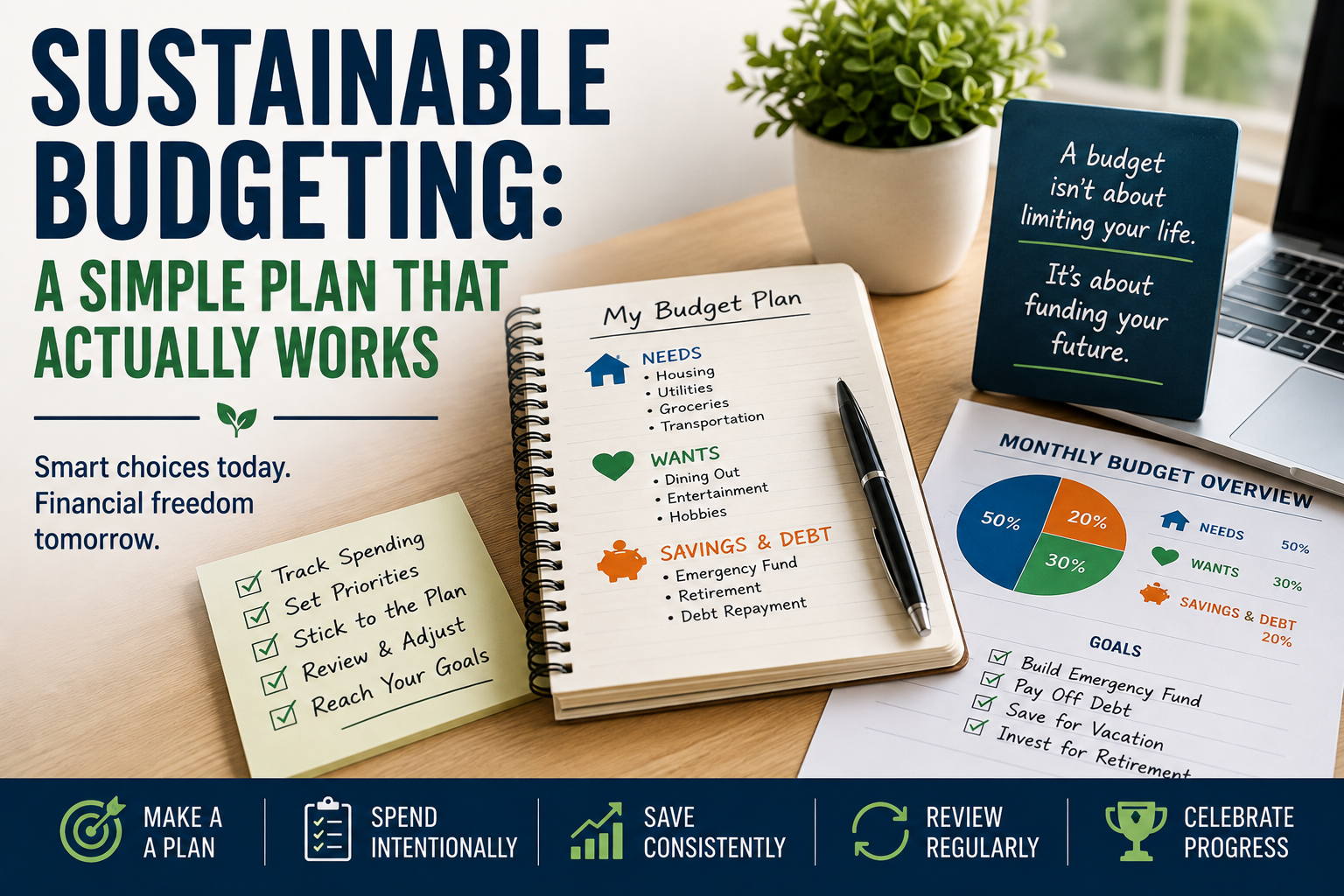
Sustainable budgeting is about creating a spending plan you can actually live with month after month. While many budgets fail because they’re too restrictive, a sustainable budget helps you balance today’s needs with tomorrow’s goals. As a result, you can make steady financial progress without feeling like you’re constantly sacrificing.
What Is Sustainable Budgeting?
Sustainable budgeting is a realistic approach to managing your money. Instead of trying to create the “perfect” budget, you build one that fits your income, lifestyle, and financial priorities.
For example, if your budget doesn’t allow any room for entertainment, dining out, or unexpected expenses, you’re more likely to abandon it altogether. However, a sustainable budget recognizes that life happens and gives you enough flexibility to stay on track.
That’s why successful budgeting isn’t about perfection—it’s about consistency.
Start by Understanding Your Spending
Before creating a budget, you need to know where your money is going.
First, track your income. Next, record every expense for at least one month. Although this may seem time-consuming, it often reveals spending habits you didn’t realize you had.
You can use:
- A budgeting app
- A spreadsheet
- Your bank’s spending tracker
- A simple notebook
The method doesn’t matter nearly as much as using it consistently.

Build a Sustainable Budget
Once you understand your spending habits, divide your money into three simple categories.
Needs
These are expenses you must pay every month, including:
- Housing
- Utilities
- Groceries
- Insurance
- Transportation
Because these costs keep your household running, they should always come first.
Wants
Wants include things that improve your quality of life but aren’t essential.
For example:
- Streaming services
- Dining out
- Vacations
- Hobbies
- Entertainment
Rather than eliminating these expenses completely, decide how much you can comfortably afford. This approach makes your budget much easier to maintain.
Savings and Debt
Finally, pay your future self.
Whether you’re building an emergency fund, investing for retirement, or paying down debt, consistent progress is more important than occasional large contributions.
Even saving a small amount every month can create meaningful results over time.
Choose a Sustainable Budgeting Method That Fits You
Fortunately, there isn’t just one way to budget.
The 50/30/20 Budget
This popular method suggests using:
- 50% for needs
- 30% for wants
- 20% for savings or debt repayment
Although these percentages won’t work for everyone, they provide a helpful starting point.
Zero-Based Budgeting
With zero-based budgeting, every dollar receives a specific job before the month begins.
As a result, you become more intentional about every spending decision.
The Envelope System
If overspending is a challenge, the envelope system can help.
Instead of relying on credit cards, you place cash into spending categories. Once an envelope is empty, that category has reached its limit for the month.
How to Make Sustainable Budgeting Last
Creating a budget is only the beginning. Keeping it working requires regular attention.
To improve your chances of success:
- Review your budget every month.
- Adjust for changes in income or expenses.
- Set realistic financial goals.
- Celebrate small victories along the way.
- Focus on long-term progress instead of short-term perfection.
Most importantly, don’t quit because one month didn’t go as planned. Instead, learn from it and make adjustments for the following month.
Final Thoughts on Sustainable Budgeting
Sustainable budgeting isn’t about restricting every dollar you spend. Instead, it’s about making intentional choices that support the life you want to build.
Because your financial situation will change over time, your budget should change with it. A flexible spending plan is far more effective than one that’s impossible to maintain.
Start with a simple plan, review it regularly, and keep making small improvements. Eventually, those consistent choices can lead to lasting financial confidence.