
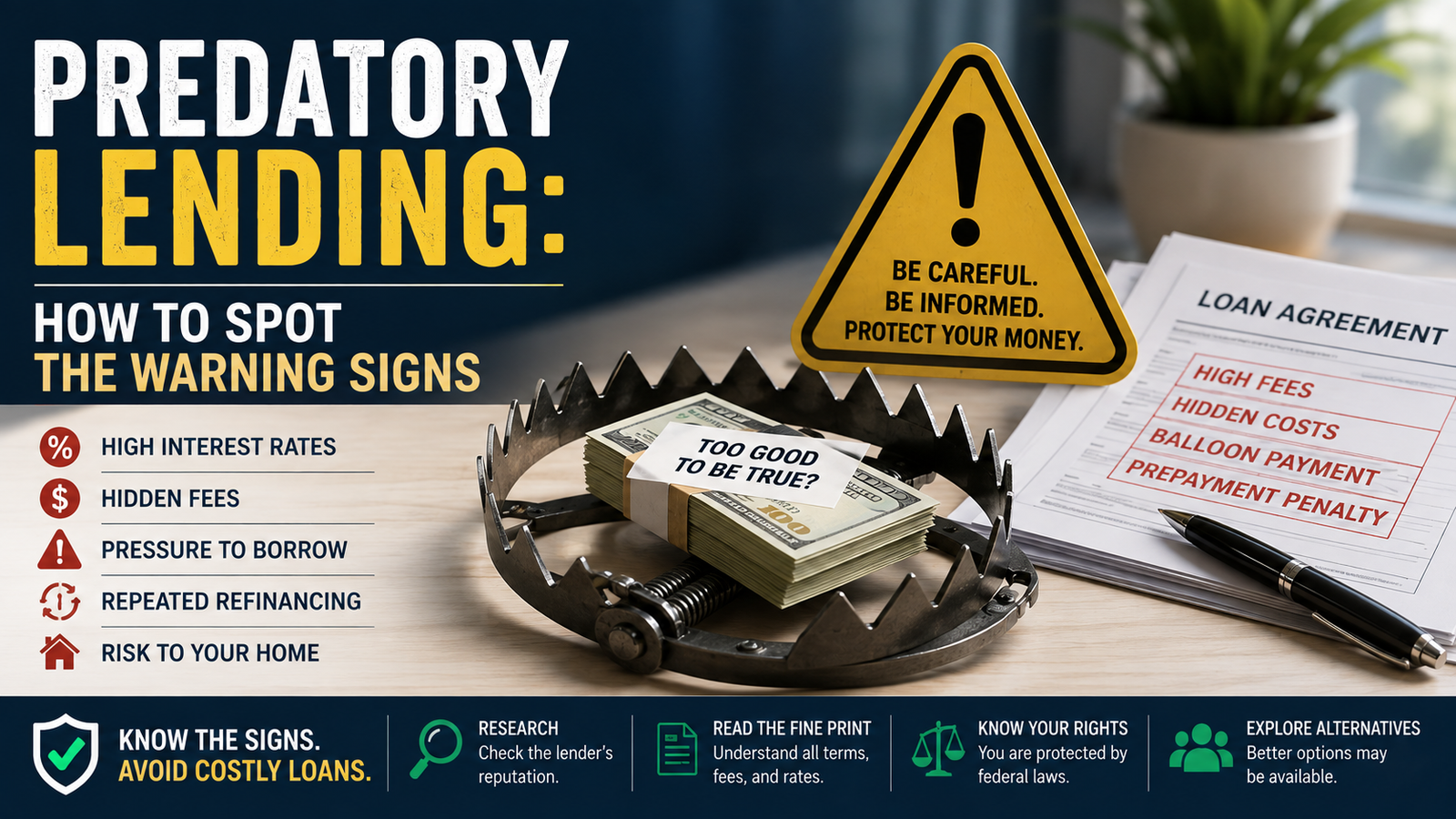
Predatory lending can trap people in a cycle of debt that becomes increasingly difficult to escape. These loans often come with excessive interest rates, hidden fees, confusing terms, and aggressive sales tactics designed to pressure borrowers into making quick decisions. Understanding how predatory lending works can help you protect your finances and avoid costly mistakes.
What Is Predatory Lending?
Predatory lending refers to unfair or deceptive lending practices that benefit the lender at the borrower’s expense. While not every high-interest loan is predatory, these lenders often take advantage of people facing financial hardship, poor credit, or an urgent need for cash.
Instead of helping borrowers improve their financial situation, predatory loans frequently make it worse by creating payments that are difficult—or impossible—to manage.
Common Signs of Predatory Lending
Knowing the warning signs can help you avoid becoming a victim.
Extremely High Interest Rates
Some lenders charge interest rates far above what reputable banks, credit unions, or online lenders offer. Even a small loan can become expensive when interest charges continue to grow.
Hidden Fees and Surprise Costs
Always review the loan agreement carefully. Predatory lenders may bury expensive fees, prepayment penalties, or balloon payments in the fine print.
Pressure to Borrow Immediately
If a lender insists you must sign today or claims the offer will disappear within hours, consider it a major red flag. Legitimate lenders give borrowers time to review the terms and ask questions.
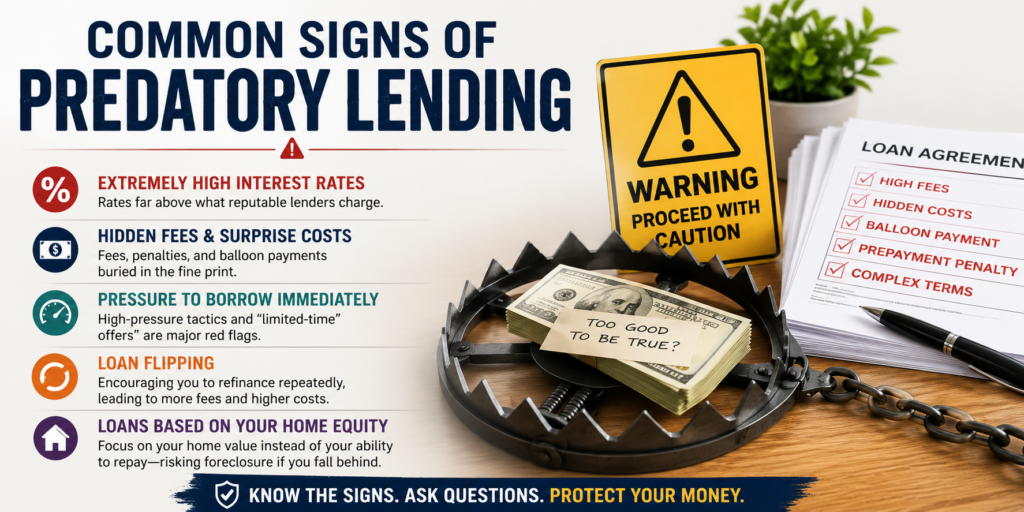
Loan Flipping
Some lenders encourage borrowers to refinance repeatedly. Each new loan generates additional fees and interest while doing little to improve the borrower’s financial situation.
Loans Based Only on Your Home Equity
Rather than evaluating your ability to repay, some lenders focus primarily on the value of your home. If payments become unmanageable, you could risk foreclosure.
The Real Cost of Predatory Lending
The financial consequences extend far beyond a single loan.
Borrowers may experience:
- Mounting debt
- Damaged credit scores
- Collection activity
- Difficulty qualifying for future loans
- Increased financial stress
- In severe cases, bankruptcy or foreclosure
Predatory lending doesn’t simply create financial problems—it often makes existing problems much worse.
How to Protect Yourself from Predatory Lending
Fortunately, there are several ways to reduce your risk.
Research the Lender
Look for customer reviews, Better Business Bureau ratings, and any complaints filed with consumer protection agencies. Compare several lenders before making a decision.
Read Every Page of the Agreement
Never sign documents you don’t fully understand. Pay close attention to the Annual Percentage Rate (APR), fees, repayment schedule, and penalties.
Know Your Rights
Federal laws such as the Truth in Lending Act (TILA) require lenders to clearly disclose borrowing costs. Understanding these protections can help you recognize unfair lending practices.
Explore Better Alternatives
Before accepting an expensive loan, consider:
- Credit unions
- Community banks
- Employer assistance programs
- Nonprofit credit counseling organizations
- Family or trusted friends, if appropriate
Even taking extra time to compare options may save thousands of dollars.
Trust Your Instincts
If something feels wrong, don’t ignore it. High-pressure sales tactics, vague answers, or promises that sound too good to be true usually deserve a second look.
Final Thoughts on Predatory Lending
Predatory lending succeeds when borrowers feel rushed, overwhelmed, or believe they have no other options. Taking time to understand the loan, compare alternatives, and ask questions can protect both your finances and your peace of mind.
Every loan should help move you toward your financial goals—not pull you further into debt. The more informed you are, the easier it becomes to recognize predatory lending and choose lenders that treat borrowers fairly and transparently.