
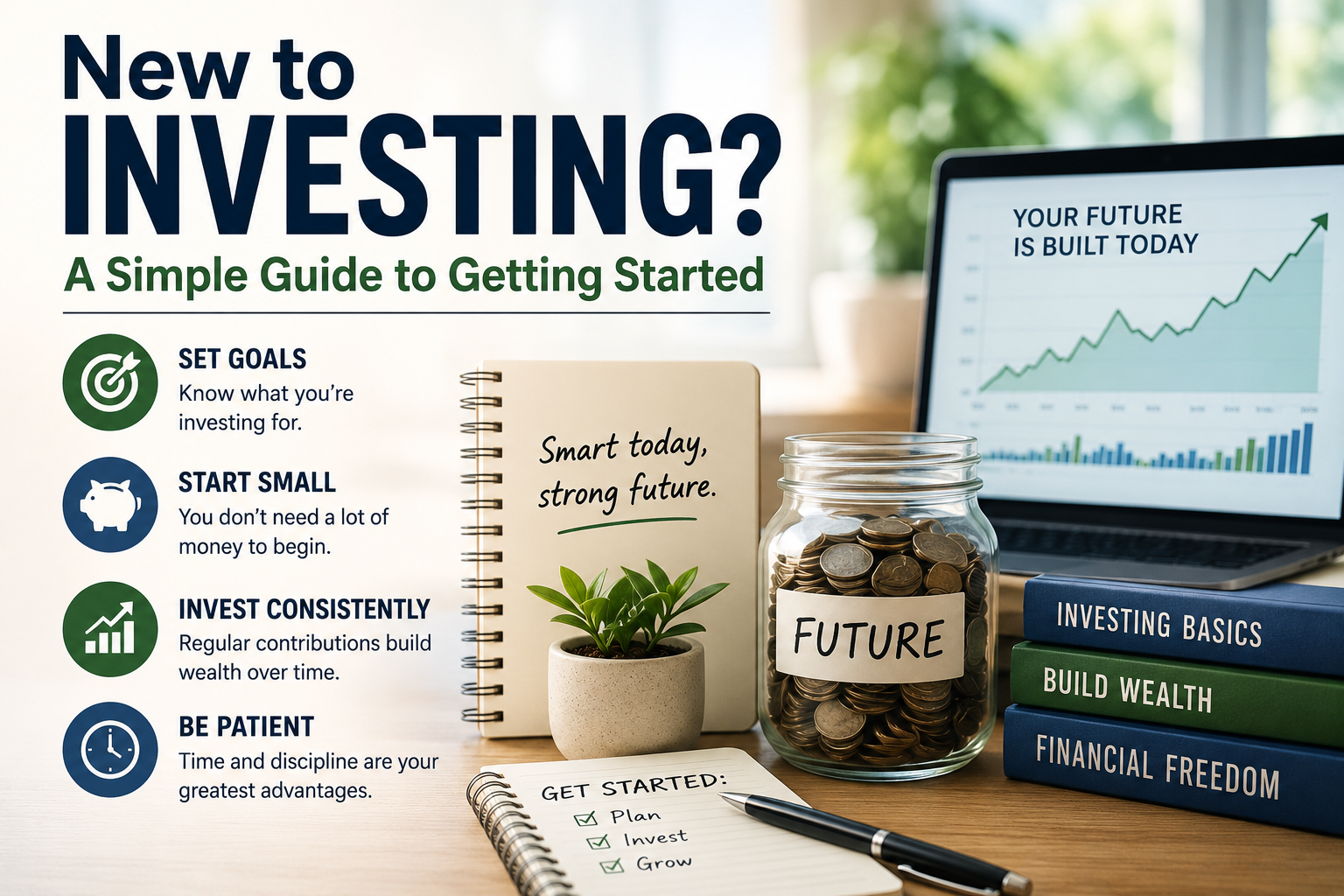
If you’re new to investing, it’s easy to feel overwhelmed. There are countless websites, financial experts, and investment products all competing for your attention. Some make investing sound incredibly complicated, while others promise quick wealth with little effort.
The truth is much simpler. Successful investing is rarely about finding the next hot stock or timing the market perfectly. It’s about developing good habits, making informed decisions, and giving your money time to grow. If you’re new to investing, this guide will help you take your first steps with confidence.
Before You Start Investing
Before putting money into the stock market, take a close look at your overall financial health.
Ask yourself these questions:
- Do I have an emergency fund?
- Have I paid off high-interest debt?
- Can I invest consistently without needing this money soon?
A good rule of thumb is to build an emergency fund that covers three to six months of essential living expenses before investing for long-term goals. Money you’ll need within the next few years is generally better kept in safer places than the stock market.
Know Why You’re Investing
Every investment should have a purpose.
Are you investing for retirement? Buying a home someday? Building long-term wealth? Helping pay for a child’s education?
Your goals determine how much risk you can reasonably take and how long your money has to grow.
Generally speaking, the longer your investment timeline, the more opportunity your investments have to recover from normal market ups and downs.
Understand the Difference Between an Account and an Investment
One mistake many beginners make is confusing an investment account with the investments inside it.
Think of the account as the container and the investments as what you place inside.
For example, you might open:
- A 401(k) through your employer
- A Traditional IRA
- A Roth IRA
- A brokerage account
Inside those accounts, you choose investments such as mutual funds, index funds, ETFs, or individual stocks.
Understanding this difference makes investing much less confusing.
Start Simple
If you’re new to investing, you don’t need a complicated portfolio.
Many experienced investors recommend beginning with diversified, low-cost index funds or exchange-traded funds (ETFs). These investments spread your money across hundreds or even thousands of companies, reducing the risk that comes from relying on just one business.
Trying to pick winning stocks may sound exciting, but for most beginners, keeping things simple is often the better approach.
Don’t Ignore Your Employer Match
If your employer offers a retirement plan with matching contributions, make every effort to take advantage of it.
For example, if your employer matches part of your 401(k) contribution, that matching money becomes part of your retirement savings. Turning down an employer match can mean walking away from money you could have received simply by participating in the plan.
Invest Consistently
One of the most effective investing habits is contributing regularly, regardless of what the market is doing.
This strategy, often called dollar-cost averaging, means investing the same amount on a regular schedule. Sometimes you’ll buy when prices are higher, and other times when they’re lower. Over time, this approach removes much of the emotion from investing and helps you stay disciplined.
Consistency usually matters far more than trying to predict the perfect time to invest.
Be Patient
The stock market rises and falls. That’s normal.
Successful investors understand that short-term declines are part of long-term investing. Checking your account every day or reacting to every news headline often leads to unnecessary stress and poor decisions.
Instead, review your investments periodically—perhaps once or twice a year—to make sure they still match your goals and risk tolerance. If necessary, re-balance your portfolio to maintain your desired mix of investments.
Patience is one of the most valuable investing skills you can develop.
Continue Learning
Investing isn’t something you master in a weekend. The more you learn, the more confident you’ll become.
Read books, follow reputable financial educators, and continue building your understanding of personal finance. The goal isn’t to know everything. It’s to make better decisions year after year.
Final Thoughts
Being new to investing doesn’t mean you need to become a financial expert overnight. Most successful investors didn’t build wealth by making perfect decisions. They built it by starting early, investing consistently, keeping costs low, and staying focused on the long term.
You don’t need to predict the market or find the next big investment opportunity. You simply need to begin.
The first investment you make may not change your financial future overnight, but the habit of investing regularly just might.