
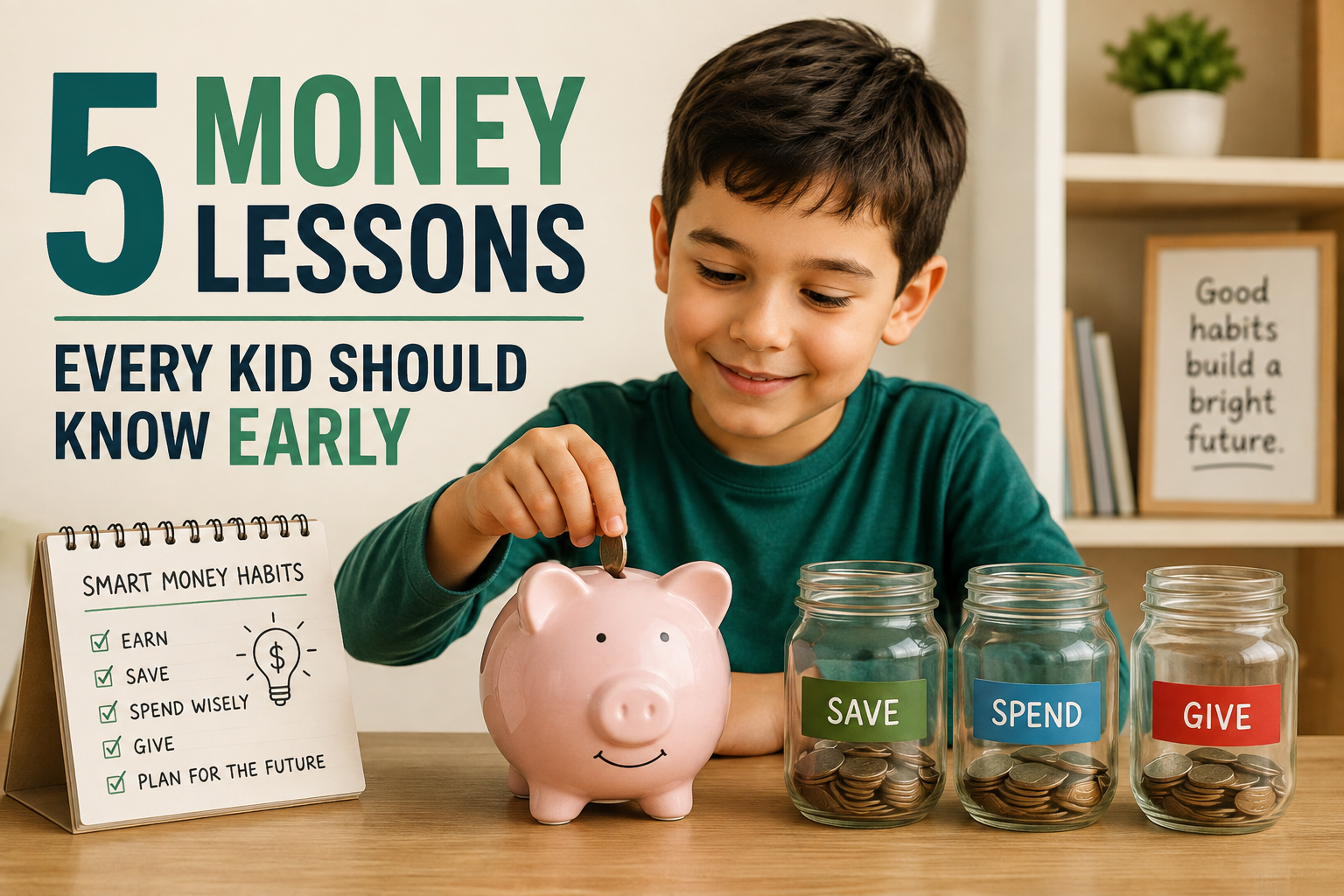
If you feel like you’re winging it when it comes to teaching your kid about money, you’re in good company. Most of us never got a real class on this stuff. We learned by opening our first checking account, getting our first paycheck, and making a few expensive mistakes along the way.
That’s exactly the gap Junior Achievement’s research found. 92% of teens wish schools taught real-world financial skills. Only 31% say schools actually offer those courses.
Some states are catching up: 30 now require a standalone personal finance course to graduate. But plenty of kids will start managing their own money long before that reaches them.
So if you want your kid ahead of that curve, here are five money lessons every kid should know before 18. They stick because they’re simple, not because they’re dumbed down.
1. A paycheck and take-home pay aren’t the same number
The first time a kid earns a real paycheck, the number on it is almost always smaller than they expected. That’s the gap between gross pay and net pay. Gross is what you earned; net is what actually lands in your account after taxes and deductions.
It’s a small distinction, but it changes how kids plan. If your teenager budgets off their hourly rate instead of actual take-home pay, they’ll come up short every time.
2. Needs and wants aren’t the same category
This sounds obvious until you watch someone actually spend money. Food, shelter, and basic clothing are needs. The new game, the concert ticket, the third pair of sneakers — those are wants. There’s nothing wrong with wanting them.
The lesson isn’t “wants are bad.” It’s that every dollar spent on a want is a dollar that isn’t available for something else. Kids who can sort spending into these two buckets, even loosely, make noticeably better decisions with their money.
3. The 24-hour rule beats most impulse buys
Impulse purchases happen fast: you see something, you want it, you buy it. One simple habit fixes most of that: wait 24 hours before you buy anything you hadn’t already planned to buy.
Half the time, the urge fades on its own. And when it doesn’t, your kid still gets to buy the thing. They just do it with a clearer head about whether it’s actually worth it.
4. Interest turns a small debt into a bigger one, fast
Here’s a scenario worth walking through with your kid: two people each get a credit card with a $1,000 limit. One keeps the balance low and pays it off. The other maxes it out on clothes and entertainment, then can’t pay it back in full.
That unpaid balance doesn’t just sit there — it grows. Average credit card interest rates topped 21% in 2026. Carrying a balance can end up costing more than the purchases were ever worth. The earlier a kid understands that borrowed money isn’t free, the less likely they’ll learn it the hard way.
5. A credit score follows you longer than a bad grade ever will
A credit score is just a number that tells lenders how reliably someone has repaid money in the past. It sounds like adult territory, but you build it from habits that start early — paying on time, not borrowing more than you can handle, keeping debt manageable.
That score ends up mattering for a lot more than credit cards. Apartments, car loans, and sometimes even jobs check it. It builds up over years, not in one moment. Kids who understand that tend to treat credit more carefully once they get their first card.
Where to go from here
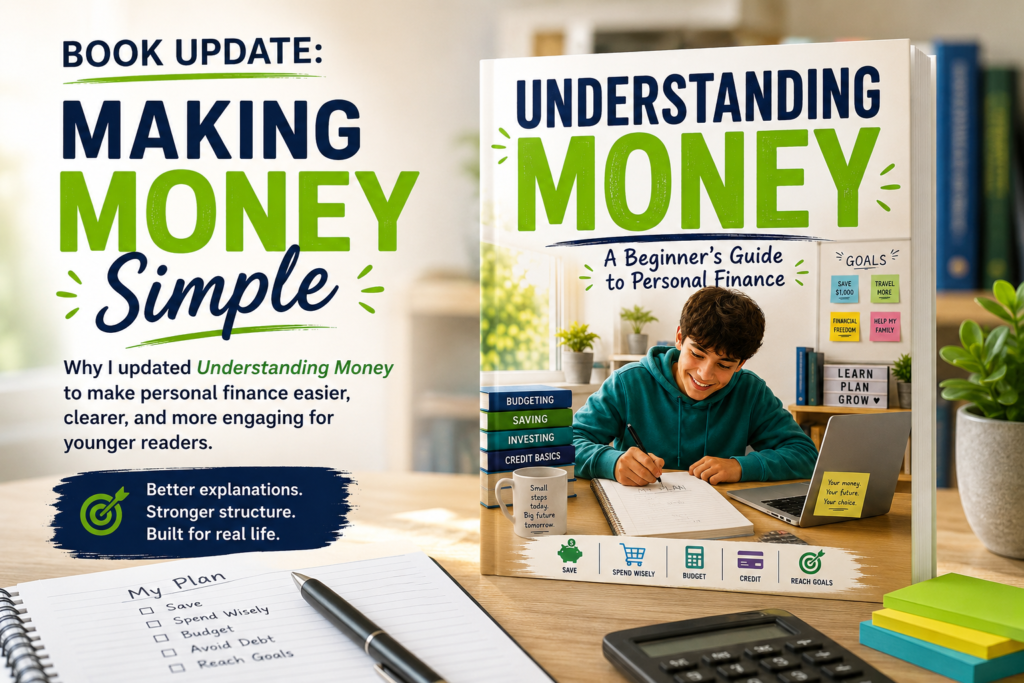
None of these lessons require a finance degree to teach. They just need someone willing to sit down and explain them in plain language. That’s exactly what I set out to do in Understanding Money: A Beginner’s Guide to Personal Finance.
It walks through these ideas and more — budgeting, saving, banking, credit, protecting yourself from scams. I wrote it in plain language that doesn’t talk down to younger readers or assume they already know the basics.
Got a teenager about to get their first job, first bank account, or first credit card? This is a good place to start.