You told yourself you were just browsing. Then the confirmation email landed in your inbox before you even decided you wanted what you just bought. It was not a lost job or a real emergency that pushed you there; it was a rough conversation an hour earlier that left you rattled. That is how much power emotions have over money. Today’s money habits are often treated as a math problem. Spend less than you earn, save for the future, and avoid unnecessary debt. Those are important principles, but they overlook something just as powerful—our emotions.
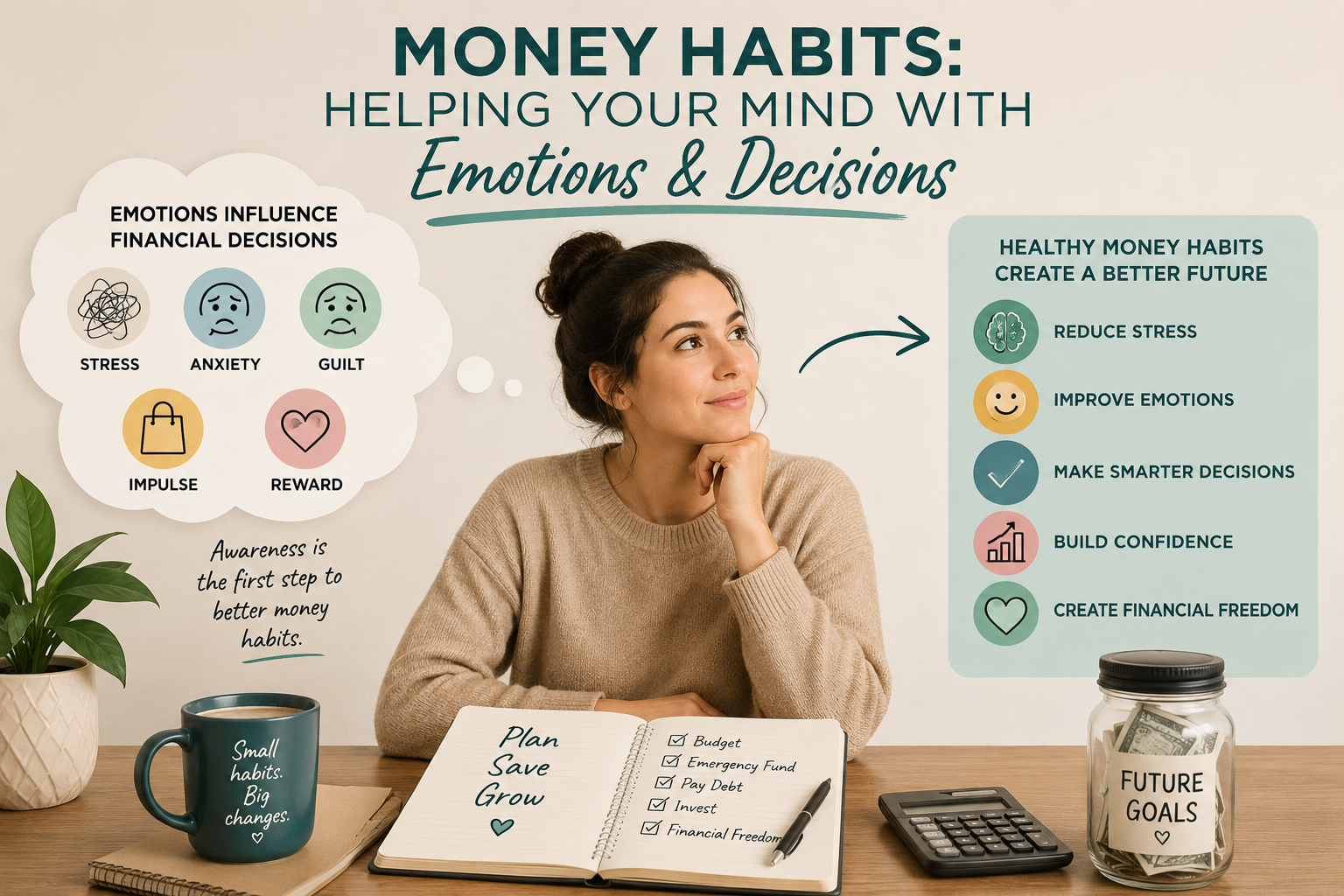
Every financial decision we make is influenced by how we feel. Stress, fear, excitement, guilt, and even boredom can shape our spending, saving, and borrowing habits. Understanding that connection is one of the first steps toward building healthier money habits.
Financial Stress Doesn’t Stay in Your Wallet
Financial stress has a way of following you everywhere.
When bills pile up or unexpected expenses appear, it’s difficult to simply leave those worries behind. Financial concerns can affect sleep, concentration, relationships, and even physical health.
Common signs that money stress is becoming a problem include:
- Constantly worrying about paying bills.
- Avoiding looking at bank or credit card statements.
- Feeling anxious whenever money is discussed.
- Arguing more often with family members about finances.
- Feeling overwhelmed instead of taking small steps forward.
The stress itself often becomes another obstacle to making good financial decisions.

Emotions Drive Spending More Than We Realize
Have you ever bought something because you had a bad day?
Or celebrated a promotion with a purchase that was much larger than you originally planned?
Emotional spending is incredibly common.
People often spend money to:
- Reduce stress.
- Reward themselves.
- Escape boredom.
- Keep up with friends or coworkers.
- Feel more successful or confident.
The purchase may provide temporary relief, but the feeling usually fades long before the credit card bill arrives.
That’s why emotional spending often becomes a cycle rather than a solution, a pattern we look at more closely in Doom Spending: Worrying About Money Means Spending More.
Fear Can Be Just as Costly
While overspending gets most of the attention, fear can also create financial problems.
Some people become so afraid of making a mistake that they avoid making any financial decisions at all.
They may postpone:
- Building an emergency fund.
- Investing for retirement.
- Reviewing insurance coverage.
- Paying off debt strategically.
- Asking questions when they don’t understand financial topics.
Doing nothing often feels safe, but delaying important financial decisions can be expensive over time.
Your Money Habits Shape Your Confidence
Healthy money habits don’t just improve your finances—they improve your confidence.
When you know where your money is going, unexpected expenses become easier to manage.
When you have savings, emergencies feel less overwhelming.
As debt decreases each month, progress becomes motivating.
Small wins create momentum.
Over time, confidence replaces anxiety as you make intentional decisions rather than constantly reacting to emotions and financial surprises. Building that kind of money mindset takes practice, but it changes how every future decision feels.
Building Healthier Money Habits
Improving your relationship with money doesn’t require perfection.
It starts with small, consistent habits.
Consider making these part of your routine:
- Review your bank accounts weekly.
- Create a spending plan before the month begins.
- Pause for 24 hours before making larger purchases.
- Build even a small emergency fund.
- Celebrate financial progress without spending money.
- Learn one new financial concept each month.
These habits may seem simple, but they gradually reduce financial stress while improving decision-making.
Remember That Progress Beats Perfection
Everyone has made financial mistakes.
The goal isn’t to eliminate every poor decision. The goal is to make better decisions more often than you did yesterday.
Healthy money habits don’t remove every financial challenge, but they give you the tools to handle those challenges with less stress and greater confidence.
The more your habits improve, the less your emotions control your financial decisions—and the more control you gain over your financial future.
If you want a structured way to start building those habits, our free 7-Day Money Habits Challenge walks you through one small, manageable step at a time, no perfection required.