
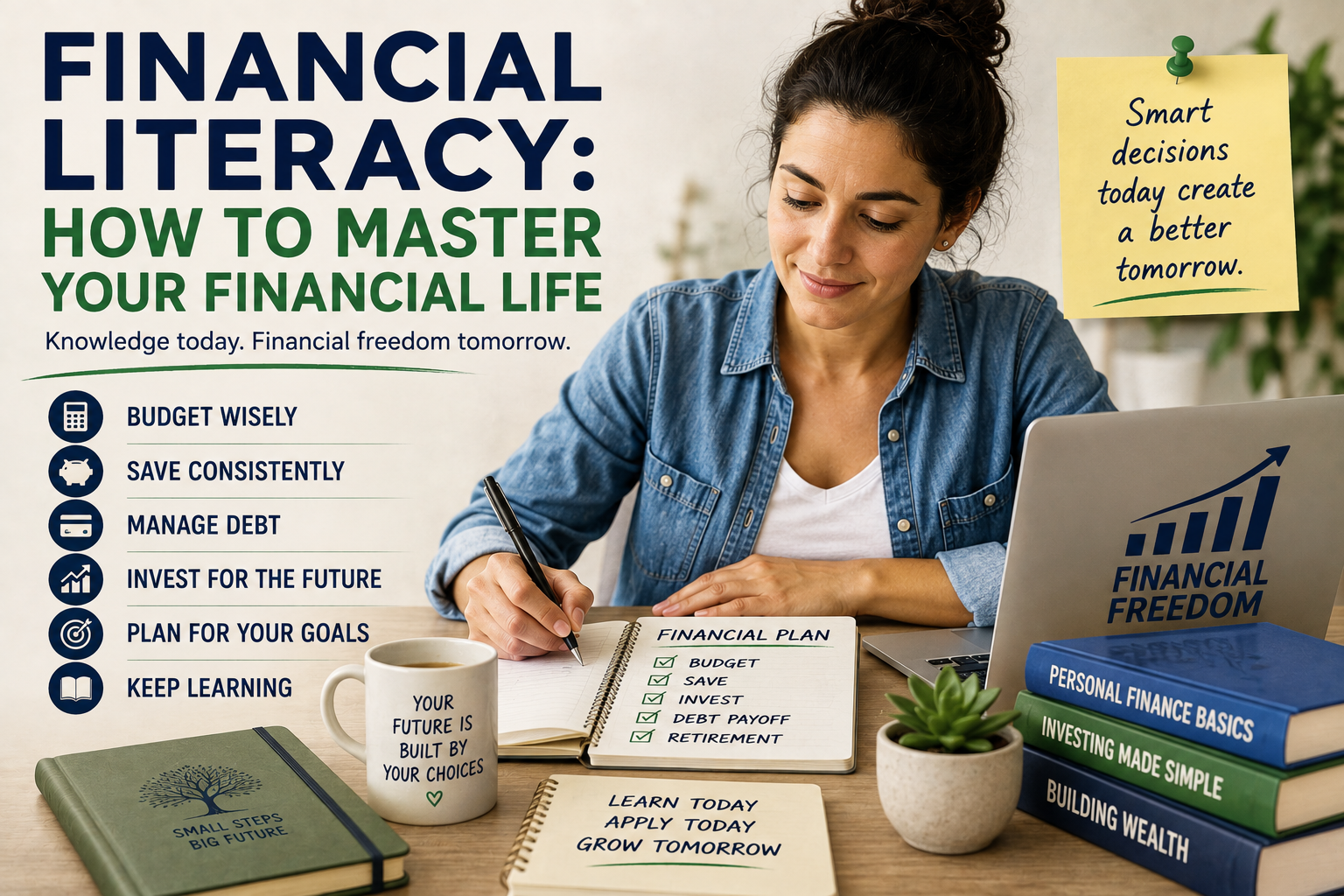
Did anyone ever actually sit you down and explain how money works? For most people, the honest answer is no, and that gap is exactly what financial literacy is meant to close. You figure it out through trial and error instead, usually after a mistake that costs you something.
Financial literacy is just the fix for that. It is not about becoming an accountant or picking stocks like a professional investor. It is knowing enough about budgeting, saving, debt, and credit to make solid decisions with the money you already have. And the good news is that financial literacy can be learned at any age, no matter how you were, or weren’t, taught growing up.
The more you understand how money actually works, the more confident you become making decisions that move you toward your goals instead of away from them.
What Financial Literacy Actually Covers
At its core, financial literacy means you can:
- Create and manage a budget
- Save for both short-term and long-term goals
- Build an emergency fund
- Use credit responsibly
- Understand loans and interest rates
- Invest for the future
- Plan for retirement
- Recognize financial fraud before it costs you
None of these skills exist in isolation. A budget makes saving possible. Understanding interest rates keeps debt from getting out of hand. Together, they add up to something simple: financial confidence and a lot less unnecessary stress.
Why Financial Literacy Matters So Much
Money touches nearly every part of life, which is exactly why gaps in financial literacy cause so much damage. Most financial mistakes are not the result of carelessness. They happen because nobody ever explained the basics, and more than half of American adults still fail basic financial literacy tests, a number that hasn’t meaningfully improved in years.
Closing that gap can help you:
- Avoid debt you did not need to take on
- Build a savings habit that actually sticks
- Improve your credit score
- Borrow with a clear head instead of guessing
- Handle a financial emergency without panic
- Invest with real confidence
- Build wealth over the long run
Every good financial decision starts with understanding the options in front of you. You cannot choose well between things you do not understand.
Financial Literacy Is a Lifelong Skill, Not a One-Time Lesson
Financial literacy education does not end when you graduate.
More states are now requiring personal finance courses before graduation, which is a genuinely encouraging shift. But even a great high school class will not prepare you for everything ahead. Tax laws change. Technology changes how we bank and invest. New financial products show up every year that did not exist a decade ago.
The people who stay financially successful are usually the ones who keep learning long after school ends.
Five Skills That Build Financial Literacy
1. Learn to budget. A budget just tells your money where to go before you spend it, instead of wondering where it went after the fact. Tracking your income and expenses for even one month usually reveals at least one surprise.
2. Save before you spend. Paying yourself first is one of the simplest habits in personal finance. Even small, consistent contributions add up into a real cushion over time. Start with an emergency fund big enough that an unexpected expense does not automatically become a credit card balance; most guidance points to somewhere between three and six months of essential expenses as the long-term target.
3. Understand debt. Debt is not automatically good or bad. The real question is whether it is moving you toward your future or working against it. Understanding interest rates, repayment terms, and total borrowing costs is what separates a useful loan from an expensive mistake.
4. Invest for the future. Investing puts your money to work instead of leaving it to sit still. The earlier you start, even with small amounts, the more time compound growth has to do the heavy lifting; a decade’s head start can end up being worth more than doubling your monthly contribution later. You do not need to time the market. Showing up consistently matters far more than being perfect.
5. Keep learning. Financial literacy is not something you master once and move on from. Read a book, follow a trusted source, ask questions when something does not make sense, and check in on your finances regularly. Every lesson you pick up makes the next decision a little easier.
Mistakes Worth Watching For
Even people who are generally good with money fall into a few common traps:
- Living beyond what they actually earn
- Ignoring the budget they built
- Carrying high-interest credit card balances month to month
- Skipping the emergency fund
- Waiting too long to start investing
- Making spending decisions based on emotion rather than a plan
- Never revisiting their financial goals
Catching these patterns early is what financial literacy is really for, it can save you real money, sometimes thousands of dollars, over the course of your life.
Putting Financial Literacy Into Practice
Knowing the material is not the same as improving your finances. Financial literacy only pays off once you actually apply it.
Pick one habit to work on this month. Review last month’s spending. Increase your savings contribution by a small amount. Call and negotiate a monthly bill. Finally, open that investment account you’ve been putting off.
You do not need to fix everything at once. Small actions, repeated consistently, are what actually build financial security over time.
Looking Ahead
Financial literacy was never about being perfect with money. It is about making a slightly better decision than you would have made without it, one choice at a time.
The more you understand about budgeting, saving, debt, credit, and investing, the more control you have over where your financial future actually goes. Wherever you’re starting from, building your financial literacy now is one of the better investments you’ll ever make, because it keeps paying off for the rest of your life.