
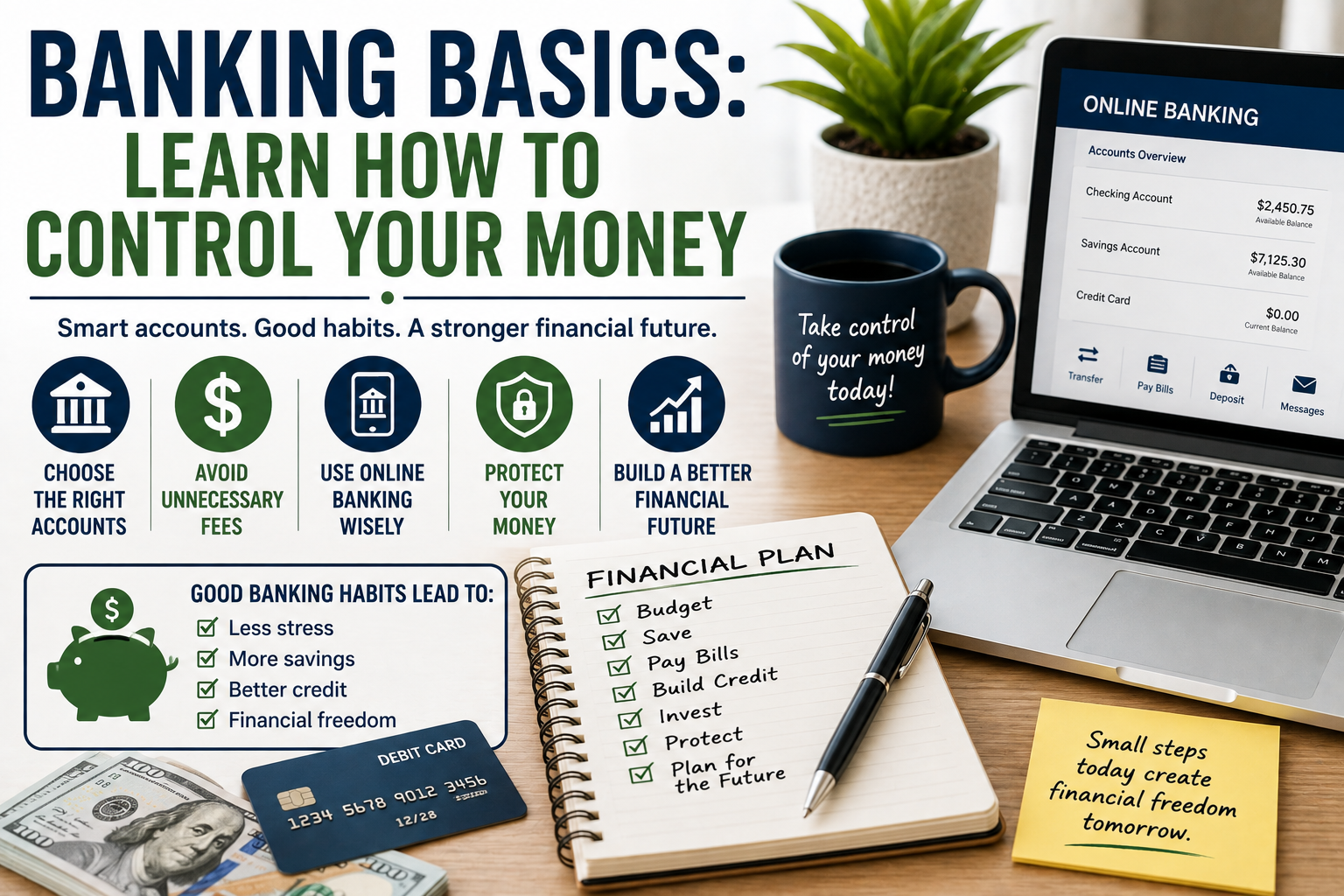
Have you ever looked at your bank statement and wondered why you’re paying a fee you don’t remember agreeing to? That’s usually a sign it’s time to revisit the banking basics, the small habits and account choices that quietly decide how much of your money actually stays yours.
Your bank does a lot more than hold your paycheck. It pays your bills, protects your income, and helps you save for what’s ahead. The better you understand how it actually works, the easier it becomes to make decisions that work in your favor instead of the bank’s.
Whether you’re opening your first account or just reviewing habits you’ve had for years, getting the banking basics right can save you real money and a fair amount of stress.
Start With the Right Accounts
Most people only need two accounts to manage their money well.
Checking accounts handle your everyday activity: depositing your paycheck, paying bills, using a debit card, withdrawing cash, and moving money around. Look for one with no monthly maintenance fee, free online and mobile access, a large ATM network, and little to no minimum balance requirement. If your current account charges you just to exist, it’s worth shopping around.
Savings accounts exist to hold money you don’t plan to touch right away: your emergency fund, a vacation, a future home repair. Whenever you can, choose a high-yield savings account instead of a standard one. The gap in what they pay isn’t small: the best high-yield accounts are currently paying well above 4% APY, compared to roughly 0.4% at the average traditional bank. On $10,000, that’s the difference between earning a few dollars a year and earning hundreds.
Understand Banking Fees Before They Understand You
A lot of people lose money every year simply because they don’t know what they’re being charged for. The usual suspects: monthly account fees, overdraft fees, out-of-network ATM fees, wire transfer fees, and paper statement fees.
Overdraft fees deserve special attention. The average overdraft fee sits around $27, and some major banks still charge as much as $35 per incident, which adds up fast if it happens more than once a month. Most of these fees are avoidable once you know they exist. Choosing the right account and keeping an eye on your balance handles the majority of it.
Let Online Banking Do Some of the Work
Your banking app is more useful than most people give it credit for. Beyond checking your balance, most apps let you deposit checks, transfer money, pay bills, freeze a lost card instantly, and get real-time fraud alerts.
Turn on automatic notifications for low balances and unusual charges. That single step catches unauthorized transactions fast and helps you avoid overdrafts before they happen; both problems are far easier to prevent than to clean up after the fact.
Protect Your Money
Understanding banking basics also means understanding how to keep your accounts secure. A few habits go a long way:
- Use strong, unique passwords
- Turn on multi-factor authentication
- Avoid accessing financial accounts on public Wi-Fi
- Check your accounts regularly, not just once a month
- Report anything suspicious immediately
A few minutes spent on security now can save you months of untangling fraud later.
Be Careful With Overdraft Protection
Overdraft protection stops a transaction from being declined, but it usually comes at a price. Rather than leaning on it as your backup plan, try:
- Checking your account regularly instead of assuming it’s fine
- Keeping a small cash cushion in checking
- Setting up low-balance alerts
- Linking a savings account for free automatic transfers, if your bank offers it
The best overdraft strategy is never needing one in the first place.
Build an Actual Relationship With Your Bank
Banks offer more than checking and savings. Depending on what you need, that might include CDs, credit cards, auto loans, mortgages, small business banking, or financial education resources.
It’s also worth remembering that your deposits are protected: FDIC insurance covers up to $250,000 per depositor, per bank, per ownership category, so your money is safe even if something goes wrong with the bank itself. If you’re not sure which products actually fit your situation, ask. A good banker will walk you through your options without trying to up-sell you on something you don’t need.
Review Your Banking Once a Year
Your financial needs change, and your bank account should keep up. At least once a year, ask yourself:
- Am I paying fees I could be avoiding?
- Could another bank offer a better rate on my savings?
- Am I actually using the tools my bank already offers me?
- Does this account still match where my finances are today?
Switching banks is easier than it used to be, and a better account can save you money every single month without requiring much effort on your part.
Looking Ahead
Mastering banking basics doesn’t take a finance degree. It just means understanding how your accounts actually work, knowing which fees to avoid, keeping your money secure, and using the tools your bank already gives you.
The more comfortable you get with the everyday side of banking, the more control you’ll have over your financial life. Small improvements to how you manage your accounts today tend to add up to real security down the road.