
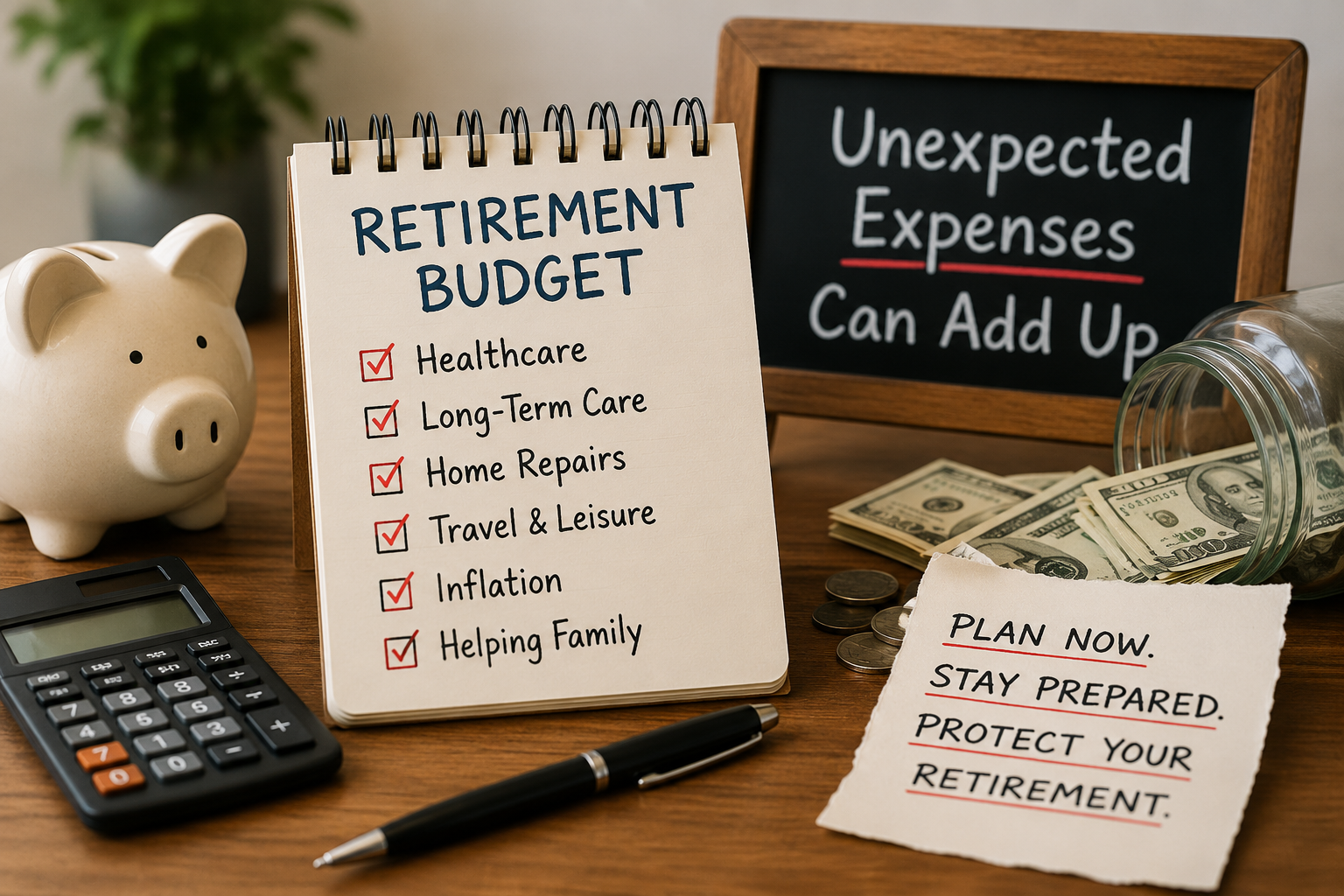
Unexpected retirement expenses can catch even the most prepared retirees off guard. You may spend decades saving for retirement, estimating your monthly income, and paying off debt, only to discover that certain costs weren’t part of your original plan. From rising healthcare bills to home repairs and inflation, these overlooked expenses can put unexpected pressure on your retirement budget.
The good news is that many of these costs are predictable once you know what to look for. Planning for them today can help you protect your savings, reduce financial stress, and enjoy retirement with greater confidence.

1. Healthcare Costs Continue to Rise
Healthcare is one of the largest expenses many retirees face.
While Medicare helps cover many medical costs, it doesn’t pay for everything. Premiums, deductibles, copays, dental care, vision services, hearing aids, and prescription medications can add thousands of dollars to your annual budget.
Healthcare costs also tend to increase as we age, making it important to build flexibility into your retirement plan rather than assuming today’s expenses will remain the same.
2. Long-Term Care Can Be Extremely Expensive
Many retirees assume Medicare will cover long-term care.
In reality, Medicare generally covers only limited short-term skilled nursing care after certain medical events. Extended care in an assisted living facility, nursing home, or even regular in-home care is often paid for out of pocket.
Not everyone will require long-term care, but the possibility should be part of every retirement plan. Understanding your options, including long-term care insurance or setting aside dedicated savings, can help protect your retirement assets.
3. Your Home Will Still Need Money
Paying off your mortgage doesn’t eliminate the cost of owning a home.
Roofs wear out. Air conditioners fail. Water heaters leak. Appliances eventually need replacing.
Property taxes, homeowners’ insurance, HOA fees, and routine maintenance also continue throughout retirement.
A good rule of thumb is to budget for annual home maintenance instead of waiting for major repairs to catch you by surprise.
4. Inflation Doesn’t Retire
One of the biggest threats to retirement isn’t a single expense—it’s rising prices.
Even moderate inflation gradually reduces your purchasing power. Groceries, utilities, insurance, travel, and healthcare all become more expensive over time.
A retirement plan that works perfectly today may require significantly more income 10 or 20 years from now.
Planning for inflation means thinking beyond today’s budget and considering how your expenses may change throughout retirement.
5. Travel and Hobbies Cost More Than Expected
Many people dream about traveling more, taking up new hobbies, or spending extra time with family after they retire.
Those goals are worthwhile—but they aren’t free.
Vacations, recreational vehicles, golf memberships, cruises, woodworking, photography, and countless other hobbies can quickly become significant budget items.
Retirement should be enjoyable, but it’s wise to include these lifestyle expenses in your financial plan rather than treating them as occasional splurges.
6. Helping Family Members
Many retirees find themselves providing financial assistance to adult children, grandchildren, or aging parents.
Whether it’s helping with college tuition, providing temporary housing, covering emergency expenses, or assisting with caregiving costs, family obligations can have a meaningful impact on retirement savings.
There’s nothing wrong with helping loved ones when you can. Just be careful not to jeopardize your own financial security in the process.
Final Thoughts
Unexpected retirement expenses don’t have to derail your financial future—but they do need to be part of your plan.
Healthcare, home repairs, inflation, long-term care, travel, and family responsibilities are all common expenses that many retirees underestimate.
The goal isn’t to predict every cost you’ll ever face. It’s about building enough flexibility into your retirement plan so that unexpected expenses become manageable rather than overwhelming.
A successful retirement isn’t just about how much you save. It’s also about understanding where your money is likely to go once you stop working.