
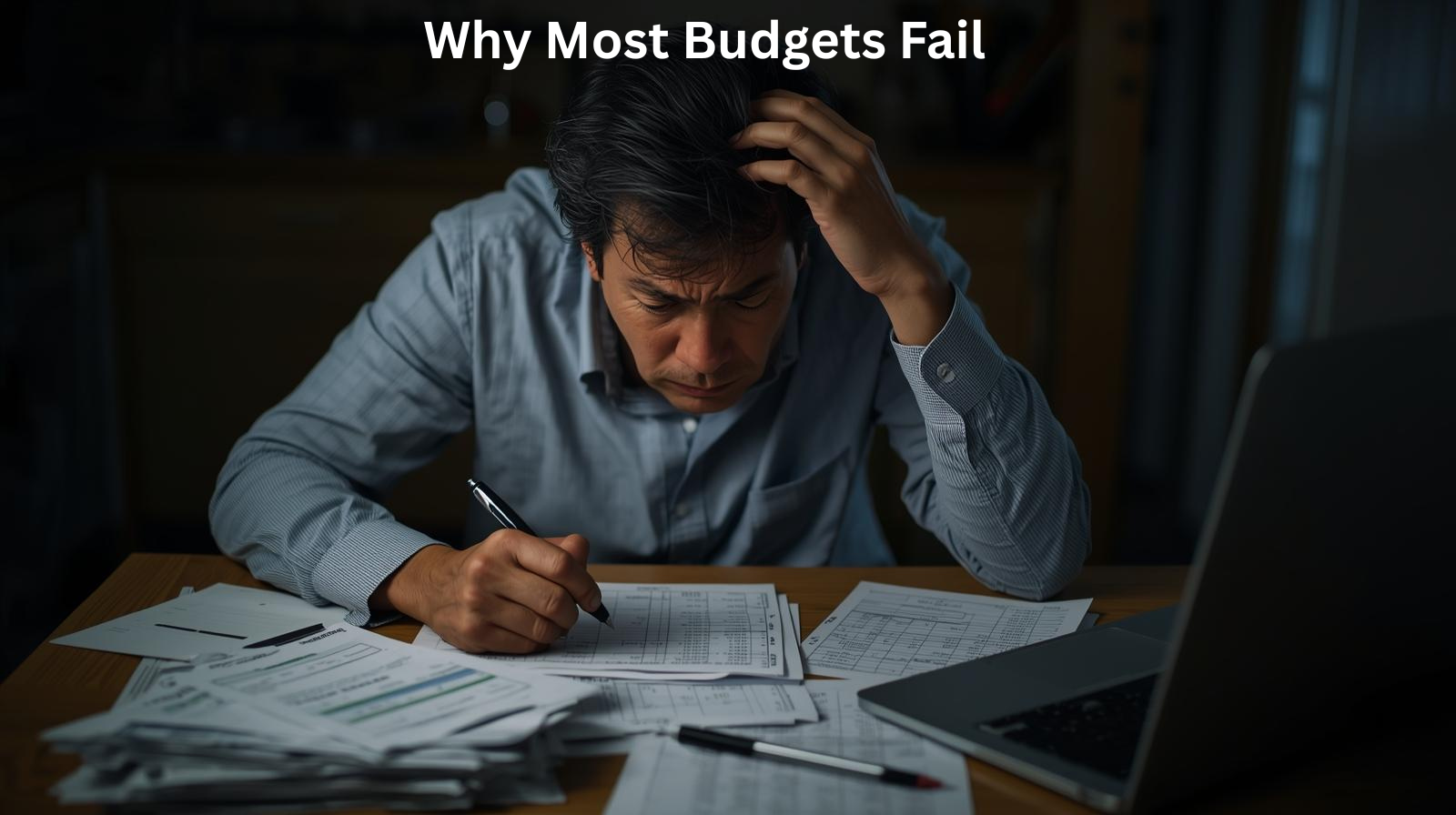
If you’ve ever wondered why most budgets fail, you’re not alone — and it’s probably not because you’re bad with money. Most budgeting systems are built around ideal behavior, not real life. They assume consistency, discipline, and predictability in a world that rarely cooperates. When life gets messy, the budget breaks, and people assume they did something wrong.
The truth is simpler — and more forgiving.
Why Most Budgets Fail in Real Life
To understand why most budgets fail, you have to look at how they’re designed.
Traditional budgets focus on control:
- Track every dollar
- Categorize every expense
- Stay “on plan” every single month
That approach may look good on paper, but households don’t run on spreadsheets. They run on energy levels, emotions, and changing priorities.
One unexpected expense or one-off week can derail an entire budget. When that happens, many people feel discouraged and quit altogether — not because they don’t care about their finances, but because the system leaves no room for being human.
If you prefer a quick explanation, here’s a short video that breaks down why most budgets fail and what works better in real life.
The Problem Isn’t You — It’s the System
One of the biggest reasons why most budgets fail is that they confuse structure with rigidity.
A rigid budget treats any deviation as failure. Miss one category, overspend once, or forget to track for a few days, and the whole system feels broken. That creates guilt, frustration, and eventually avoidance.
A better system doesn’t punish you for being imperfect. It adapts.
What Actually Works Better Than Traditional Budgeting
Instead of focusing on strict rules, a more effective approach is to build small, repeatable money habits.
Habits work because:
- They don’t require perfection
- They adjust as life changes
- They build confidence over time
When you shift from asking “Did I follow the budget perfectly?” to “Did I make one small improvement today?”, money management becomes calmer and more sustainable.
This habit-based approach directly addresses why most budgets fail — by removing the pressure that causes people to quit.
Flexible Planning Beats Rigid Budgeting
A realistic financial plan expects:
- Unexpected expenses
- Inconsistent months
- Normal human behavior
That flexibility is exactly what most budgets are missing.
Instead of trying to control every dollar, focus on:
- One financial priority at a time
- One habit at a time
- One small win per day
Progress doesn’t come from restriction. It comes from consistency — even when things aren’t perfect.
A Simple Way to Start (Without Another Failed Budget)
If you’re tired of wondering why most budgets fail and want a more realistic place to begin, start with habits — not rules.
That’s why I created the 7-Day Money Habits Starter Plan.
It’s designed to:
- Take about 10 minutes a day
- Focus on one simple habit at a time
- Help you build momentum without overwhelm
No strict budgeting rules.
No guilt when life happens.
Just practical habits that fit real families and real schedules.
👉 You’ll find the 7-Day Money Habits Starter Plan right on the home page at
https://moneyhabitsforme.com
Final Thought
Understanding why most budgets fail can be a relief — because it means the problem was never a lack of willpower.
Money progress doesn’t come from doing everything right.
It comes from doing small things consistently.
Start with habits.
Build confidence.
And let flexibility work in your favor.