
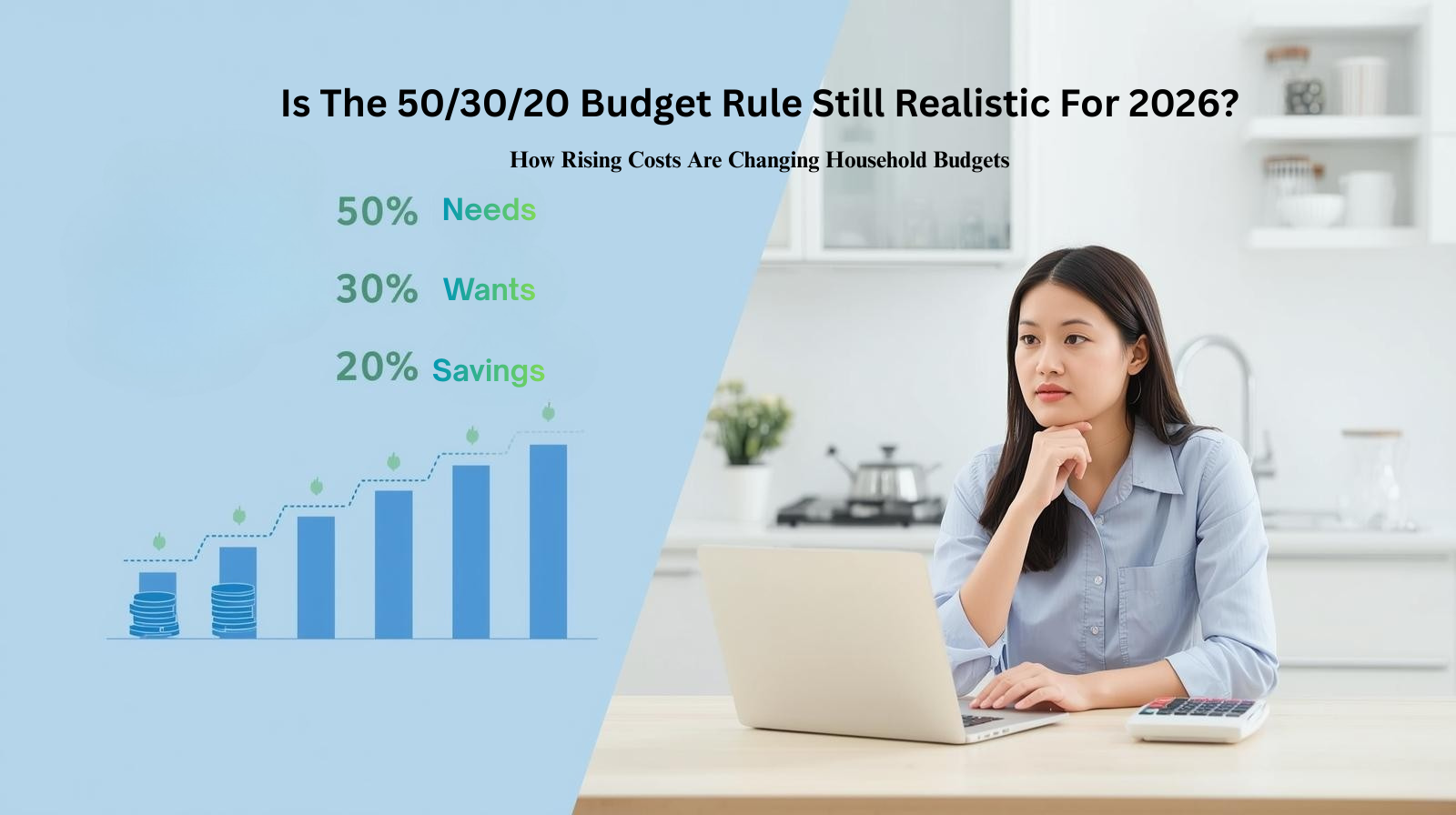
The 50/30/20 budget rule is a simple guideline for dividing your income into three categories:
- 50% Needs
- 30% Wants
- 20% Savings or Debt Reduction
The idea is straightforward. Half your income goes to essential expenses. A portion goes to lifestyle spending. The remaining amount goes toward building your financial future.
It’s easy to remember, which is why the rule became popular.
But like many financial rules, it was created during a time when the math looked a little different from what it does today.
What The 50/30/20 Budget Rule Actually Means
Before deciding whether the 50/30/20 budget rule works today, it helps to understand how the categories are supposed to work.
50% – Needs
These are the expenses you must pay to live and function. They typically include:
- Housing (rent or mortgage)
- Utilities
- Insurance
- Transportation
- Minimum debt payments
- Groceries
The key idea is that these are non-negotiable costs.
30% – Wants
This category includes spending that improves your lifestyle but isn’t strictly necessary.
Examples include:
- Dining out
- Entertainment
- Travel
- Streaming services
- Hobbies
This is where most discretionary spending lives.
20% – Savings And Debt Reduction
The final portion is meant for long-term financial stability.
This includes:
- Retirement contributions
- Emergency fund savings
- Extra debt payments
- Investment accounts
In theory, if you follow this structure consistently, you build savings while still enjoying life.
Why The 50/30/20 Budget Rule Is Harder To Follow Today
Here’s where many people run into trouble.
The 50/30/20 budget rule assumes that essential expenses account for about half of your income. For many households in 2026, that assumption simply isn’t realistic.
Several factors have pushed the numbers around.
Housing Costs
Housing is often the biggest challenge.
In many areas, rent or mortgage payments alone can take 35% to 45% of income, sometimes more.
Once you add property taxes, insurance, and utilities, the “50% needs” category fills up quickly.
Food And Daily Living Costs
Groceries and everyday expenses have risen significantly over the past few years. Even families who budget carefully may find their food spending higher than expected.
Insurance And Healthcare
Health insurance, auto insurance, and home insurance have all seen increases. These are essential expenses, which means they fall directly into the “needs” category.
The result is simple.
For many households today, needs can easily reach 60% or more of income.
Budget Adjustments People Are Making In 2026
Because of these pressures, many people are adjusting the traditional formula rather than abandoning budgeting altogether.
Some common variations include:
60 / 30 / 10
- 60% Needs
- 30% Wants
- 10% Savings
This version recognizes that basic living costs are higher while still encouraging some savings.
60 / 20 / 20
- 60% Needs
- 20% Wants
- 20% Savings
This approach trims lifestyle spending but protects long-term savings goals.
Pay Yourself First
Another approach is to reverse the formula entirely.
Instead of following strict percentages, people first set aside money for savings or retirement, then build the rest of the budget around what remains.
This method focuses on consistent progress rather than perfect ratios.
How To Use The 50/30/20 Budget Rule As A Guide
Even if the exact percentages don’t work perfectly today, the 50/30/20 budget rule still offers something valuable.
It gives people a starting framework.
Think of it less like a rigid rule and more like a compass.
If your budget looks like this:
- Needs: 62%
- Wants: 25%
- Savings: 13%
You’re still moving in a healthy direction.
The real goal isn’t hitting a perfect formula.
The real goal is making sure your money supports three important priorities:
- Covering essential living costs
- Enjoying life in reasonable ways
- Building financial security for the future
If those three areas are working together, your budget is doing its job.
A Practical Way To Test Your Budget
If you’re curious whether your own spending fits the 50/30/20 budget rule, try this simple exercise.
Look at the last three months of expenses and sort them into three groups:
- Needs
- Wants
- Savings and debt reduction
You may be surprised at what you find.
Many people discover that small recurring expenses quietly expand the “wants” category, while rising living costs push the “needs” category higher than expected.
Seeing the numbers clearly often helps people make better decisions going forward.
Final Thought
The 50/30/20 budget rule was never meant to be a rigid financial law. It was designed as a simple framework to help people think about balance.
And balance still matters.
But in 2026, the smartest approach may be flexibility.
Use the percentages as a guide, adjust them to match your real life, and focus on steady improvement rather than perfect math.
Because in the end, the best budget isn’t the one that looks perfect on paper.
It’s the one you can actually live with.