
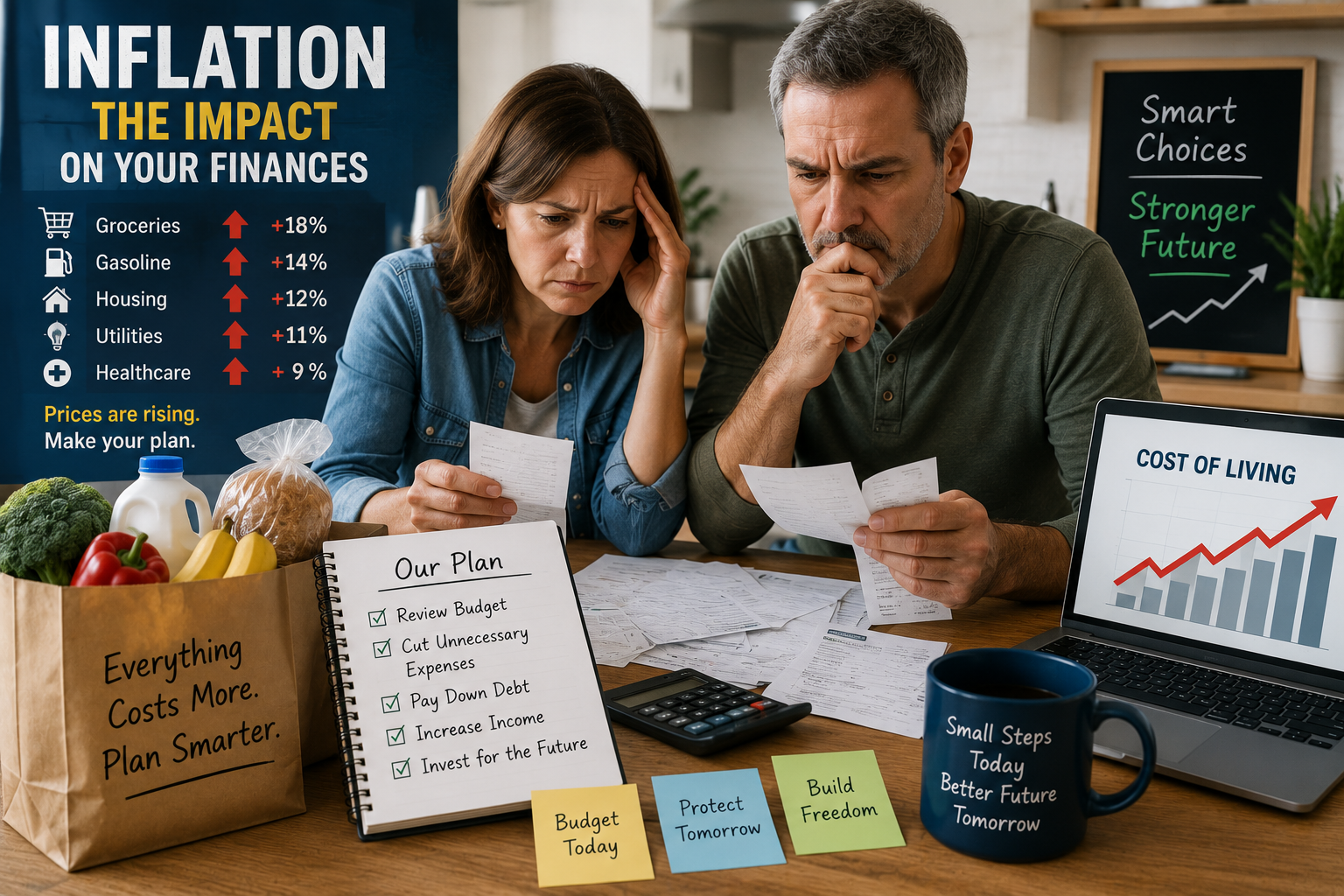
You buy the usual groceries, renew your insurance, and pay the electric bill. Nothing feels extravagant, but less money is left at the end of the month. That is where the impact of inflation becomes personal.
You cannot set prices across the economy. You can check which costs changed, decide what needs attention, and adjust your household plan without trying to fix everything at once.
For the explanation of what inflation means and why slower inflation does not necessarily mean lower prices, read Inflation Explained. This article focuses on what you can do with your own numbers.
Start With the Bills That Actually Changed
Compare current bills with those from six or twelve months ago. Start with three large expenses, such as groceries, housing, and insurance. Write down the old amount, the new amount, and the difference.
For example, if groceries rose from $500 to $550 a month and insurance rose from $150 to $175, those two changes use another $75 each month. You now have a specific gap to address. These are sample figures, not estimates of current inflation.
Not every increase is caused by inflation. A higher utility bill might also reflect more use, while an insurance renewal may reflect changes to your coverage or risk. Check both the price and what you are paying for.
Your bills may change differently from the national average. The Bureau of Labor Statistics’ CPI resources explain the wider price measure; your statements show the household impact.
Adjust Your Spending Plan Around Today’s Costs
Update the amounts in your plan rather than expecting last year’s numbers to keep working. Put essential bills first, then look for spending you can change.
Try one manageable action: cancel an unused subscription, plan meals around food you already have, compare recurring service prices, or delay a purchase that is not urgent. Our practical budgeting guide can help you organize those choices.
If your income does not cover essentials, small cuts may not be enough. Contact bill providers about available arrangements and explore legitimate assistance. That is a gap to solve, not evidence that you failed to budget well.
Check Which Borrowing Costs Can Change
Higher interest rates can make new borrowing and variable-rate debt more expensive. Check your statements and loan terms rather than assuming every payment will rise.
The interest rate on an existing fixed-rate loan stays fixed. For a mortgage, however, the total payment can still change if property taxes or insurance paid through escrow increase.
Before replacing a loan, compare fees, interest, repayment length, and total cost. A smaller monthly payment is not always a cheaper loan. Read How Interest Works for the basic calculations.
For credit cards, check the rate and balance, keep required payments current where possible, and choose an affordable repayment plan. Avoid adding new debt just because you fear an item will cost more later.
Keep Emergency Savings Available
Inflation can reduce what your savings will buy if prices rise faster than the interest you earn. But emergency money has another job: being available when you need it.
Do not move money for next month’s bills or an unexpected repair into a risky investment simply to chase a higher return. Look at access, fees, account terms, and deposit protection when comparing savings options.
If you used your emergency fund, it did its job. Choose an affordable amount to rebuild it, even if progress is slower now. Our guide to how much to keep in an emergency fund can help you set a realistic target.
Review Long-Term Goals Without Chasing a Quick Fix
Investing may help money grow for distant goals, but it does not guarantee that you will beat inflation or avoid losses. The Investor.gov guide to risk explains both investment losses and the risk of losing purchasing power.
Match decisions to when you need the money, your circumstances, and the losses you could handle. An alarming headline is not a good reason to buy something you do not understand.
If you are still working, review whether retirement contributions fit your goals and current budget. Increase them only when you have room, rather than treating rising prices as a reason to stretch an already tight household.
Already Retired? Review Income and Withdrawals Together
Compare your regular income with your updated spending. Some income may receive cost-of-living adjustments; other payments may stay fixed. Check your actual statements rather than assuming every source rises with inflation.
If the gap has grown, look at spending changes and how much you are drawing from savings. Larger withdrawals can cover today’s bills while leaving less for later, so consider the longer-term effect.
Review the plan when major expenses change. If you need individual advice about withdrawals or investments, our guide to finding financial advice you can trust explains how to evaluate a professional.
Choose One Step, Then Check the Result
You do not need to predict inflation to make a useful change. Pick one expense to investigate or one part of your plan to update. Write down the action and a date to review it. If the repeated decisions themselves are wearing you down, rising prices and money stress focuses on narrowing the next task and asking for help when small cuts cannot close the gap.
A month later, ask whether it reduced the gap. If not, try the next practical step. Our financial checkup can help you review the wider picture.
For more on prices and purchasing power, return to Inflation Explained. Our Financial Education guide connects these ideas to other money basics.
The impact of inflation is easier to address when you work with specific bills and realistic choices. Start with one number that changed and one action you can take this week.