
You open your debt tracker on a random Tuesday night, the way you have a hundred times before, and the number is barely different from last month. You’ve been making payments. You’ve been doing everything right. And yet the balance still feels impossibly far from zero. If you’ve ever sat with that exact discouragement, wondering whether any of this is actually working, you’re further along than it feels.
Paying off debt is a little like training for a marathon. The excitement is high at the starting line, but somewhere around month four or five, the finish line stops feeling close at all. Here’s the part that matters: paying off debt isn’t just math. It’s mindset. The people who get all the way there aren’t always the ones with the highest incomes. They’re the ones who find a way to keep going after the motivation fades.

Remember Why You Started
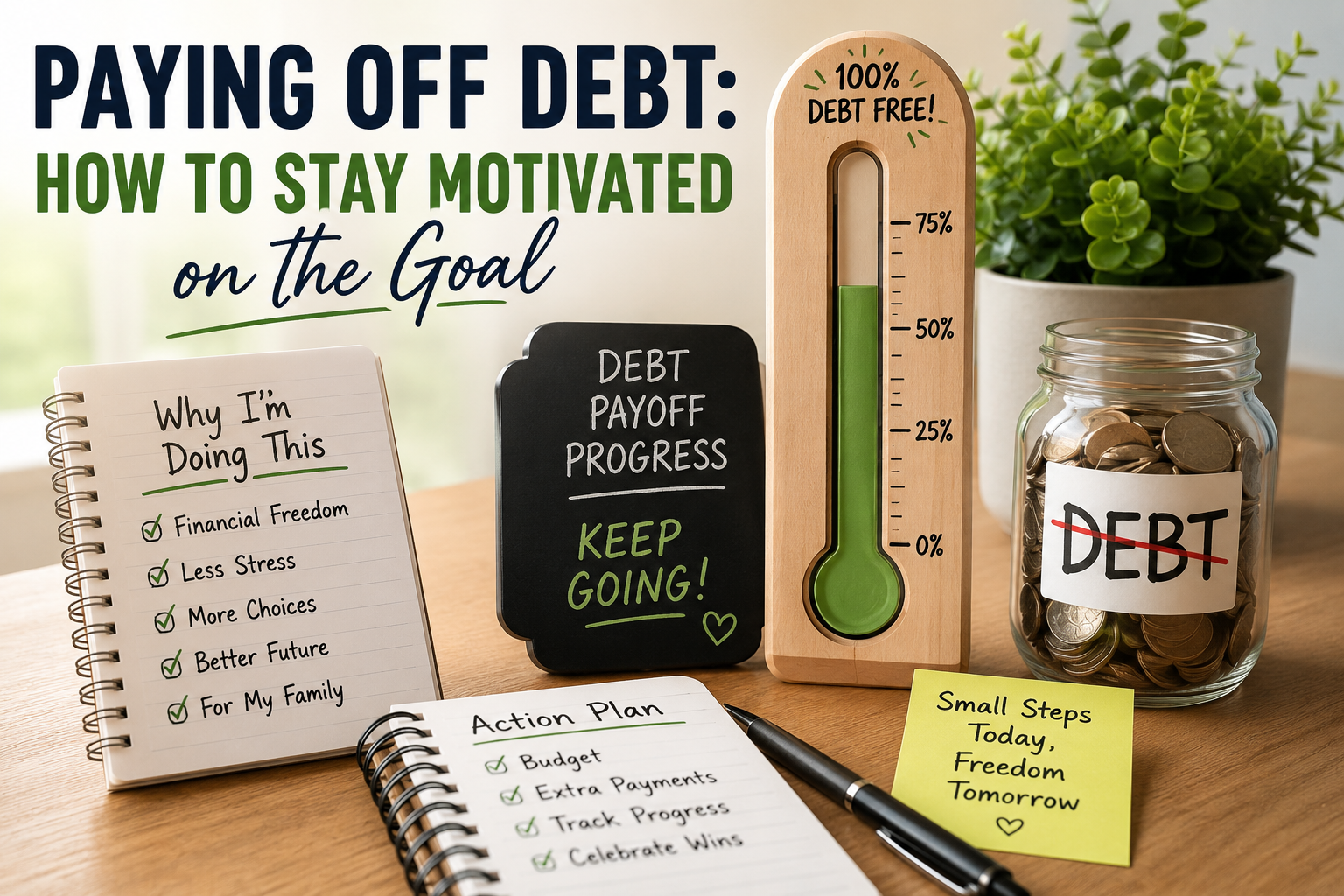
Before the numbers, there’s usually a reason. Maybe it’s sleeping without the low hum of financial stress, or finally being able to say yes to a vacation without reaching for a credit card, or just wanting one version of your life where a bill doesn’t feel like a threat. Write that reason down somewhere you’ll actually see it, because on the months when the progress feels invisible, that reason is what keeps your hand moving toward the next payment instead of away from it.
Celebrate the Middle, Not Just the Finish
Waiting until you’re completely debt-free to feel good about any of this is a long, quiet way to lose motivation. The milestones along the way deserve their own moment: the first card paid off, the first thousand dollars gone, the day you realize you’ve made six straight months of on-time payments. None of it needs to cost money. A favorite movie, a good dinner at home, an afternoon doing something you actually enjoy, that’s enough. Seeing the number move, even on a simple spreadsheet or a printable tracker, turns an abstract balance into visible proof that you’re actually getting somewhere.
Build the Habit, Not Just the Result
Results take months to show up. Habits happen every single day, and that’s actually good news, because habits are the part you can control today. Instead of thinking “I still owe eighteen thousand dollars,” it helps to think “I made another payment this month.” One approach worth knowing about is the debt snowball method described by Military OneSource: pay the minimum on everything, throw whatever extra you have at your smallest balance, and once that one’s gone, roll that same payment into the next smallest. It’s not the fastest math on paper, but it builds momentum you can actually feel, the same principle we cover in The Minimum Payment Trap. Automating what you can, payments, transfers, sending a bonus or tax refund straight at your highest-priority balance, means willpower isn’t doing all the work by itself.
Let Comparison Go, and Find Someone in Your Corner
Social media has a way of making everyone else look like they’re doing better than you, new cars, vacations, the newest phone. What you don’t see is their credit card balance, or the sleepless nights, or the loan payments behind the scenes, a pattern we explore more in Lifestyle Creep: Why More Income Feels Like Less Money. Your goal was never to keep pace with someone else’s highlight reel. It was peace of mind. That goal gets easier to hold onto with someone in your corner, a spouse, a friend, an online community, not to judge your progress, but to remind you why you started when you’ve momentarily forgotten.
Expect the Setbacks
Almost everyone hits one: a car repair, a medical bill, a slow month at work. These moments don’t erase the progress you’ve made, they just mean life happened, the same reason it’s worth having even a small cushion in place, something we get into in Why Any Unexpected Cost Makes You Panic Today. What matters is getting back to the next payment as quickly as you can, rather than treating one rough month as proof the whole plan failed.
Picture What’s Waiting on the Other Side
Every so often, it helps to actually picture life without the monthly debt payments, keeping more of every paycheck, building savings instead of feeding interest, making a purchase because you want to instead of because a balance is forcing your hand. That future isn’t wishful thinking. Every payment you make is what’s actually building it, one month at a time.
Consistency Beats Perfection
Plenty of people quit not because the plan failed, but because one expensive month made them feel like it did. Financial progress was never about being perfect. It’s about making more good decisions than bad ones, over and over, for long enough that the balances that once felt impossible are simply gone. If you want a more complete system for building these habits so they stick past the hard months, that’s exactly what our upcoming book, Money Habits, and our free 7-Day Money Habits Challenge are built around, one manageable step at a time. Keep making the next payment. Then the next one. Your future self is going to be glad you didn’t stop.