
If you’re searching for how to improve your credit score, you’ve probably already run into a pile of contradictory advice. Close your old cards. Never close your old cards. Pay off everything immediately. Carry a small balance to “build credit.” Some of that is outdated, some of it is flat-out wrong, and almost none of it explains why any of it matters.
Here’s the good news: improving your credit score isn’t complicated once you understand what actually goes into it. The average FICO score in the U.S. currently sits at 714, and about 48% of consumers now have a score of 750 or higher. Wherever you’re starting from, there’s a clear, unglamorous path to get there. Let’s go through the steps that actually help.
How to Improve Your Credit Score Starts With Understanding What Makes It Up
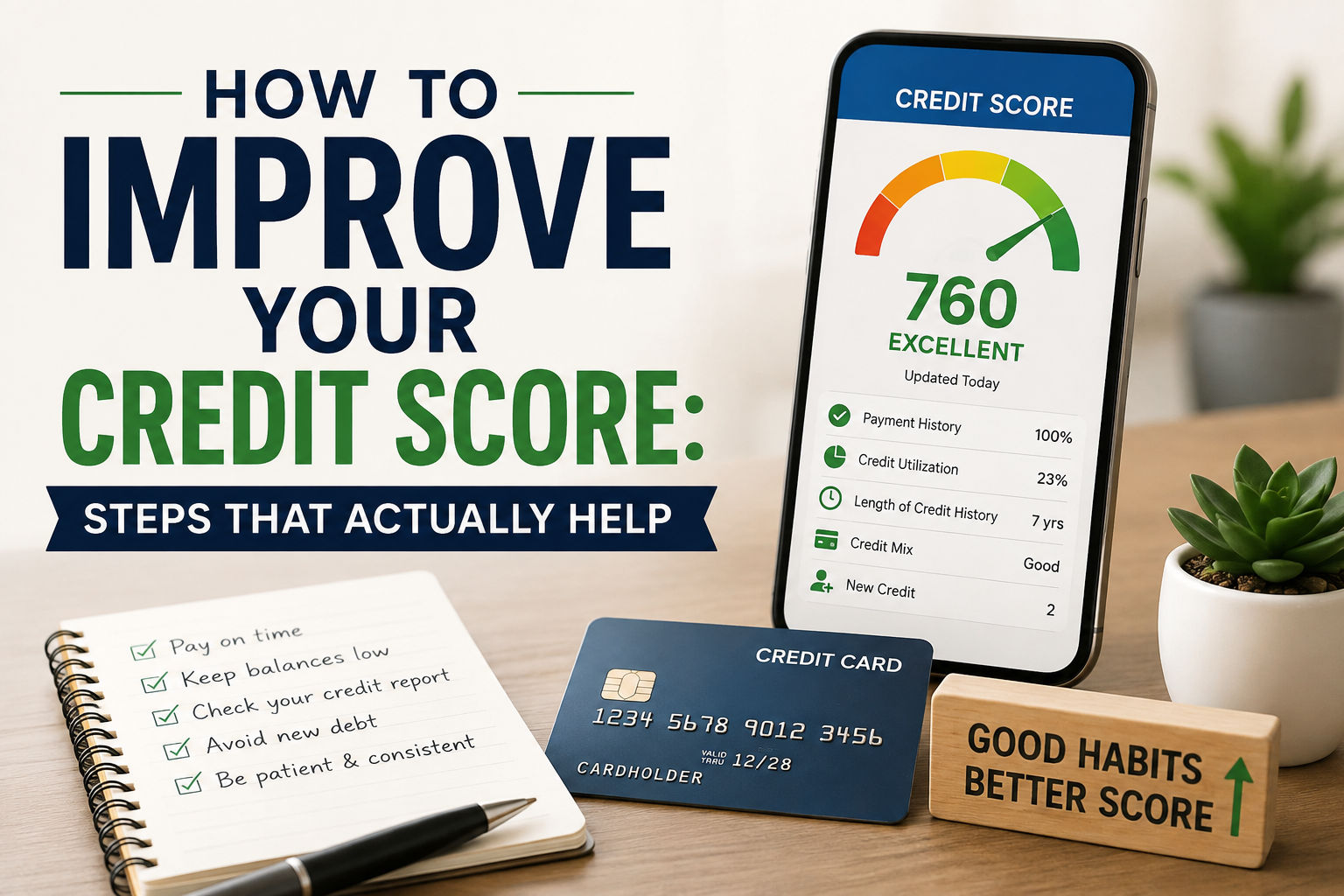
Before chasing tips, it helps to know what you’re actually working with. FICO calculates your score from five weighted factors: payment history (35%), amounts owed (30%), length of credit history (15%), credit mix (10%), and new credit (10%).
Notice how much of that is payment history and amounts owed alone — together they make up nearly two-thirds of your score. That’s why so much of the advice below focuses on those two areas first. Chasing a “credit hack” that ignores these fundamentals wastes your time.
Pay Every Bill on Time, Every Time
This is the single most important habit for anyone wondering how to improve your credit score, because payment history is the biggest factor. One 30-day late payment can knock a meaningful number of points off your score, and it can sit on your credit report for up to seven years.
Set up autopay for at least the minimum payment on every credit account you have, even if you plan to pay more manually. That way, a forgotten due date during a busy week never turns into a real ding on your report. If you already have a late payment sitting on your file, it’s not permanent — its impact fades over time, and consistent on-time payments going forward gradually offset it.
How to Improve Your Credit Score by Lowering Utilization
Amounts owed make up 30% of your score, and the biggest piece of that is your credit utilization ratio — the percentage of your available revolving credit you’re currently using. High utilization signals to lenders that you might be overextended, even if you’re paying everything on time.
A common rule of thumb is to keep your utilization under 30%, and lower is generally better. If you have a $10,000 combined credit limit and you’re carrying $4,000 in balances, that’s 40% utilization, which is worth bringing down. You can do that by paying down balances, spreading spending across multiple cards instead of maxing one out, or asking for a credit limit increase on an account you already manage responsibly, which lowers your utilization without you spending less.
One thing worth knowing: your utilization is typically calculated from your statement balance, not what you owe on any given day. Paying a card down before the statement closes, rather than right before the due date, can lower the number that actually gets reported.
How to Improve Your Credit Score Without Closing Old Accounts
Length of credit history counts for 15% of your score, and closing an old account doesn’t just erase that history — it can also shrink your total available credit, which pushes your utilization ratio up. If you have an old card with no annual fee that you barely use, it’s often better to keep it open and add a small recurring charge, like a streaming subscription, than to close it entirely.
This matters most for your oldest accounts. Closing the newest card in your wallet usually does far less damage than closing the one you’ve had the longest.
Be Careful With New Credit Applications
New credit makes up 10% of your score, and every hard inquiry from a new application can ding your score slightly, typically for about a year. Opening several new accounts in a short window looks riskier to lenders, especially if you don’t have a long credit history to balance it out.
That doesn’t mean you should never apply for credit if you’re working on how to improve your credit score. It means being intentional. Space out applications when you can, and avoid opening several new accounts right before you need your credit score to look its best, like right before applying for a mortgage.
Build a Mix of Credit Types Over Time
Credit mix accounts for 10% of your score. Lenders like to see that you can responsibly manage different types of credit, such as revolving credit cards alongside an installment loan like a car payment or student loan. This is the smallest factor on the list, so it’s not worth taking out a loan you don’t need just to diversify your credit mix. But if you already have a mix naturally through normal life, it works in your favor.
How to Improve Your Credit Score by Fixing Report Errors
Errors on your credit report are more common than people expect, and they can drag your score down for reasons that have nothing to do with your actual financial behavior. You’re entitled to a free copy of your credit report from each of the three major bureaus, and it’s worth pulling all three periodically to check for accounts that aren’t yours, incorrect balances, or late payments that were actually paid on time.
If you find an error, dispute it directly with the credit bureau reporting it. Corrections can sometimes bump your score up meaningfully with no other effort required.
Be Patient — Real Progress Takes Time
If you’re wondering how to improve your credit score fast, be skeptical — anyone promising to fix it overnight is selling something. Real improvement, especially if you’re rebuilding from missed payments or high balances, tends to happen gradually over months, not days. That’s normal, and it doesn’t mean your efforts aren’t working.
The habits that move the needle the most, paying on time and keeping utilization low, are also the ones that compound the longer you stick with them. A score built on real payment history and healthy credit habits tends to be far more durable than one chased through short-term tricks.
The Bottom Line
Improving your credit score really comes down to a short list of consistent habits: pay everything on time, keep your balances well below your available credit, leave old accounts open, apply for new credit sparingly, and check your reports for errors. None of it is flashy, and none of it happens overnight, but it’s exactly what the scoring models are built to reward.
Start with the factor that’s hurting you most right now. If it’s utilization, focus on paying down balances first. If it’s payment history, set up autopay today. Small, consistent changes in the right direction add up to a real difference over time.