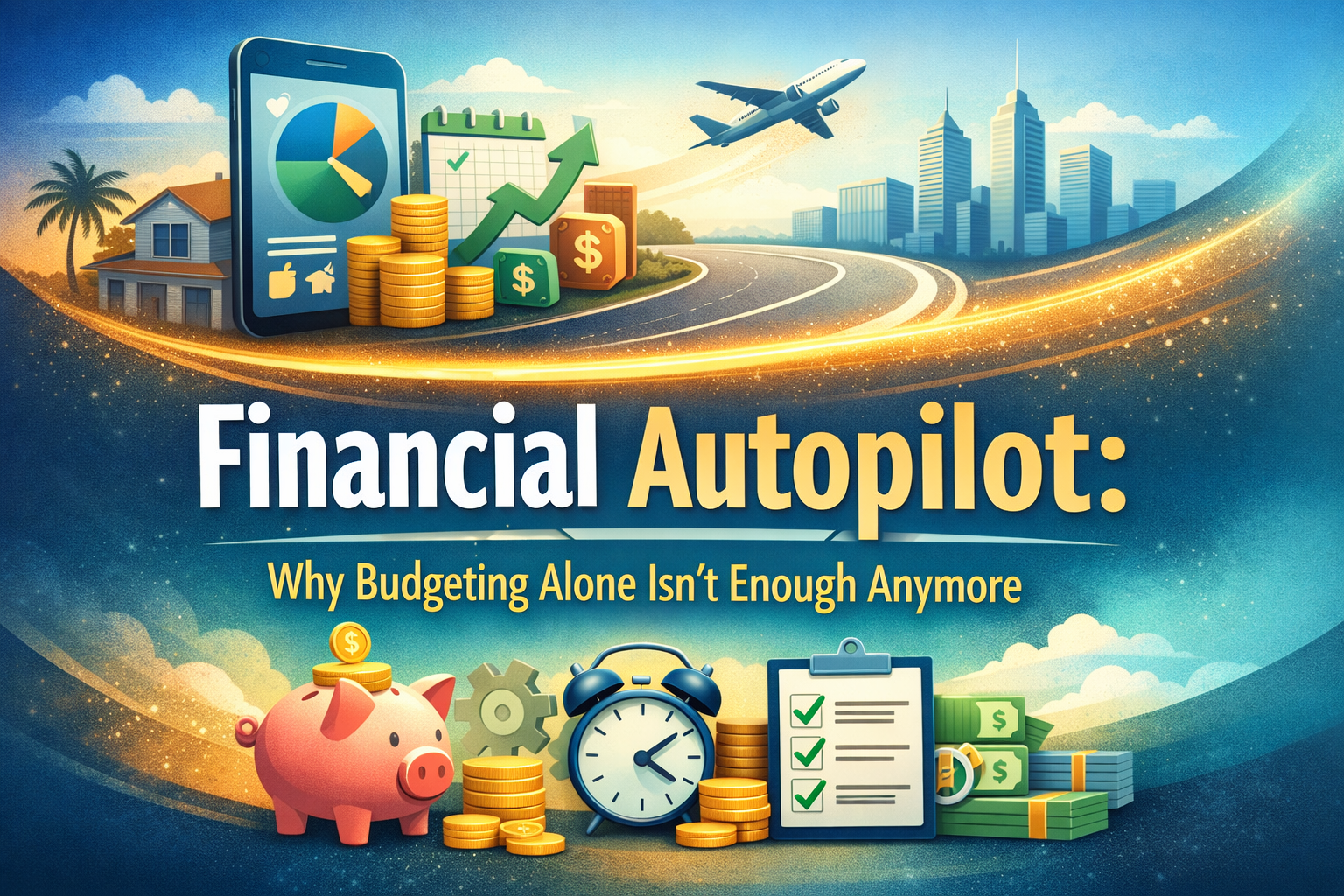
Financial Autopilot: New Budgeting Methods For You
There’s a point in managing money where the numbers start to make sense, but the results don’t quite match the effort. You’ve taken the time to build a budget, you know where your money is going, and you’re more aware than you’ve ever been. Still, progress feels slower than expected, leaving you wondering what’s missing. That gap is exactly where the idea of financial autopilot starts to matter, because the issue usually isn’t knowledge—it’s how everything is set up to work day to day. Financial Autopilot Starts Where Budgeting Slows Down Budgeting has always been the foundation of personal finance, and for good reason. It forces awareness, it highlights habits, and it gives structure to what can otherwise feel like a guessing game. For a while, it works exactly as intended. You track your spending, you make adjustments, and you feel a sense of control that wasn’t there before. Over time, though, something subtle begins to change. The act of constantly checking, categorizing, and managing every dollar feels like work. Not because it’s difficult, but because it requires your attention over and over again. Life doesn’t slow down just because you created a budget, and eventually the system begins to rely more on effort than it should. That’s the point where budgeting alone starts to lose its edge, and where financial autopilot begins to offer a better path forward. What Financial Autopilot Really Means in Everyday Life When people first hear the term “financial autopilot,” it can sound technical or complicated,