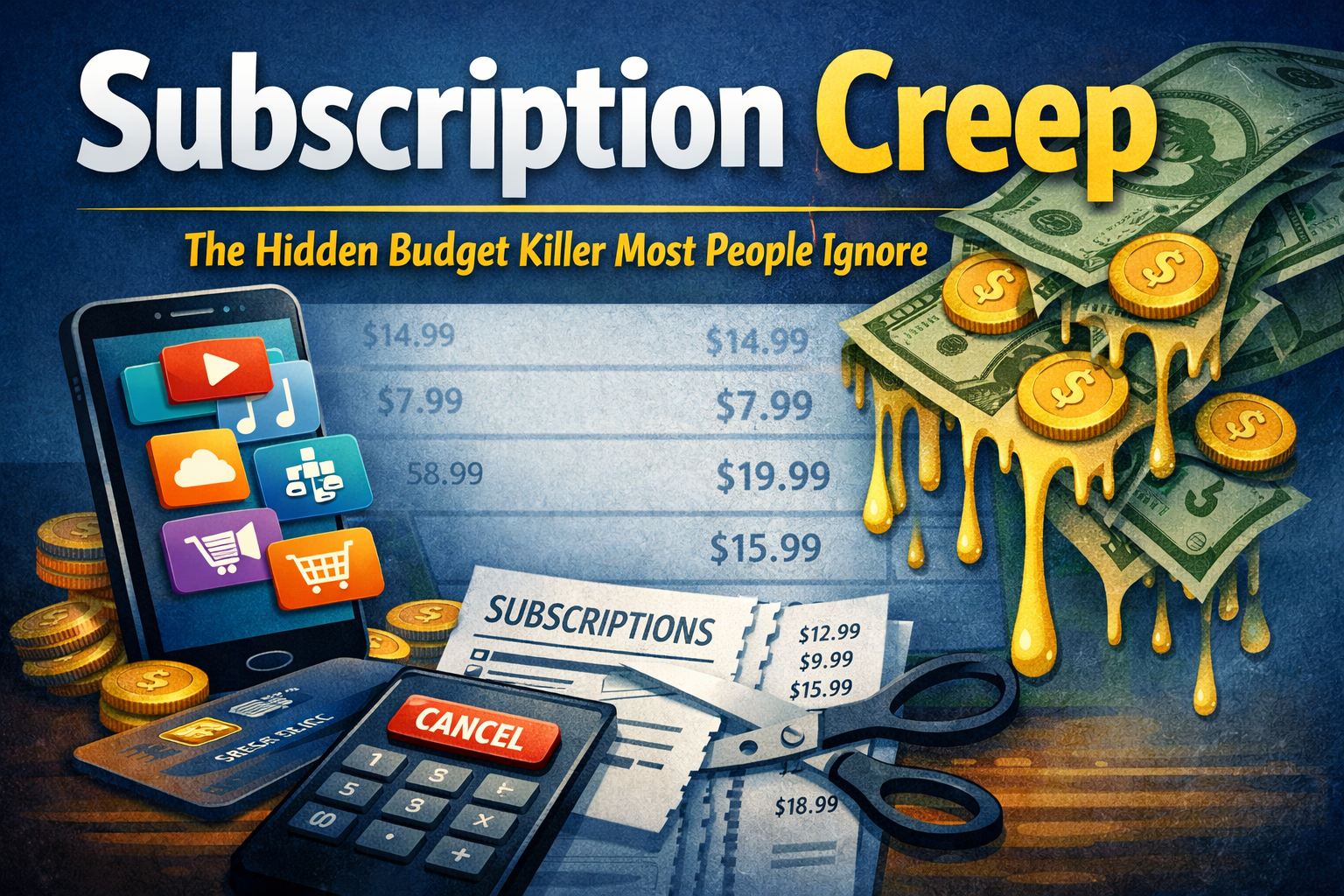
Subscription Creep: The Budget Killer Most People Ignore
Most people have a rough idea of what they spend on rent, groceries, and gas. What they almost never track is subscription creep — the slow, quiet accumulation of recurring monthly and annual charges that pile up in the background while you’re busy living your life. It doesn’t announce itself. It doesn’t send a warning. Subscription creep keeps draining your account, month after month, for services you may have signed up for years ago and completely forgotten about. The problem isn’t any single subscription. It’s all of them together, and the fact that most people never stop to add them up. How Subscription Creep Gets Started It usually begins with something completely reasonable. A streaming service here, a free trial there. Maybe a fitness app you downloaded in January, or a news site offering three months at a discounted rate. Each one feels like a small decision at the time, and technically it is. But small decisions made repeatedly without review tend to compound into a much larger problem. Subscription businesses are built around this dynamic. Free trials automatically convert to paid plans. Annual renewals process without any notification beyond a buried email. Introductory pricing expires and bumps to the standard rate without fanfare. By design, these services make it easy to sign up and easy to forget. The friction is intentional, and it works. Why Subscription Creep Is So Easy to Miss There are two reasons most people underestimate what they’re spending on subscriptions. The first is that the